
What’s at stake?
An amendment to the sidewalk vending ordinance proposed banning the practice on weekend nights at the Tower District, citing a need to address public safety and health concerns.
But following a failed introductory vote, and pushback from the community, the city is at least reconsidering their approach.
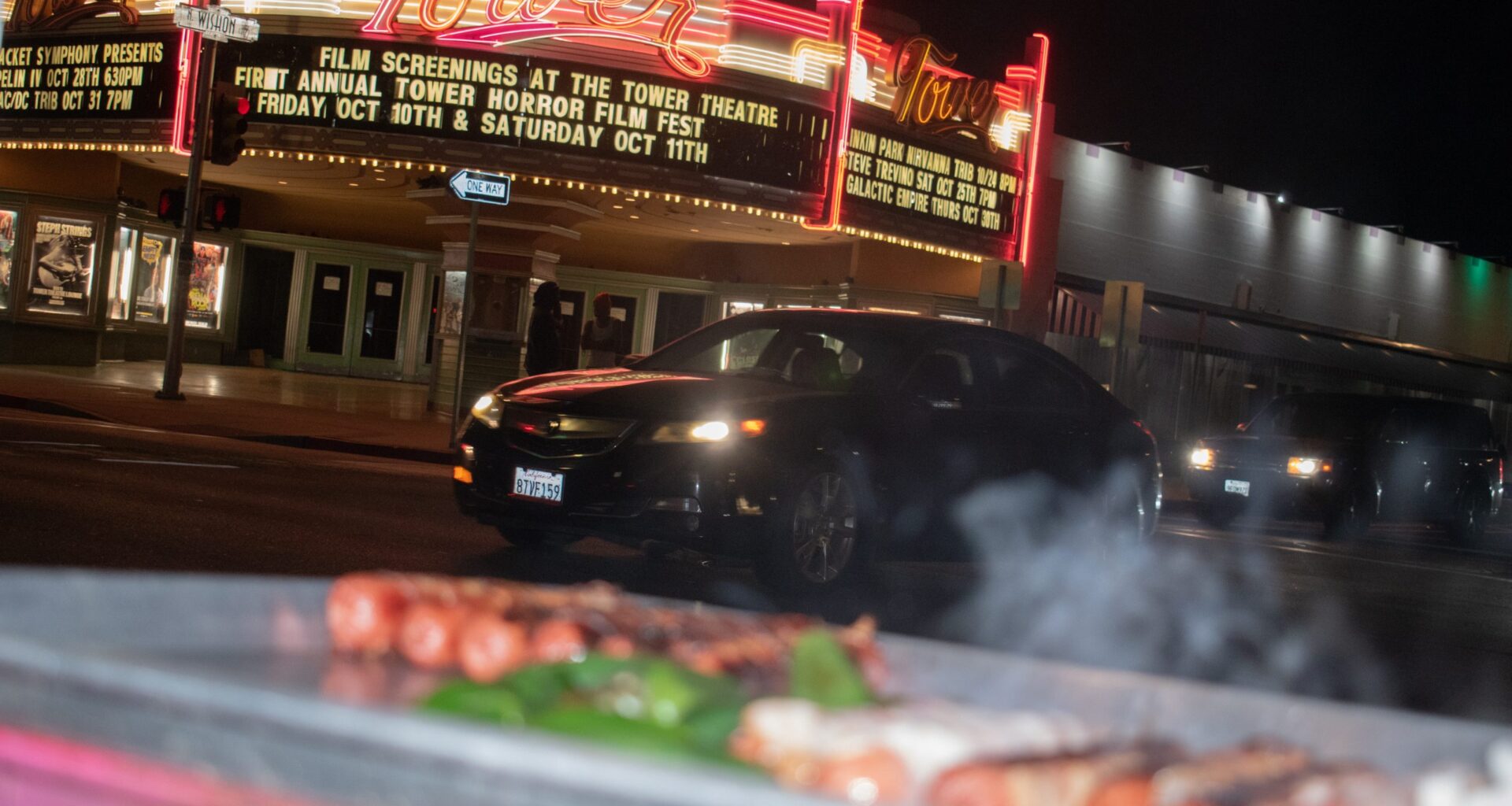
Deep into Friday and Saturday nights in the Tower District, most people are beginning to end their day full of drinking and dancing by slowly sauntering off into the streets of the city’s hub for nightlife.
For people like Laurie Montero, however, their night is about to begin.
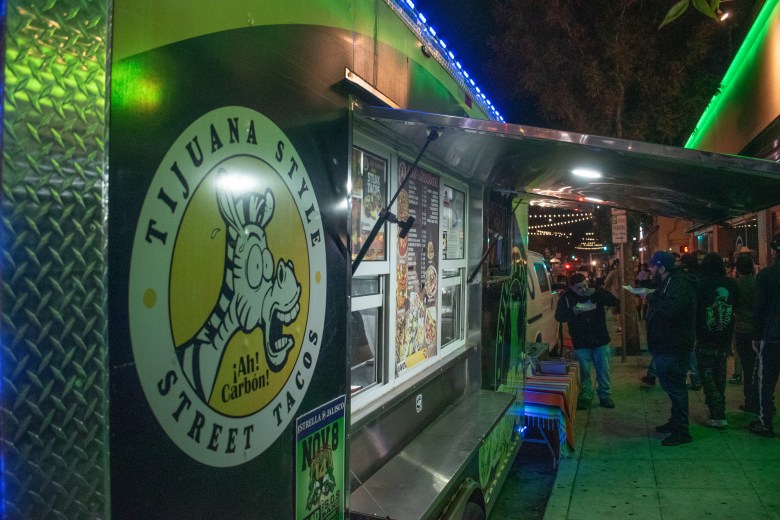
Montero, 47, is one of many street food vendors that adorn Olive Avenue with a mix of music, colorful lights and, above all else, some hot and ready food.
But depending on who you ask, vendors like Montero are either a welcome sight or a public nuisance.
Fresno City Councilmembers Miguel Arias and Annalisa Perea recently attempted to introduce a new policy that would outright ban street vendors in the Tower District on weekend nights, a move they said would help curb safety concerns and raucous crowds.
The proposal came following pressure from local businesses, competing interests and neighboring homeowners, who, city leaders say, are reaching their breaking point with the issue. But, facing community backlash over the past two weeks, leaders at City Hall are rethinking their approach.
Vendors who spoke with Fresnoland on a recent Saturday night didn’t dispute the idea that something needs to change — fights and other unpleasant disturbances are bad for business.
Montero, who sells bacon-wrapped hot dogs on the southwest corner of Olive and Wishon Avenues with her son, said she hopes the city keeps small business owners like her in mind as they grapple with potential legislative solutions.
“We’re not committing a crime, you know, we’re doing our best to provide for our families,” she said. “It’s really hard out here these days. At least we’re working for our money. We’re not out there committing a crime or stealing or begging for money, we’re actually out here working for it.”
But are street vendors the problem?
Calls for service to the Fresno Police Department in 2025 have seen an uptick in the Tower District in places that “correspond to areas frequented by food vendors,” according to the city’s data they used to justify the policy.
Perea — whose district includes the northern part of the Tower District — said the problems tend to start after the last call for drinks at Tower District bars and restaurants. In California, bars can’t serve alcohol past 2 a.m. She said that’s when people slowly make their way onto Olive Avenue and, because of the presence of street vendors, can “stay out until 3 or 4 in the morning.”
It’s that time of the night when police start getting an influx of calls to address “rowdiness, public intoxication, litter everywhere, folks going into the neighborhoods … fights,” she said.
“The issue is that we were having to pull public safety resources from other parts of our city to now address these Tower crowds that are happening on Friday and Saturday nights.”
Jaime Ramirez runs the Tacos Ah Cabron Mexican food truck with his son, Juan, 27. They’ve operated their truck for over three years, and even have a permanent spot on Clinton and Weber, but they still come out to Olive Avenue on weekends.
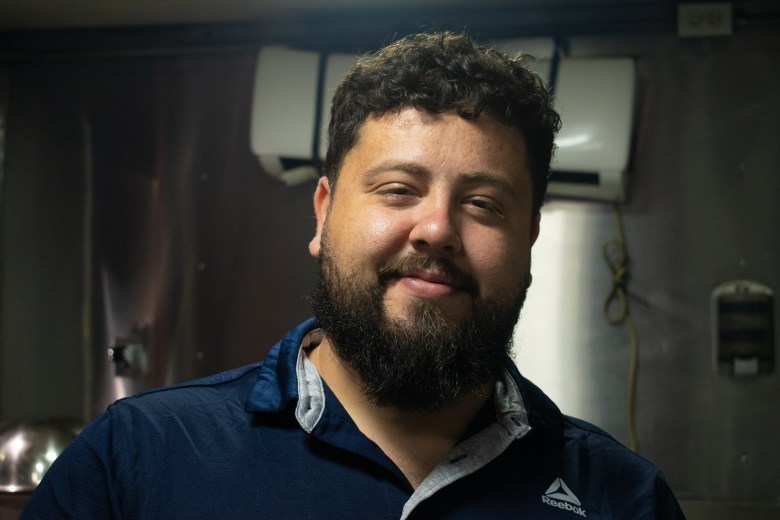 Juan Ramirez, 27, runs the Tacos Ah Cabron food truck with his father, Jaime. Pablo Orihuela | Fresnoland
Jaime, 49, who spoke to Fresnoland in an interview in Spanish, said he’s not surprised that the city is running out of patience.
He said he and his son would sometimes bring a leaf blower to round up trash before leaving for the night. The gesture is an act of good will, they say, to the brick-and-mortar businesses they park in front of.
“Imagine you’re a renter and you wake up one morning and see your storefront trashed, dirty and ugly … you’ll want us to stop coming,” Jaime said.
Still, there are some issues he knows he can’t solve. Jaime said he’s used to seeing sidewalks and tree wells with oil in them, and he said some vendors leave clean up duty to the customers — which doesn’t always pan out. He’s said he’s also seen some sell alcohol, which the city strictly forbids.
But code enforcement can sometimes be put in tricky situations when trying to uphold those rules, he said.
“Imagine, you’re from the city and late at night you want to tell a vendor that they’re breaking a rule, like say they’re selling alcohol,” Jaime said. “Some vendors are emboldened enough to tell code enforcement to piss off, and then you have drunk patrons that tell them to get lost, too! It can get scary.”
Arias said he’s also tried to reach out to bad-acting vendors. He hasn’t fared any better.
“They’ve told me that the city’s fines … they make that up in one meal,” Arias said. “They just chalk that up as a business expense.”
Current penalties for sidewalk vendors max out at $100, and that’s after multiple warnings and prior fines.
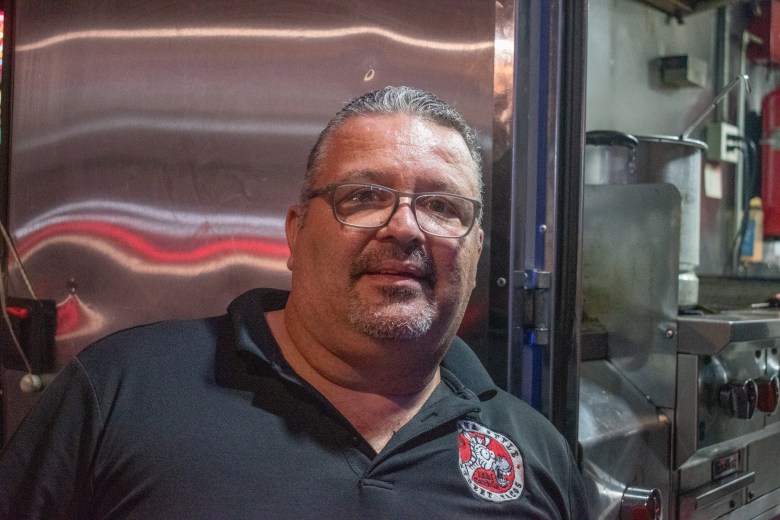 Jaime Ramirez, 49, runs the Tacos Ah Cabron food truck with his son, Juan. Pablo Orihuela | Fresnoland
Are the proposed laws too nuclear of an option?
Fresno leaders have been trying to get a handle on how to regulate street vendors in the Tower District since 2023, when they introduced a pilot program to improve business registration and compliance with the laws.
Veva Islas is the co-founder and executive director of Cultiva La Salud, a Fresno-based nonprofit that focuses on creating health equity in the San Joaquin Valley. Her organization has built a steadily growing relationship with some street vendors through programs like Vendors4Health — a 2016 initiative that helped mobile vendors access healthy food options to sell to areas of the city that are considered food deserts.
Islas – also a Fresno Unified trustee — has advocated for sidewalk vendors on the issue. She said the language in the proposed vending ban is taking “this huge leap at attributing all of that negativity to sidewalk vendors.”
Islas said the issue was important to her because of her mother, who was a small business owner. “I can identify with how hard it is to make a living,” she said.
She also acknowledged that there are some bad apples among the Tower food vendors, but said she hopes the city would go to greater lengths to focus attention on that group instead of punishing everybody.
“But their response has been, ‘well, the vendors keep them there,” Islas said. “That they maintain a presence that isn’t desirable.”
The proposed amendments introduced in October would have increased the maximum fine to $500, and banned sidewalk vending in the Tower District between 6 p.m. and 3 a.m. on the weekend.
An initial vote was taken on Oct. 16 with Councilmembers Tyler Maxwell, Nelson Esparza and Nick Richardson voting “no.” New ordinances in Fresno require two separate affirmative votes before they can go into effect.
Arias and Perea both told Fresnoland that their original proposed ordinance amendments were actually less restrictive than what some of the street vendors’ staunchest critics have been asking them to do. They both told Fresnoland that calls from angry constituents have asked them to go as far as banning street vending outright in the Tower District, and sometimes even worse than that.
“Full disclosure, they wanted to be far more aggressive,” Arias said. “They wanted us to arrest people, which I said no to, absolutely no to.”
Arias said that the city has been trying to look the other way for as long as it can, from introducing street cleanup crews in the morning, to extending police and code enforcement overtime in the area. But all of those solutions take up funding at an amount he said is unsustainable.
“So now we’re looking at, do we not have outdoor vending in this corridor during these days, during these hours, for health and public safety?” Arias said. “And it’s over these vendors we’ve been trying to regulate who continue to refuse to follow the rules.”
Food trucks like the one Jaime and Juan run were notably exempt from original proposed amendments. But even with the prospect of seeing less competition from the night crowds, Jaime said he’d be against a proposal that outright bans sidewalk vending on weekends. He sees most people selling food as like him — law-abiding and just trying to make ends meet. He doesn’t think it’s right for everybody to get penalized over an unruly sect of vendors.
“Everybody has a right to do what they can to make ends meet, yeah? It’s not right that the vendors that are cutting corners, not paying taxes and permits, selling alcohol on the side and leaving behind trash … that they can come in and ruin it for the honest people trying to make ends meet. That’s just not fair.”
After community pushback, will the proposal be delayed again?
The new policy was supposed to get a final vote at the Nov. 6 Fresno City Council meeting, but was quietly pushed to the council’s Nov. 20 meeting, amid significant community opposition online and during the council’s public comment period. Arias said it could still be kicked back even into December.
Arias and Perea haven’t released official language for what any amendments would look like just yet. But they’re considering eliminating the outright ban of street vendors, instead focusing on increasing fines for vendors violating the rules already on the books and possibly extending enforcement from the city’s police department or code enforcement unit.
As of late October, Perea told Fresnoland that she’s considering removing the sidewalk ban portion of the policy after “listening to the vendors,” particularly those that came to speak at the proposal’s first hearing at the Oct. 16 council meeting.
“We don’t need more rules,” Perea said, “we need to enforce the ones we already have.”
Among those criticisms have been that the policy is “Trumpesque” in nature, meaning a law that is going out of its way to target a minority group while labeling them as conducive to crime.
The added politicization has made it difficult for the city, and even vendors and businesses, to speak publicly and on the record on the topic. Perea said that when the policy comes back, whenever that may be, she wants to stress that the spirit of the law is to target bad acting vendors – not everyone.
Arias said it hasn’t been easy getting his message across either.
“That’s my complication. I’ve been trying to not go on the offensive in the public space, because it’s very hard to not portray this as ‘the vendors are the problem,’ because they’re not,” Arias said. “The vast majority of vendors in Fresno are not a problem because they’re not in front of the entertainment district.”
Perea said she wouldn’t be surprised to see some constituents still be angry with a less restrictive ordinance, but that her role is ultimately to reach a compromise that benefits everyone.
“My job is to listen to community input from everyone,” Perea said. “In doing so, I’m going to be tasked with making a decision at some point with the understanding that no matter what decision I make, there’s going to be a segment of people that are going to be upset. With that in mind, this is still moving the needle forward, perhaps not to the degree that a lot of people were wanting it to go, but we’re still moving it forward, and I think it’s a good compromise.”
Perea said the city would be looking at reduced calls for service, continued talks with business owners and even first-hand accounts as measures of success with the new amendments.
“I’m going to be talking to the businesses, because they’re the ones out there in the early morning, so they are the very first ones that see the aftermath from the night before,” she added.
Islas also expressed some sympathy toward city leaders facing public pressure. She said she’s aware of the competing interests at play. To her, it’s not fair that sidewalk vendors, who she considers to be at the bottom of the “street vending totem pole,” to be targeted while other options, like food trucks, aren’t targeted by the new law.
“I’m not against regulation. I just want regulation to be equitable, and I want it to be fair, and I don’t want a regulation that completely limits someone’s ability to have a small, thriving business.”
Islas said, ultimately, street vending at all levels is something the city should be encouraging and fostering. Drawing back to the hustle of her mother, she thinks the business model is an avenue for many to make ends meet.
“That skill, those assets should be allowed as a pathway out of despair and out of poverty, that’s what small food businesses are about,” Islas said. “Building a clientele, a business base that lets you move from just being a peddler or bike or cart operator to perhaps a food truck, to perhaps a brick and mortar restaurant, right? And essentially, they’re killing that. They’re killing that as a dream for some of these folks that are out there. And that just seems so unjust to me.”
Until a solution is reached, vendors like Montero will continue to sell food on Olive Avenue to the patrons that come their way.
In spite of all the chaos the last few council meetings have brought people like her, Montero said she still finds joy in cooking. She recalls life in her early 20s when she had a small catering business, serving outside of bars and business offices during lunch time. She’s come back to vending as a second job, given that her primary part-time job “doesn’t even cut the bills.”
She said she’d consider doing this full-time if money wasn’t an issue.
“I’ve always loved to cook, still do,” Montero said. “I love to cook for my family…it’s like a passion thing for me…the same way others look toward art, that’s what this is for me.”
Related