
Photo by Noradoa via Shutterstock
Save
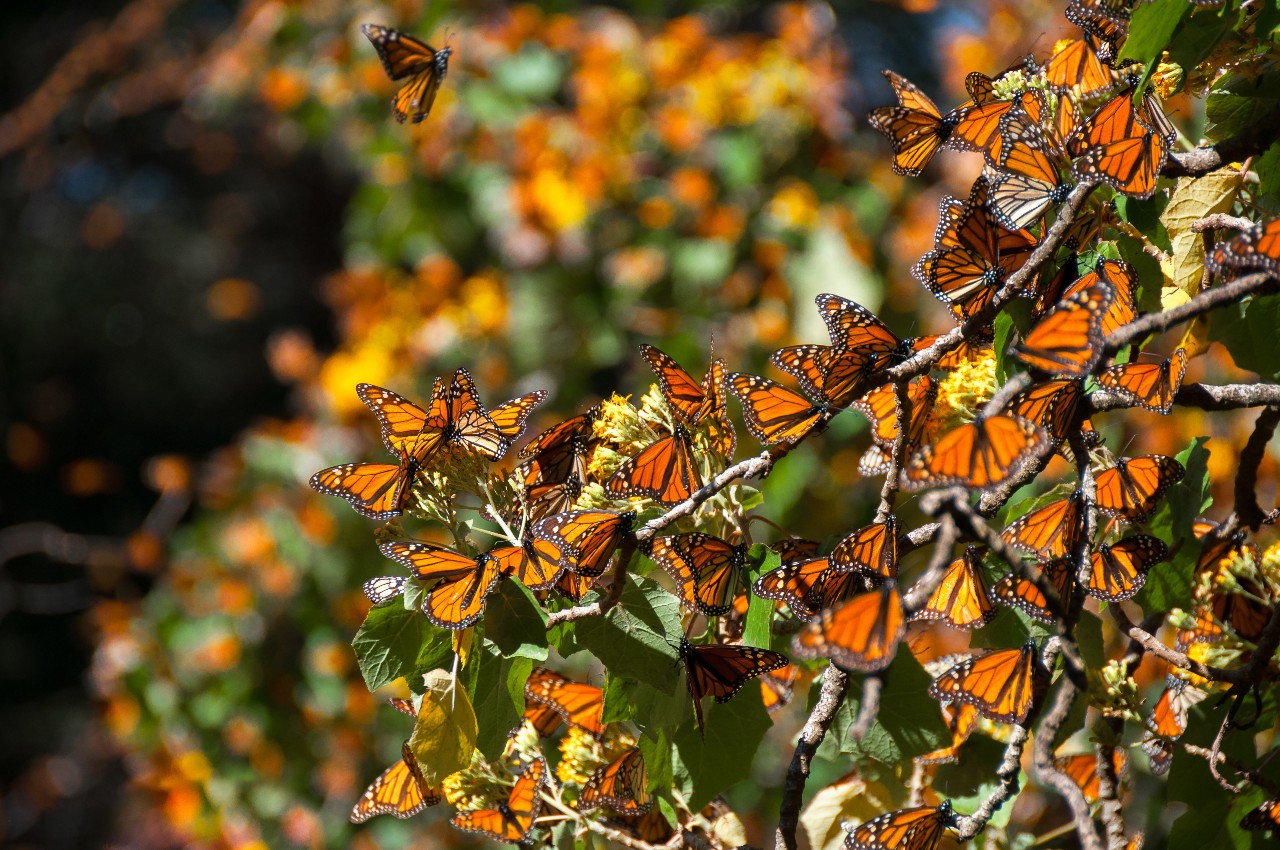
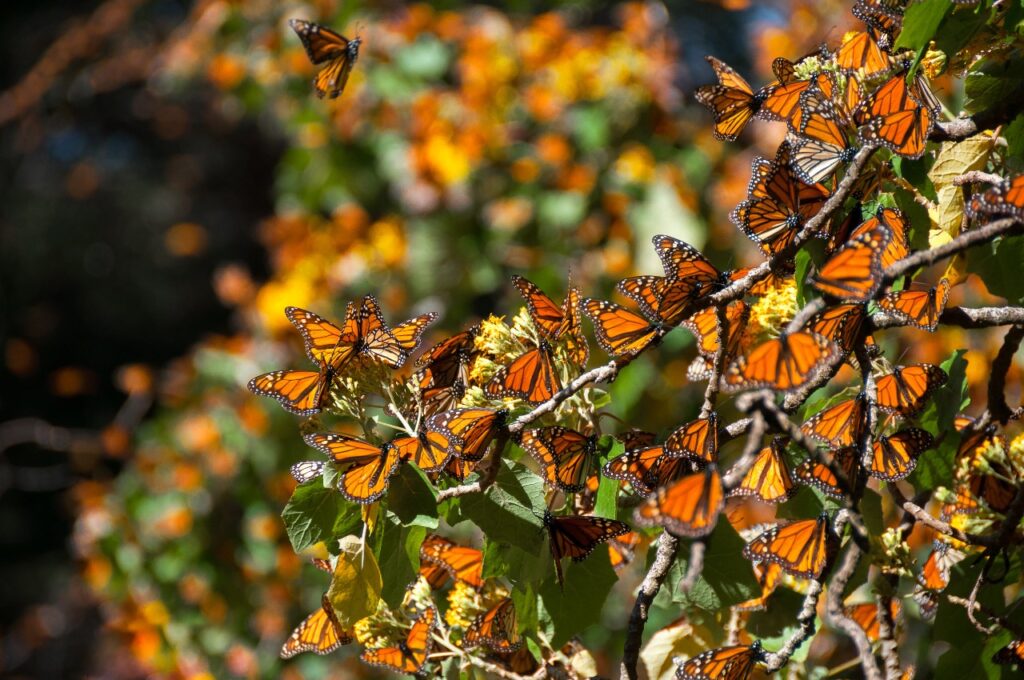
The monarchs are back! At many places along the California coast, monarch sanctuaries are starting to see butterflies congregating at overwintering sites.
Monarch populations collapsed last year due to record heatwaves and droughts, and numbers are known to fluctuate drastically year to year. According to the Xerces Society, early 2025 population numbers are looking modest compared to previous years, with about 5,000 individuals counted so far across monitored sites.
If you’re hoping to catch a glimpse of this fascinating California phenomenon, consider visiting these monarch butterfly hotspots down the coast.
Where to See Monarch Butterflies in 2025 Santa Cruz
Santa Cruz is beginning to see monarch activity at Natural Bridges State Beach and Lighthouse Field State Beach. Early season counts show about 1,100 butterflies so far at Natural Bridges and just over 900 at Lighthouse Field. The Monarch Grove Trail at Natural Bridges is open for self-guided monarch tours.
🌐 Learn more: Natural Bridges State Beach
Pacific Grove
The Pacific Grove Monarch Butterfly Sanctuary in Monterey receives swathes of monarchs from November to January. Early 2025 numbers have only tallied 63 individuals, but you may see them flying in the afternoons when it’s sunny and warm.
🌐 Learn more: Pacific Grove Museum of Natural History
Pismo State Beach
Pismo Beach in San Luis Obispo is one of the most active monarch butterfly overwintering sites in California. While tens of thousands of monarchs arrived here in 2022 and 2023, the Xerces Society has tracked just over 200 butterflies there so far for the early 2025 season.
🌐 Learn more: Visit Pismo Beach
More overwintering sites
According to the Monarch Program, these (relatively) nearby overwintering sites are usually quite active as well, but be sure to call ahead for the most recent monarch activity.
Sonoma County Marin County Alameda County Monterey County San Luis Obispo County 2025 Monarch Butterfly Season
The Xerces Society for Invertebrate Conservation monitors monarch butterfly populations each year via the Western Monarch Count, with the help of over 100 community scientists.
“Early reports estimate approximately 5,000 monarchs observed so far, though data are still coming in,” they wrote in a recent announcement. “Last year’s early-season count tallied 7,601 butterflies.”
The Western Monarch Count holds three official count windows throughout the winter, the first of which ran from Oct. 18 to Nov. 2, 2025. Data from the count reports is usually published a few weeks after the count period ends, so stay tuned to hear more about the official early-season numbers.
The mid-season Western Monarch Count period runs from Nov. 15 to Dec. 7, and the late-season count runs from Dec. 27 to Jan. 11.
Back in the winter of 2021, butterfly populations experienced a major rebound, with numbers above 335,000 reported at the beginning of 2023. This was a major increase considering the 2020 count was less than 2,000, but numbers are still concerning given that the monarch population was in the millions in the ’80s.
Looking for ways to help these beautiful creatures? Consider getting involved in the Western Monarch Call to Action, which works to protect monarchs and their native habitats all across the state.