
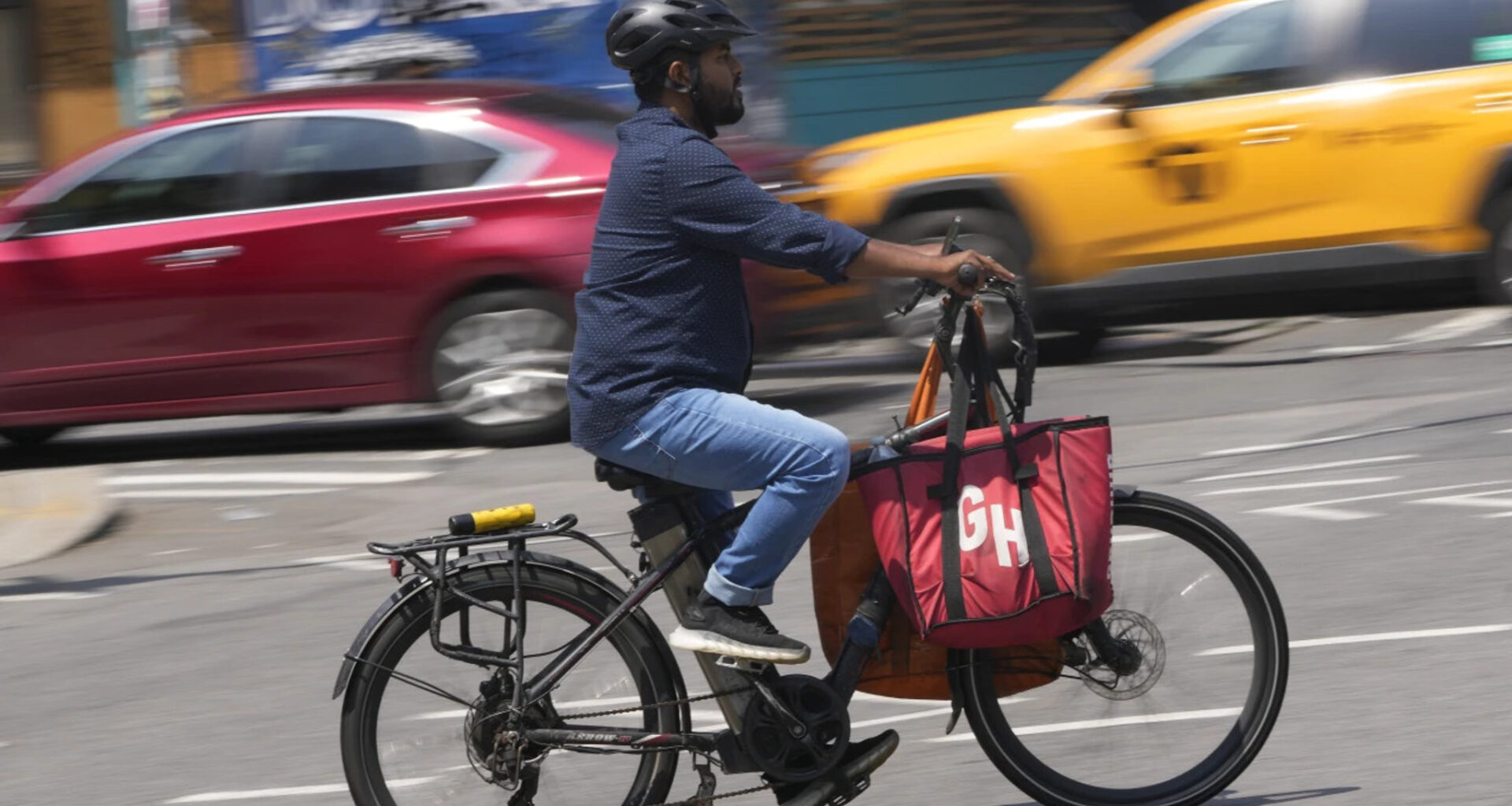
At least 20,000 people are injured and 3,000 hospitalized each year because of e-bikes — numbers the American College of Surgeons said are likely underreported.
To address this and other e-bike issues, a new statewide coalition — the California Independent Electric Mobility Council — launched last month with a grant from Honda to study what makes e-bikes dangerous and how to make them safer without discouraging people from using them.
Safety concerns on trails
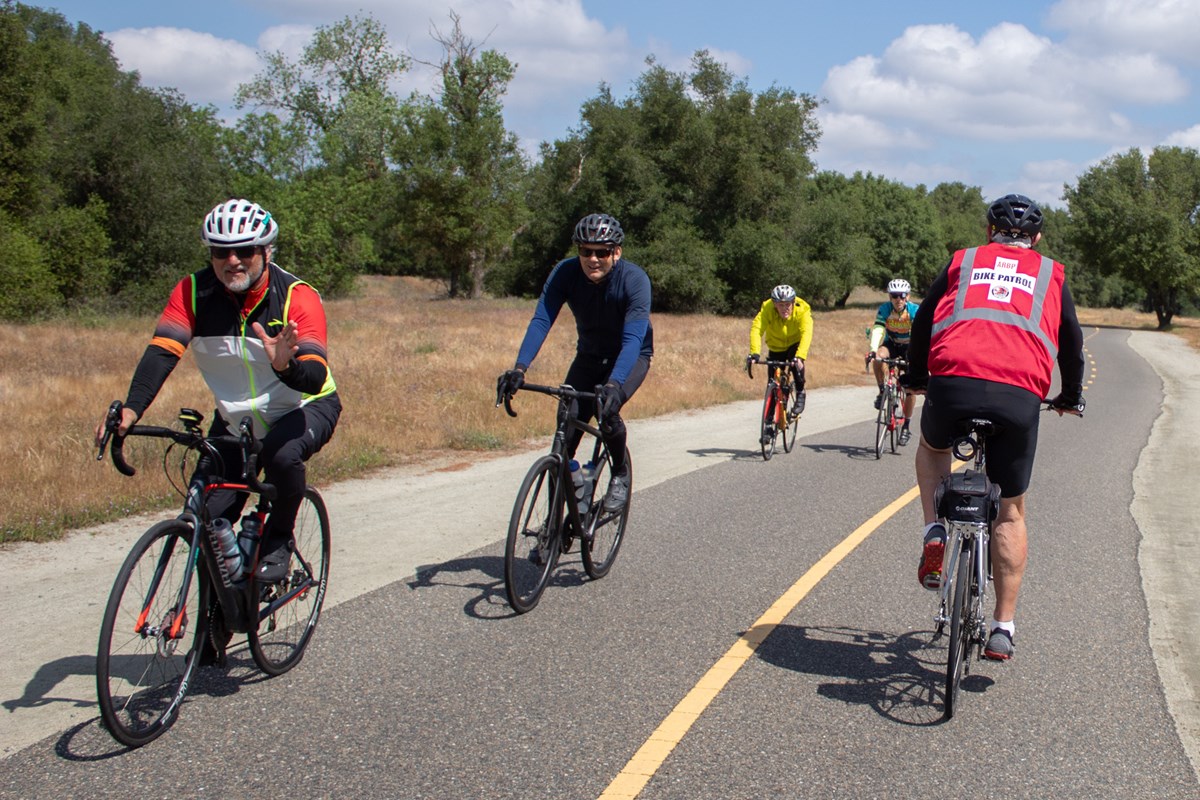 American River Bike Patrol member Rich Fowler passes cyclists during a ride Monday, April 28, 2025, in Rancho Cordova.(Gerardo Zavala/CapRadio)
There’s an urgency to find solutions statewide, including along Sacramento’s American River Parkway, where e-bikes compete for space with walkers and non-electric bicycles. Victor Massenkoff, a spokesperson for the American River Bike Patrol, said e-bikes have made bike trails more dangerous in recent years.
He recalled a recent head-on collision between someone on an electric tricycle and a cyclist on a traditional road bike.
“During the incident, the gentleman on the e-bike even apologized,” Massenkoff said. “He admitted he was going too fast for the turn and couldn’t maneuver it. And that’s where the real problem with the e-bikes lies.”
Massenkoff said the speed and weight of e-bikes make them difficult for inexperienced riders to control, especially on trails shared with pedestrians. Many bikes can reach speeds of up to 28 mph.
“Normally in a car at 10 to 15 mph, that usually results in a fenderbender,” he said. “On a bike, there’s no such thing as a fenderbender. At those speeds in a collision or a loss of control, there’s going to be some amount of injury and damage, but the concern is that the possibility of severe traumatic injury is always possible.”
Hospitals seeing more e-bike injuries
Stephanie Jensen, a spokesperson for the California Emergency Nurses Association and member of the council, said hospitals are seeing more patients injured while riding e-bikes — or by e-bikes.
“I’ve seen fatalities from someone dying from their injuries because they got hit by an e-bike rider,” Jensen said. “It’s not a one-size-fits-all solution. We have to look at this from many lenses.”
The trauma nurse noted that many riders don’t realize most bicycle helmets aren’t built for the speeds e-bikes can reach.
“Most helmets are only rated up to 20 mph and many of these e-bikes can go up to 28 mph,” Jensen said. “One of the issues that we have is that people modify their bikes. They’re clocking some of these bikes 40, 50, 60 mph, which is the same speed as a motorcycle.”
Jensen argued that stronger helmet standards for e-bikes would be a good start in addressing the rise in injuries.
Safety and access
Jared Sanchez, policy director with CalBike and a member of the new council, said e-bikes are an important tool for reducing car trips and expanding access to transportation. He’s concerned about local and state rules around e-bikes that vary widely and could discourage people from buying them.
“There was a bill trying to prohibit e-bikes on boardwalks, which are essentially beach paths or class one trails alongside the ocean that would definitely limit a lot of folks from purchasing an e-bike,” he said. “There’s a variety of different efforts continuing to regulate e-bikes in a way that would prevent use and I don’t think that’s the intention.”
Sanchez said the council will meet six times before releasing recommendations for state and local governments on how to make e-bikes safer.
Follow us for more stories like this
CapRadio provides a trusted source of news because of you. As a nonprofit organization, donations from people like you sustain the journalism that allows us to discover stories that are important to our audience. If you believe in what we do and support our mission, please donate today.