
San Diego officials say two years of ugly budget cuts, fee hikes and controversial haggling among politicians have eliminated a $300 million structural deficit and stabilized city finances moving forward.
The budget for next fiscal year can be balanced without any additional cuts or new revenues – even with paid parking at Balboa Park ending in January and city trash fees shrinking in fiscal 2028 and 2029.
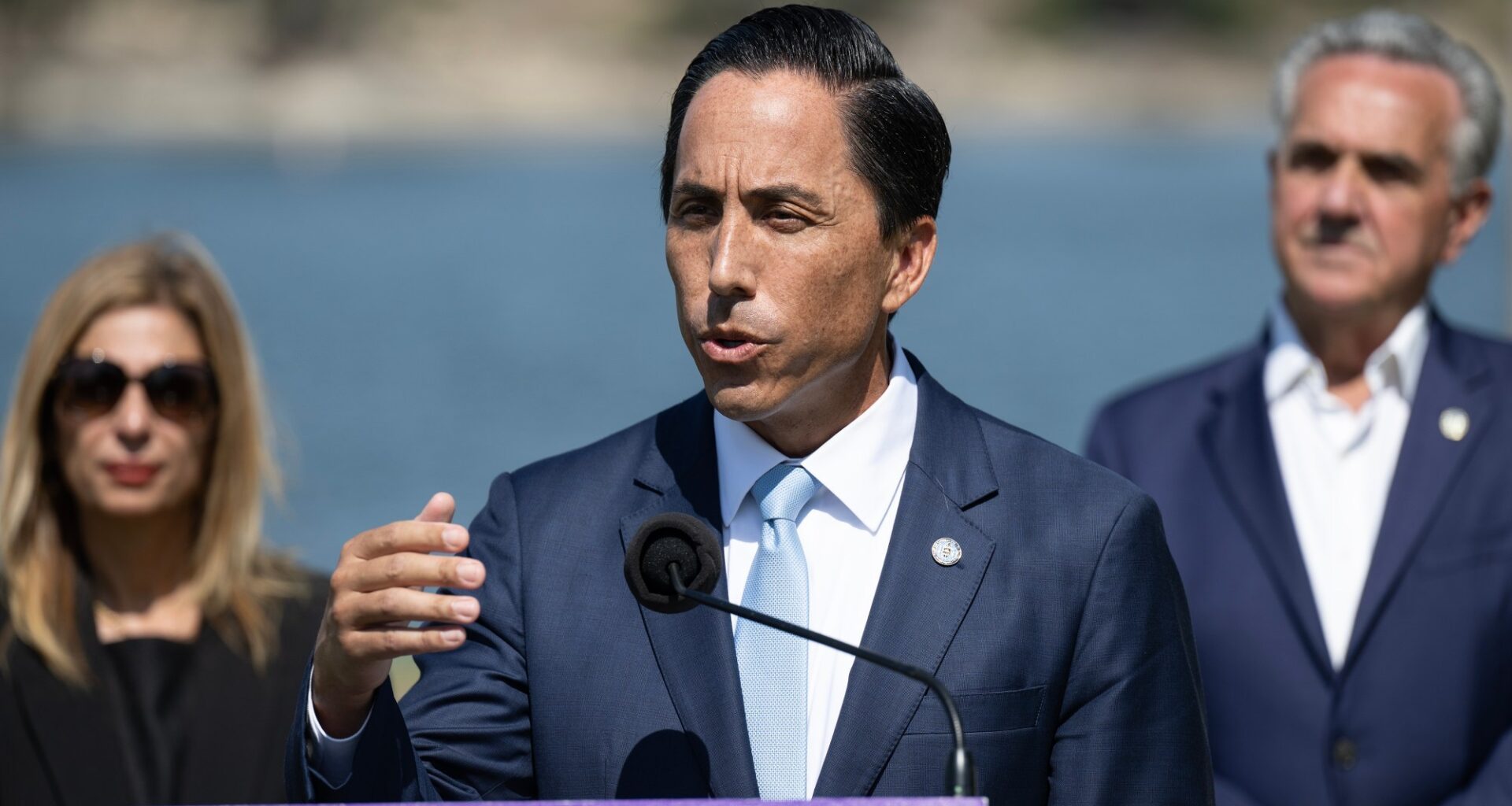
“This is a historic turnaround,” Mayor Todd Gloria said Thursday.
There are some negatives. There’s no money to restore recent cuts to libraries and other cherished services, city reserves will remain many millions below target and a $6.5 billion infrastructure funding gap will keep growing.
But a new five-year analysis of city finances released Friday morning shows dramatic improvement compared to what similar studies found in fall 2023, fall 2024 and fall 2025.
A $1 million surplus is projected during the fiscal year that starts next July and relatively small deficits are projected the next four years: $27.4 million in fiscal 2029, $29.6 million in fiscal 2030, $48.3 million in fiscal 2031 and $62.1 million in fiscal 2032.
The combined deficits San Diego faces from fiscal year 2028 through 2032 is $166.4 million – far less than the $538.4 million five-year total last fall and miles below the $1.32 billion in fall 2024 and the $1.07 billion in fall 2023.
The mayor said this five-year outlook is far healthier than any previous outlook in at least a decade. He stressed that the city will start “in the black” and will then face small deficits that pale in comparison to annual gaps of well over $100 million the city had to close last year and the year before.
The key has been the painful effort to eliminate a roughly $300 million structural deficit – the difference between the city’s ongoing, long-term revenues and its ongoing, long-term expenses.
Officials say San Diego’s structural deficit was hidden in recent years by $550 million in federal pandemic aid and other temporary funding and financial gimmicks.
Gloria announced three years ago that he would incrementally eliminate it – and this week he’s declaring victory. He said such problems usually get solved by an economic surge boosting tax revenues, but not in this case.
“The economy didn’t bail us out,” the mayor said. “It was our hard decisions.”
City finance officials say the structural deficit was wiped out with $180 million in cuts, $80 million from being able to start charging for trash service and $63 million combined from a hotel tax hike and an opioid settlement.
Other key factors have been reductions in the city’s annual pension payment, concessions from city labor unions and an economy strong enough for officials to project steady increases in property taxes, sales taxes and hotel taxes.
The pension payment will go down at least $11 million because of a new analysis showing city retirees are not living as long as previous estimates. But city officials are estimating it will go down millions more because of strong stock market performance last spring.
The annual pension payment is based on how the stock market performs during the previous fiscal year, which ended June 30.
Another boost comes from city labor unions agreeing to new contracts this year that include no pay raises during fiscal 2027 – and in some cases fiscal 2028.
And the five-year outlook predicts property tax revenue will rise from $880 million in fiscal 2027 to $1.1 billion in fiscal 2032, sales tax will increase from $391 million to $456 million over that period, and hotel tax will rise from $173 million to $197 million.
While those projections may seem rosy to some, city finance officials stress that they are smaller increases than the city has seen historically.
Sales tax typically grows roughly 3.4% per year, but the outlook predicts increases of 1.6% during the first two years and 3% during the final three years.
Hotel tax growth was roughly 6% per year before the pandemic, but the outlook predicts it will be similar to recent years with hikes ranging from 2.2% to 2.8%.
The only reason the outlook includes any projected deficits is because the city’s aging infrastructure is requiring more frequent and expensive emergency repairs to things like storm drains and pipes.
The outlook projects an increase in debt payments for bonds the city will likely sell to finance such work.
The outlook includes other financial challenges, such as the possibility the city will have to spend $5 million on two stand-alone special elections to replace Councilmember Marni von Wilpert, who was elected to the U.S. Congress this week.
The county Registrar of Voters predicts the first election to replace von Wilpert early next year will cost $2.5 million. If no candidate gets more than 50% of the vote, a runoff costing another $2.5 million would be needed.
The city’s $203 million reserve fund is also badly in need of a major boost. The city’s own reserve policy says the rainy-day fund should be $362 million – 16.67% of the city’s annual budget, instead of just under 11%.
The city has essentially made no contributions to its reserves since the pandemic, and for the first time in many years spent $4 million in reserves to balance the budget for the fiscal year that ended June 30.
City officials say they plan to immediately replenish that money when some state reimbursements come in. And finance officials will bring a new reserve policy to the council in coming weeks.
The new policy will recommend that any one-time money, such as insurance payments or budget surpluses, be dedicated to reserves. But the policy will likely veer from the 16.67% goal, which is a best practice recommended by the Government Finance Officers Association.
A recession would make the city’s relatively low reserve levels a problem because a recession would sharply reduce sales tax and hotel tax revenue.
The mayor said city officials have faced a tough choice in recent years between contributing to reserves and needing to make even deeper budget cuts, or leaving the reserves alone and making softer cuts.
On potentially restoring cuts made in recent years, Gloria said that will likely take a stronger economy.
The five-year outlook predicts the City Council will again override a policy requiring a portion of revenue increases be contributed to the city’s infrastructure fund. The outlook predicts a contribution to the fund only during fiscal 2032.
But the outlook predicts the council will not continue to waive the annual contribution to the climate equity fund, which helps fund projects in low-income area that help communities cope with climate change.
The outlook predicts city spending on homelessness will remain steady at about $100 million per year.
Arts funding is iffy. The city cut its contribution from $12 million to $6 million and the gap was covered by $3 million each from the county and the nonprofit Prebys Foundation. The outlook says the city will continue to spend $6 million, but its uncertain whether those outside contributions will continue in future years.
The city must subsidize trash service just over $12 million per year in both fiscal 2028 and fiscal 2029 because of a settlement last spring. But the outlook predicts no subsidies in subsequent years, indicating the city expects to complete a new analysis of its trash costs and then increase fees accordingly.