
Nithya Raman. Marissa Roy. Angela Gonzales-Torres.
What do those three names have in common?
They all won, or appear likely to win, their respective races for Los Angeles mayor, L.A. city attorney and an L.A.-area congressional seat.
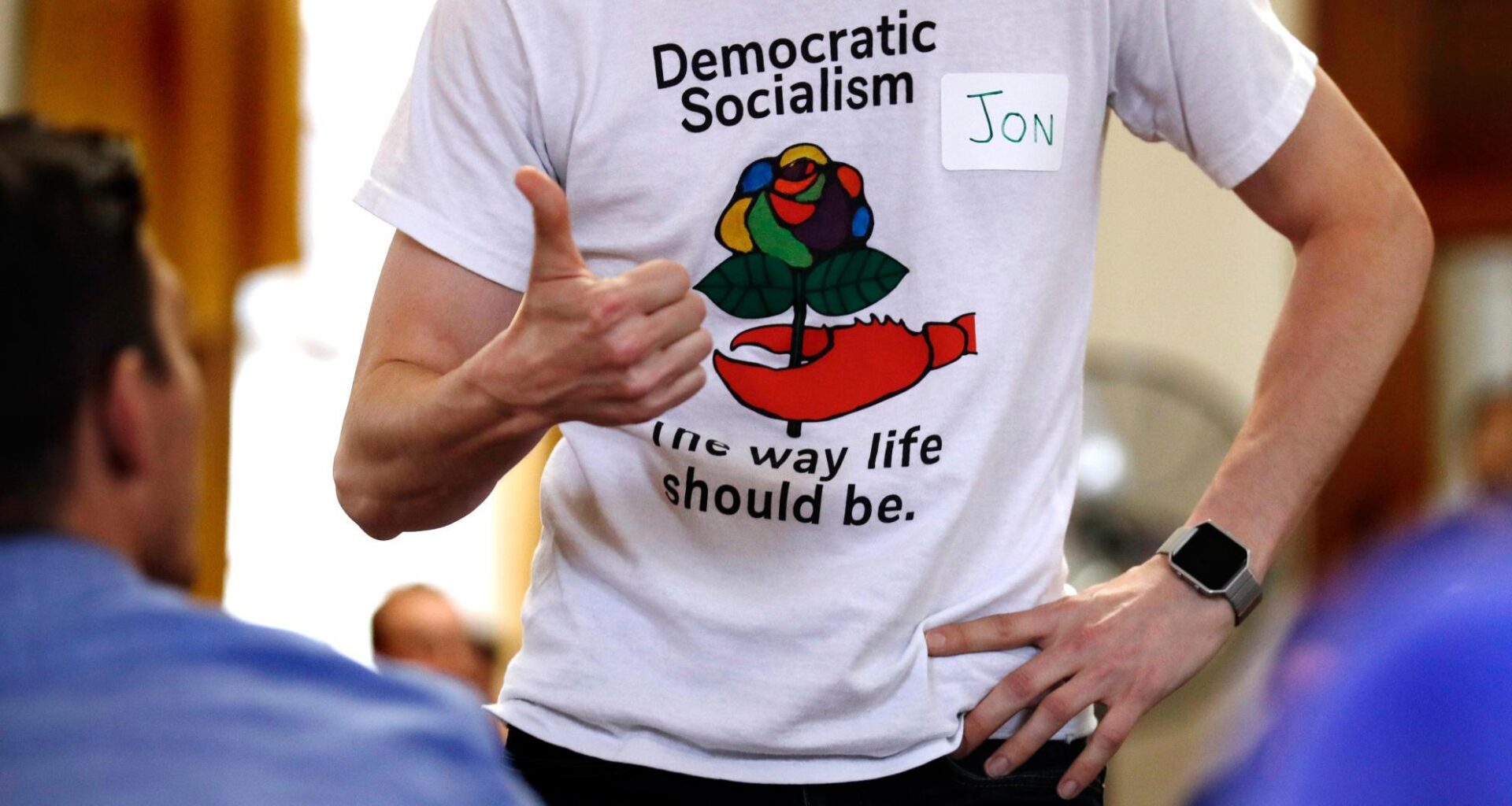
And they’re all democratic socialists.
Much has been said about a “blue wave” during these midterm elections as Democratic candidates notched a number of wins across the country.
But is there also a progressive wave taking hold?
There may be a bit of that playing out – at least in the nation’s second most populous city – though local political experts were careful not to make overly broad statements about the rest of the state or nation, and some downplayed the role of any one group, such as the Democratic Socialists of America.
Democrats, in general, won many seats this election cycle, but across the country, progressive candidates did not win at any greater rate than moderate or mainstream Democrats, said Christian Grose, a political science professor and director of the USC Democracy and Fair Elections Lab.
That said, looking at elections going back several years, Grose said the city of L.A. may be an outlier.
Since Raman’s first election to the City Council in 2020, three more DSA-backed candidates have won seats on the L.A. council, as has progressive City Controller Kenneth Mejia and now presumably Roy, who appears poised to win this week’s L.A. city attorney’s race.
“In places like L.A., we are seeing people who are DSA or DSA-affiliated winning. That historically hasn’t always been the case. … The city, I think, is moving in a direction that’s more progressive than we’ve had in a while,” Grose said.
“I do think there’s a bit of a (progressive) wave in L.A. – a wave within a wave,” Grose added, though he couched his remarks by noting that a strong showing for progressive candidates in L.A. is, for now, still isolated to certain pockets within the city.
In the mayoral race, for example, Raman fared much better in the eastern and central parts of the city, where many renters and young people live, while current L.A. Mayor Karen Bass had more support in South L.A. and western San Fernando Valley, Grose said.
Jorge Flores, a Los Angeles-based public affairs consultant who used to work on Democratic campaigns, also was not ready to declare an outright progressive wave.
Although there are examples in L.A. County of progressive candidates performing well in this election, there were also races where more moderate Democrats appeared on track to beat opponents that ran to the left of them, he countered.
He cited as an example the state Senate District 26 race, where Sara Hernandez was ahead of Sarah Rascón by about 9 percentage points as of Friday afternoon, Nov. 6. Both Hernandez and Rascón are Democrats, but the latter was recommended by DSA’s local chapter.
“Whether you have a DSA moniker on you or are just a progressive candidate or a moderate candidate, voters are looking for candidates they can trust and those candidates who have the experience to deliver whatever it is voters are looking for,” Flores said.
“The candidates that won, I think, have clearly delivered that message to voters that ‘I understand where your needs are and I can deliver,’” he said.
Fernando Guerra, founding director of Loyola Marymount University’s Center for the Study of Los Angeles, said the success of DSA-backed candidates across Southern California points to a broader political shift and DSA’s growing influence in California politics.
“This solidifies the idea and the fact that the DSA is a factor, No. 1, and that DSA has the potential to become an even more powerful group in the foreseeable future,” he said.
Guerra added, though, that the latest election results don’t necessarily mean voters have embraced DSA’s specific policy proposals. Rather, he said, the appeal of DSA-backed candidates lies partly in their ability to present themselves as alternatives to the political establishment.
“It’s almost like, ‘we don’t care, but they’re not the establishment,’” Guerra said of voters’ attitudes. “Because what the establishment has done in the last decade or so is not working.”
Progressives are indeed having a moment in politics, said Chris Zepeda-Millán, a public policy professor at UCLA with expertise in racial and ethnic politics, political activism and social movements. But today’s progressive candidates are focused on issues different than those of the past, he said.
Unlike the progressive movement of the 1990s, which was more about identity politics based on race or sexual orientation, for instance, today’s progressive movement is focused on economic inequalities and everyday bread-and-butter issues, Zepeda-Millán said.
“People like (CA-34 Rep.) Jimmy Gomez, Karen Bass, who came out of the L.A. Democratic machine. … They were challenged within (their party) by people who put working-class issues front and center,” he said.
“There is definitely a moment of progressivism, but it’s a class-based progressivism,” he added.
And in the cases of Bass and Gomez, other factors may have contributed to their losses. Bass took a major political hit due to fallout stemming from her handling of last year’s deadly Palisades fire, while Gomez is facing allegations of sexual misconduct, a claim which he’s denied.
Whether these issues tipped the scale in their opponent’s favor is anyone’s guess, but experts note there were multiple factors at play.
One of his biggest takeaways from Tuesday’s election was the strong support younger voters showed for progressive candidates, said former L.A. City Councilmember Mike Bonin, who is now executive director of the Pat Brown Institute for Public Affairs.
Renters are also becoming a bigger force in Los Angeles politics, particularly as younger residents struggle with housing costs and the prospect of ever owning a home, Bonin said. Progressive candidates, he said, have been more focused on issues affecting those voters, including affordable housing, wages and public transportation.
“One of the things we’ve seen, particularly in Los Angeles, is since 2020 – not coincidentally, since the election of Nithya Raman (to the City Council) – renters have really become more of a force in Los Angeles politics,” Bonin said.
But he cautioned against reading the results as simply a sign of DSA’s growing influence.
“A lot of people in the media tend to overemphasize the DSA thing, when DSA is only one part of what in Southern California has become a growing and more influential….progressive electoral infrastructure,” he said, pointing to groups such as Working Families Party and LA Forward, which also works to advance progressive candidates.
Grose, the USC professor, believes the successes progressive candidates have seen in this year’s elections are partly attributable simply to voter dissatisfaction with the current state of affairs and said if progressive Democrats fail to deliver results in this next term, the pendulum could swing back in future elections.
“Voters are incredibly unhappy with the Republican Party and are not that enthusiastic about Democrats or progressives but are willing to give them a chance,” Grose said about this year’s election.
“There is a progressive shift in some election outcomes, but I don’t know how voters will respond to progressives in the next four years.”