
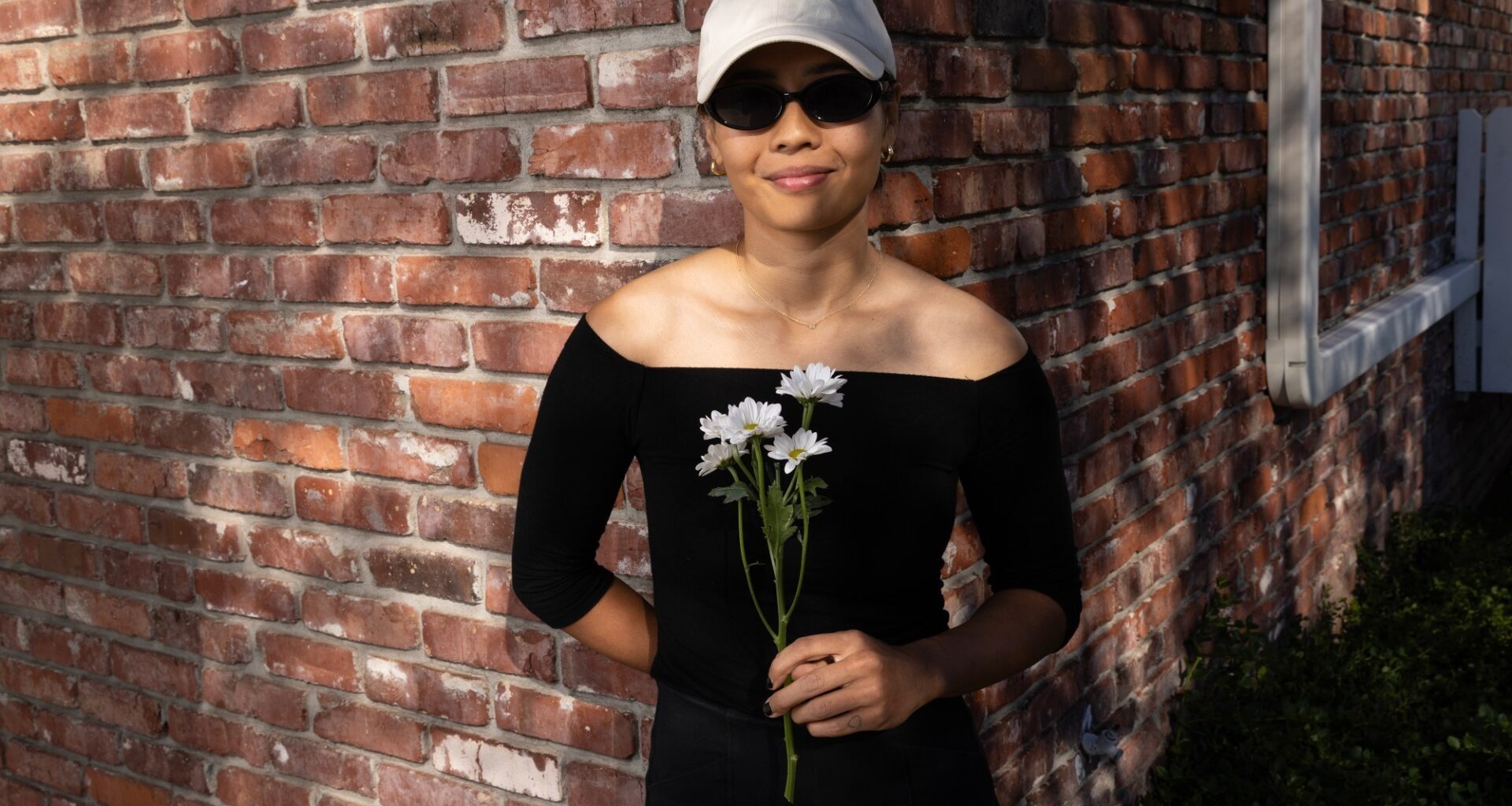
Kali’s mother told her the stories about what she’d seen and lived in Myanmar — the military junta burning the homes of ethnic minority groups, hiding friends from those minority groups in her family’s basement until they could safely leave the country, seeing people die in front of her during peaceful protests that were met with government violence.
Years later, as an adult, Kali (a pseudonym the filmmaker uses for the safety and security of herself and her family) would travel to Myanmar to share the story of strength and hope in her native land, of those fighting in the country’s resistance movement.
“I was inspired just witnessing people from all over my country coming together and fighting for our freedom, for our democracy, and just seeing how powerful it can be when people work collectively; when we stand up for each other and we stand up together, what we can achieve. If you look at what’s happening in Myanmar, we’re up against this violent and brutal military dictatorship,” she says. “And all we have is each other. But, here we are, five years after the attempted military coup, and they haven’t succeeded at taking control of the entire country. So, yeah, that’s what inspired me.”
It inspired her to make the film “We Bloom in Spring,” a documentary short following the women of the Myanmar resistance. The 18-minute film features a soldier in the movement, a humanitarian aid worker and a medic, and is being screened Saturday in the Emerging Filmmakers – Advanced segment of the ShortsFest Exhibition at the Coronado Island Film Festival; Sunday in the All Eyes on Her – Shorts Program of San Diego Film Week; and Monday during the San Diego Asian Film Festival.
“The military dictatorship is very restrictive on a lot of journalists and activists and artists that cover what’s happening in Myanmar. We’re targeted, often, because that’s the only way the rest of the world can know what’s happening there, so they do often target the people who are shedding light on what’s happening,” she says of using the pseudonym and withholding certain details about herself that may lead to revealing her identity and that of her family members still living in Myanmar. “And, target their families, as well, with imprisonment, torture. They’ve killed several activists who are still residing in the country.”
Kali, who lives in San Diego, does freelance documentary filmmaking and previously directed an award-winning short about a Ukrainian refugee. She took some time to talk about shooting on location in Myanmar — avoiding active land mines, the nonstop sounds of explosions and weapons firing — and using her skills to share a story of resistance, hope and love.
Q: What was your familiarity with the women of this resistance movement before making “We Bloom in Spring”?
A: I was following, very closely, everything that was happening from the military coup that happened in 2021 and following the resistance movement that started to grow. I saw a lot of women at the forefront, and these are not new activists; some have been activists for a long time, at the forefront. I knew that I wanted to tell the story of what’s happening in the country, so why not tell it through the lens of women, as a lot of them have been at the forefront. When we look at history books and these revolutionary movements, you don’t usually see women, we don’t hear about them although they are often there, contributing. I didn’t want it to be focused on the fact that they’re women, but I wanted it to be through the lens of women at the forefront because they were playing such a pivotal role in this movement.
What I love about San Diego…
I love a lot of things. I love that the weather is mostly perfect, and I just love how many outdoor activities they are to do here and the culture is also very outdoorsy. I see a lot of people out and about, lots of rollerblading, biking, beach volleyball, which I love to play, as well. I love that there’s just that ability to be in nature all the time with good weather and doing healthy activities like that. And it’s mostly free. These are also mostly free activities, so that’s amazing.
Q: Can you talk about where you were in 2021, the year of the military coup in Myanmar? What you were seeing, and how that influenced your pursuit of documentary filmmaking?
A: I can say that, generally, the region I was in was Southeast Asia at the time. I’ve heard of these stories, but to be witnessing it; in this generation, there’s phone images and videos of all of the violence and brutality that’s happening from the hands of the military at these peaceful protests. The protesters, they’re not armed at all, and just seeing that every day on my screen, and then seeing the results of that with people having to leave the country and hide in other countries; I met some of these people and hearing these stories, I was just stunned and it was traumatizing to see that, and painful to see that happen, to see the unfairness and that nothing was being done about it. After that, I felt very inspired by how people reacted to it. They kept fighting back, they weren’t scared, they didn’t back down. In the past, peaceful protests happened, bloody retaliation from the military, and people stop. But, this is the first time where people were not scared enough to stop, so I was very inspired by seeing how people were able to continue. It’s because of the whole country coming together, everyone doing their part in many different ways.
Q: Walk us through some of your process in making this film. How did you get in and out of Myanmar? Who are some of the women featured in the film? How long have you worked on this project, and how much did it cost to produce the film?
A: I started it in 2025 and finished it toward the end of the year. We filmed in Myanmar and we actually had only a week there. In that week, a lot of the time was traveling from location to location because it was very difficult to get around in these war zones, conflict zones, so I actually only had one to two days with each of these subjects to cover it. Ideally, I would have loved to have five days with each of them, but it was both a matter of time and money. It’s also very expensive to fund it. I think it came to something like $13,000. We did a very small budget. (Funding came from) ourselves, our family, and a little bit of help from Women in Film.
To get in and out of Myanmar, we had to go through Thailand. The resistance groups and local people in that area were able to give us safe passage to cross. It was definitely risky to go into the heart of the resistance areas, into the front lines. I’ve never done that before, I’ve only seen it in the movies, so it was very surreal to see something in the movies in front of you. We had to drive through roads that were littered with landmines that were marked with just fallen sticks. We slept just minutes away from the front lines. When we were filming the frontline medic, we were constantly hearing explosions, gunshots. Then, there was the constant threat of aerial attacks, so we would have to hide every time we heard a fighter jet. Despite all of that, we had our safety and security protocols in place, so I felt safety in that, and I also felt safety in the protection of the resistance group that took care of us throughout the trip.
Q: What’s an example of a safety protocol that you all had?
A: We carried a medical kit and I took time to learn how to use all of these tools, like a tourniquet, if there is a gash in your leg or whatever; how to quickly, react medically to all of these situations that could happen. We also studied how landmines are marked because they just put little sticks in a square, so you have to know that so you don’t step on one. And, marking the areas that are more contested and more difficult, so that we didn’t go into those areas. We tried to stay away from the fighting areas, to stay on the outskirts of those areas.
It was just me and my cinematographer. It was a small team and we both carried a camera, we both filmed. We had our three main subjects, the three women. One was a medic on the front lines, one was a soldier on the front lines, and one was a humanitarian aid worker, so she was providing aid to displaced people.
Q: When you first started, how did you picture the story unfolding? Was there an outline or storyboard process?
A: I knew from the get-go that I wanted to highlight different forms of resistance work because that was the main thing that first inspired me, was seeing a whole country come together and do their part, and what that can achieve. Even though three main characters in a short is ambitious and not recommended, I wanted to do that because our movement wouldn’t be where it is today without every single person doing this. So, I had that clear vision in mind, but I wasn’t actually able to find two of my subjects until I reached Myanmar. It’s very difficult to interview and locate people during a war, so I went in there with a very clear vision of different types of activism and resistance work I wanted to cover, and then I just had to go in there and hope to find people willing to let me in.
Q: How did the final version align or deviate from your initial imaginings? Was there anything that surprised you about the way this film took shape?
A: Oh, that’s a good question. I thought about that because, in a documentary, it does take form in different ways throughout the whole process. I didn’t know who I would actually find. I was very surprised with the soldier, that was one of my main characters. She was training new recruits at the time when I filmed, so I saw these young girls who could be my little sisters. They were, like, 17 years old and seeing these young girls’ faces, I got really emotional standing there in front of them I could see that their lives could be so different if this didn’t happen.
Q: Can you talk a bit about some of the women who appear in the film? Who are they? The reasons they gave for joining in resistance work?
A: The humanitarian aid worker, she’s about 36. Her reason was that she was an internally displaced person. We have about 4 million internally displaced people, right now, in the country due to the fighting and the military junta (according to the United Nations High Commissioner for Refugees operational data portal). She was displaced as a young girl, at about 9 or 10 years old, and she has been displaced ever since. She still currently lives in an IDP camp, which is Internally Displaced Person camp. So, for that reason, she wanted to help other people in her same situation, so she joined the Karen Women’s Organization, which delivers aid, they educate young girls, and provide safety and security for other internally displaced people.
Then, the medic, she’s 21 and she was 19 when she joined. She was actually just getting ready to go to university when the military coup happened. She decided instead that she would join a resistance group to fight for their future. Her, the soldier, their families, were very scared for them to join the resistance and try to fight for freedom because it’s very dangerous, but they followed their hearts. I remember them saying that the main thing that gets them through each day is just their love for their people and their home. The soldier and the medic both worked for KNDF (Karenni Nationalities Defense Force) resistance group.
Q: What did you witness about their hope? Where it seems to come from under such violent and oppressive circumstances, and what sustains their hope for victory?
A: That’s another thing that surprised me, was just seeing how, given all of the trauma that they’re experiencing, I would imagine them to maybe have a little bit more hardness to them, but they were so loving and open-hearted, every single person I met. I was really surprised by that, and I think that is what drives them and keeps them fighting, is just that immense love. I think there can be quite a strength in having that kind of love for each other and knowing that you’re in it together for each other and with each other. That feeling of being united, I think, provides enough strength.
Q: What do you hope your film says to audiences?
A: The main takeaway I would love everyone to get from this is just to see the power that we can have when we, as people, unite and come together. Put aside our differences and come together with empathy and understanding for each other. We can really achieve, and I believe that we can also dismantle the most evil entities out there, wherever you are in the world.
Q: What does it mean to you to have your film included in these festivals?
A: It means a lot every time anybody resonates with this film. It means a lot to share our story when the dictatorship wants to silence us. It means a lot to me to be able to do that, and to be able to get the story out there. For me, I feel like this is what I can do with my skill set to support our fight.
Q: What is the best advice you’ve ever received?
A: I’m gonna say Maya Angelo’s quote about love, love liberates you (“I am grateful to have been loved and to be loved now and to be able to love, because that liberates. Love liberates. It doesn’t just hold — that’s ego. Love liberates. It doesn’t bind. Love says, ‘I love you. I love you if you’re in China. I love you if you’re across town. I love you if you’re in Harlem. I love you. I would like to be near you. I’d like to have your arms around me. I’d like to hear your voice in my ear. But that’s not possible now, so I love you. Go.’”). When you love yourself, you can liberate yourself from certain negative perspectives and experiences, and having love for others can also help you overcome.
Q: What is one thing people would be surprised to find out about you?
A: That I wish I was a professional soccer player. That would have been another path I would have loved.
Q: Please describe your ideal San Diego weekend.
A: I would go to the beach, play some beach volleyball, take my dog to the little dog beach over there. Maybe a nice little hike if the weather’s good.
To suggest a San Diegan for the One-on-One series, contact Lisa Deaderick at lisa.deaderick@sduniontribune.com.