
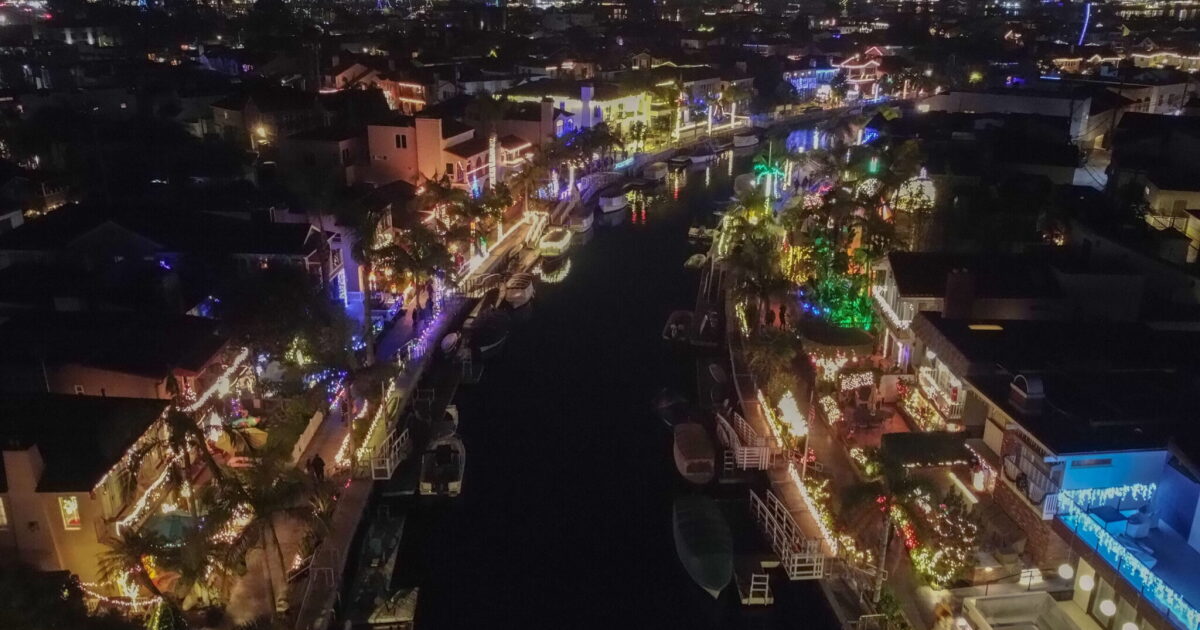
Expect silent nights in Naples’ channels this holiday season.
The Naples Improvement Association announced Saturday that this year’s Naples Island Holiday Boat Parade, a Long Beach tradition since 1946, has been canceled because of expected high tides and heavy surf that organizers said would make the event too unsafe for visitors and participants.
It’s the first time in six years — since the onset of the COVID pandemic — that the parade has been canceled. What began as a small procession of decorated barges filled with singing church choirs has grown into an institution in Long Beach with more than 100 entries, from Duffys to dragon boats, and 60,000 spectators.
Ben Fisher, the association president, said the decision came after weeks of deliberations and a 600-respondent poll that found most wanted the parade — and all holiday events in Naples — to be canceled this year.
Forecasters expect a powerful El Niño season that will raise tides 6 to 18 inches above typical levels. This is paired with a series of slow, very wide swells of warm water known as Kelvin waves expected to frequent Long Beach’s southern-facing coast this winter.
During the week of Christmas, tides are expected to reach 7.5 to 8.5 feet, with the highest forecast to arrive in the mornings and peaking around Christmas Eve.
Part of the decision was also tied to ongoing frustrations with the city, which Fisher said has failed to address the island’s deteriorating infrastructure, from its aging seawall to underperforming drainage systems, that make it “too unsafe to draw tens of thousands of people to visit Naples this holiday season.”
“The city has told us to sandbag everything (public and private property); docks and gangways are being dismantled and sawed off however each individual owner sees fit; and the seawalls themselves are crumbling with exposed, rusted and sharp rebar in many places along the canals where many families normally would sit on any given holiday evening,” Mr. Fisher wrote.
For decades, the seawall has shielded multimillion-dollar homes and fortified the man-made canal that loops around the island. The city evaluated the structure in 2009 and found it in significant disrepair. A six-phase repair plan is underway, but only two phases are complete.
City officials have said they need $125 million to finish replacing the aging seawall, and they have halted reconstruction amid shrinking oil revenue and an uncertain future for federal disaster aid. Among the options under consideration is a 30-year bond spread across the whole neighborhood that would cost $5,100 per property annually. If limited to homes along the seawalls, it would cost $48,000 per property.
In a statement Saturday, council member Kristina Duggan, whose district includes Naples, said she respected the decision and added that the focus this winter should be on preparing the island for the upcoming weather. While the seawalls are stable under high tidal pressure, she said, maintenance work will “start next week to seal cold joints and help reduce water seepage.”
“We are encouraging everyone to prepare, and we look forward to seeing the Naples Boat Parade return next year,” Duggan wrote.
When high tides arrive, water already spills over the seawalls in some spots, reaching nearly two feet deep, flooding sidewalks and threatening homes. Residents and officials disagree over whether to prioritize coastal protection or recreational amenities.
The money normally spent on the parade will go instead toward pumps, hoses, plugs and generators, Fisher said, “resources our waterways and neighbors desperately need.”
Whether residents decorate their homes this year, he said, is up to them.