
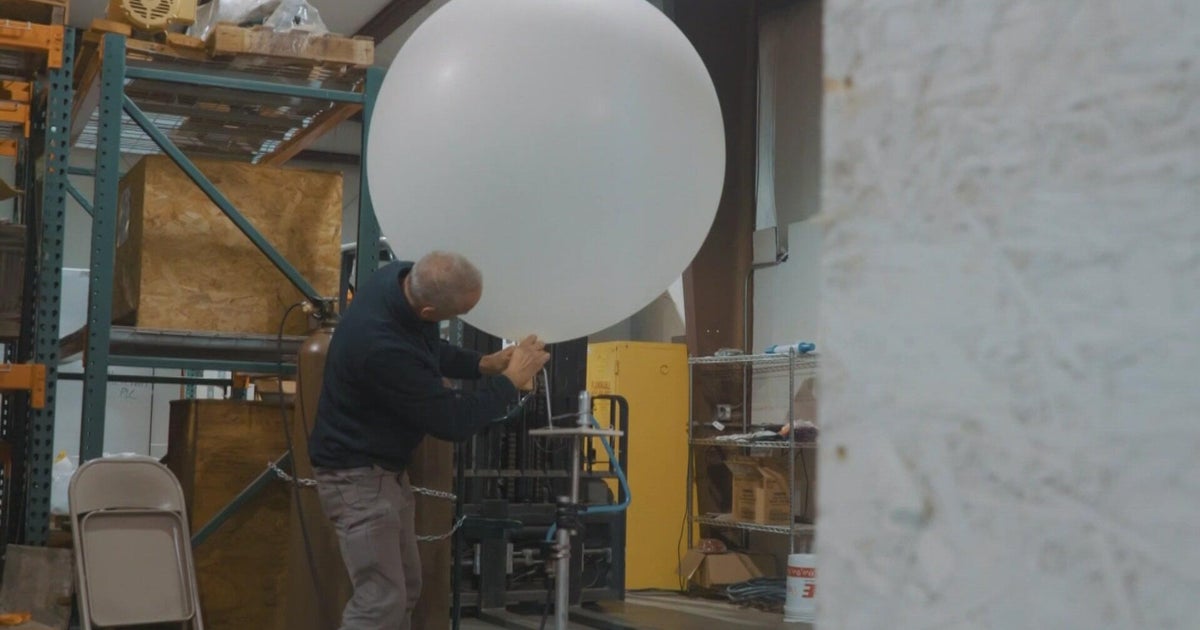
As a storm moves through Northern California, the real work is just beginning for atmospheric river researchers.
“Understanding the storms helps them make the simple decision of do you fill or do you spill,” said Douglas Alden, lead engineer with the Center for Western Weather and Water Extremes, or CW3E.
Winter storm preparations aren’t just done before the weather hits. For atmospheric river researchers, critical work happens during the storm.
Alden traveled from San Diego to Marysville to launch weather balloons and collect real-time data to help guide reservoir operations.
“We’re launching here in Northern California from Bodega Bay and Marysville for this storm,” he said, “the weather balloon launches are a key component of a much larger program called atmospheric river reconnaissance.”
In a place like Yuba County, which is prone to flooding, studying atmospheric rivers is essential. The more we know, the better prepared the county can be when it comes to spillways and flood risk management during the winter.
“We’re working with our partners at Yuba Water, and we look at the forecast information. There’s a whole team of people at CW3E. We work closely with NOAA and the National Weather Service,” Alden said.
The information collected from the weather balloon launches out of Marysville will be added to a worldwide database system.
“Weather models around the world will pick up that information and use it to improve their forecast capabilities,” Alden said.
“There’s a lot we don’t understand about atmospheric rivers, and these balloons allow us to take observations from the surface all the way up to 80,000 feet in the atmosphere,” said Chad Hecht, meteorologist with CW3E.
Atmospheric rivers were only coined in the 90s. Research has gotten stronger over the last decade, but there’s still a lot more to learn, according to Hecht.
“If models don’t currently know what’s happening in the atmosphere, they’re not going to do a good job forecasting in the future. And taking away some of these weather balloon launches could degrade some of the forecast models and not provide as much warning,” Hecht said.
The National Weather Service had to reduce weather balloon launches this year due to federal cuts. While this team isn’t directly affected, they say there can still be a ripple effect when it comes to data.
“Having this data allows us to improve our forecast capability. Not just in the accuracy of the forecast, like where the storm is going, what the intensity is, but it allows us to improve on the lee time,” Alden said.
California gets 50 percent of its water supply from atmospheric rivers.
More from CBS News