
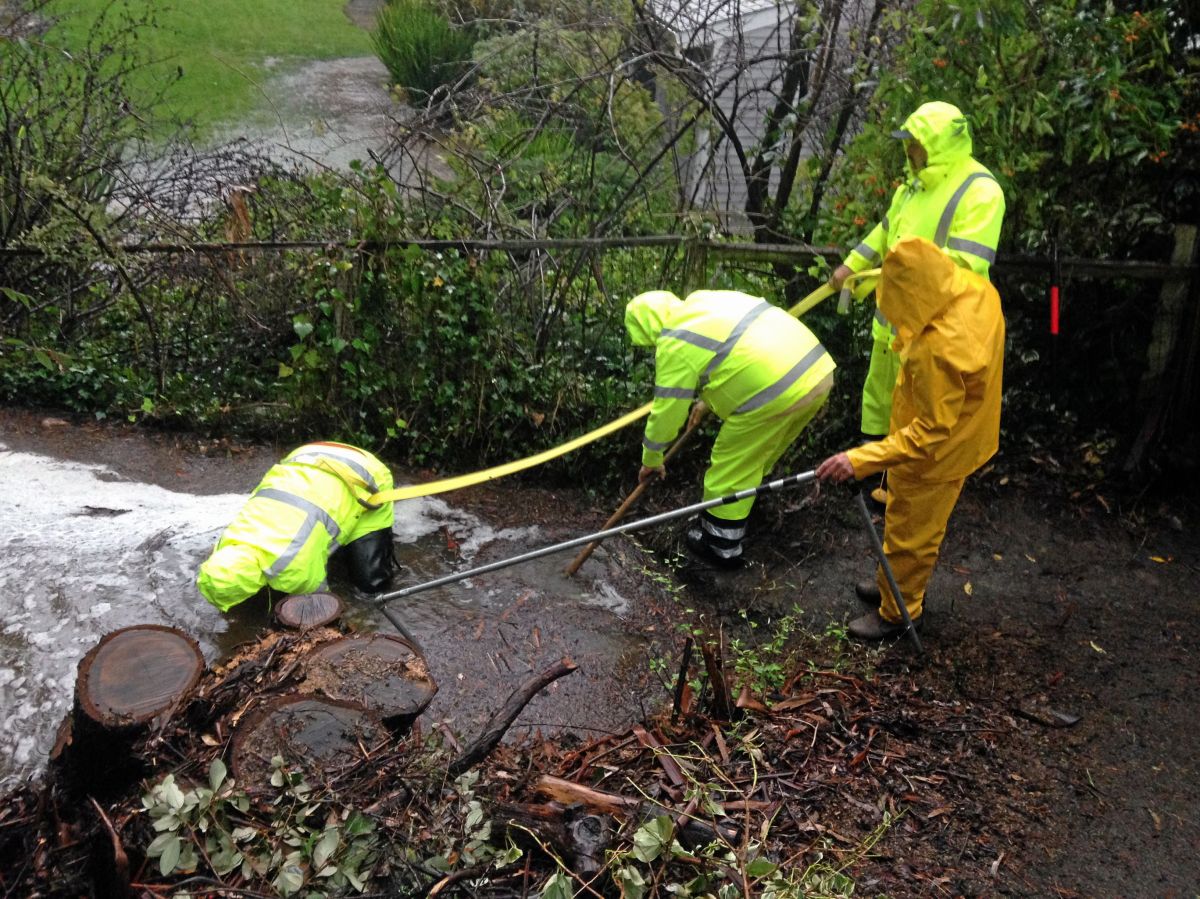
Tiburon plans to launch a pilot program that will partially reimburse private property owners for repairing drainage infrastructure on their properties.
The Town Council unanimously approved the program on Nov. 4 and allocated a maximum of $100,000 for it.
“Private drainage failures become public problems,” said Patrick Kerslake, public works operation manager. “Much of Tiburon was developed before incorporation in 1964. There’s private culverts and pipes that carry runoff across properties and into the public system. The town doesn’t inspect or inventory them, so their condition is usually unknown until they fail.”
Kerslake said that when the systems fail, neighboring properties can flood; public streets and utilities are damaged; sediment enters waterways; public infrastructure like storm drains can become blocked; and emergency costs can rise. Failures can also increase public health and safety risks.
The pilot program will last for 12 months. It will reimburse applicants either 50% of the cost of the project or $25,000, whichever is less. Eligible applicants include property owners, neighbors applying together, neighborhood groups like homeowner associations and common-interest developments.
The eligible projects include certain culverts, drain pipes, catch basins, channels, energy dissipators and other infrastructure approved by the town. Roof, yard and area drains are not included, nor are drains that only affect the applicant, routine maintenance or clearing, and work covered by insurance.
“Each project to be eligible must show a public benefit,” Kerslake said.
Urgent repairs conducted within 90 days of an application might also be eligible for reimbursement through the program if they meet certain requirements.
Kerslake said the staff will track the effects of the program before making a recommendation on whether it should continue. Marin County launched a similar pilot program in 2019 before making it permanent this year.
“I think it is a way not only to help our homeowners agree to fix the things that need to be fixed, but also it really protects our public infrastructure as well because a lot of these issues are going to be a huge issue for the town if they’re not fixed,” said Councilmember Holli Thier.
Councilmember Jack Ryan asked what would happen if one property owner in a larger scale project was unwilling to participate.
Town Attorney Benjamin Stock said the town could implement nuisance abatement code in certain instances, allowing the town to address certain sections of the project if it would affect public health and safety.
“I agree this is a very positive sensible program,” Ryan said. “It would be nice if we could figure out a toolkit or something that would give the residents the ability to sort of come to the right answer quicker.”