
Soon after Dana Williamson re-entered the inner echelons of California’s Democratic power structure in early 2023 — taking over as Gavin Newsom’s chief of staff — she was discussing directing a senior attorney to resolve a state discrimination lawsuit against a former corporate client, according to an indictment unsealed this week.
And when a whistleblower began seeking public records about the Newsom administration’s involvement in that case, Williamson derided the request to her close associate and alleged co-conspirator Alexis Podesta.
“Fuck her,” Podesta said, according to a transcription of the secretly recorded June 2024 conversation included in the indictment against Williamson. “They don’t really know who they are messing with.”
“They really don’t,” Williamson replied. “It’s bad for them.”
Few people in California politics have accumulated as much influence — or as many detractors — as Williamson did while serving multiple governors and cementing herself as a sought-after counselor to campaigns and interest groups in Sacramento. She built a reputation as a ruthlessly effective and at times caustic operator with a penchant for dealmaking and an expertise in wielding power, earning both fear and respect in Sacramento.
“I have faced the wrath of Dana, but I’ve also had the experience with her of getting stuff done,” said former legislative leader Toni Atkins, who worked closely with Williamson. “I’m aware of her reputation, absolutely — but everyone has a different style … Some of it’s a bad rep. She earned some of it.”
It all collapsed this week as federal prosecutors charged Williamson and two others with funneling campaign funds of then-Health Secretary Xavier Becerra to his longtime aide, lying on her taxes about a spree of luxury purchases, and deceiving federal investigators about Covid-19 business relief loans. Becerra was not implicated in the indictment and his spokesperson referred several questions to the former aide. Podesta, Williamson’s associate, has cooperated with prosecutors and has not been charged.
While the indictment largely focused on Williamson’s role in the alleged campaign money theft, the episode involving a former client — which Williamson is accused of lying to the FBI about — is the accusation that most directly touches on on Williamson’s time in the Newsom administration, depicting Williamson using her position and clout to try and influence the outcome of the case. The details, as described in the indictment, suggest it was California’s turbulent lawsuit against the gaming company Activision Blizzard.
While Newsom has not been accused of any wrongdoing, the corruption probe targeting one of his top former aides generated the first series of bad headlines in months for the likely 2028 presidential contender — providing fresh fodder for his conservative detractors and a new set of political vulnerabilities for future Democratic rivals to pick through.
The corruption case ensnaring Williamson and other top operatives stunned Sacramento. But for some, there was a familiar ring to the description of Williamson’s alleged role in the state’s lawsuit: She had acquired a reputation as a bareknuckle political brawler who knew where the levers of power were and had few qualms about using them.
Williamson, whose early political experience included a stint in the Clinton White House, built up a resume of a consummate Sacramento powerbroker. She led public affairs for PG&E, working alongside Nancy McFadden, who then became a top aide to Gov. Jerry Brown. Williamson followed her mentor to Brown’s office, where she helped fashion deals on major climate legislation and ran his ballot measure campaign to roll back certain strict criminal sentencing requirements.
After Brown finished his final term, she made a lucrative jump to the private sector, building a public affairs firm with a client roster that included Fortune 500 companies such as Meta and Comcast, and top California politicians including Rob Bonta, now the state attorney general, and Becerra.
Her decision to return to the Horseshoe, as the governor’s office is colloquially known, surprised some, as she had never been a member of Newsom’s orbit and at the onset of his first term was at times a skeptic. But she quickly assumed the role of his Capitol consigliere.
Newsom’s office said it put Williamson on leave late last year after becoming aware of the case against her and that it has no indication Newsom himself has been a target, despite her attorney’s claim that federal authorities approached Williamson last year to assist with a “pending investigation” involving the governor.
A Newsom representative said the office had no knowledge of Williamson passing information about a state court case to outside entities and added a note of skepticism about a Trump-era Department of Justice prosecution, although the investigation began under President Joe Biden.
“While we are still learning details of the allegations, the Governor expects all public servants to uphold the highest standards of integrity,” spokesperson Izzy Gardon said in a statement. “At a time when the President is openly calling for his Attorney General to investigate his political enemies, it is especially important to honor the American principle of being innocent until proven guilty in a court of law by a jury of one’s peers.”
Prosecutors do not name the corporate client, but the details of the case match a high-profile workplace misconduct lawsuit that California brought against Activision Blizzard in 2021. The gaming giant enlisted Williamson’s firm in the year before she joined Newsom’s staff, according to Williamson’s financial disclosure, and also brought on longtime Sacramento lobbyist Greg Campbell, a close friend of Williamson’s who accepted a plea deal in the case.
Representatives for Activision Blizzard did not respond to several requests for comment.
Williamson, in her first month in the governor’s office, told Podesta — a close friend and mentee who had taken over some of Williamson’s clients — that she’d directed a “high-level government” attorney to move the litigation and “get it settled,” according to the indictment. By the end of that year, California ended its case against Activision Blizzard with a settlement that required the company to pay a $54 million fine without admitting any wrongdoing.
Williamson also boasted to Podesta about an attorney involved in the case getting fired, according to the indictment. While the federal charging documents do not name the person who was seeking public records related to how Williamson and others may have affected the case’s outcome, the timeline and details match the account of a former government lawyer who resigned in protest in 2022, alleging the Newsom administration exerted undue influence over the case and fired another attorney for refusing to go along.
That attorney, Melanie Proctor, left her post months before Williamson joined Newsom’s office; at the time, Williamson was running a private consulting firm whose clients included Becerra and Activision.
Proctor has since posted public records act requests and responsive documents to her social media account that match the timeline in the indictment. They show Williamson met with an Activision representative in early 2024, soon after California resolved the case. An attorney for Proctor and another former state employee who protested what they described in internal emails as interference from the governor’s office declined to comment.
The comments and maneuvers attributed to Williamson in the indictment match a version of Newsom’s former chief that would be familiar to many Sacramento insiders: aggressive, dismissive of her foes, and deeply familiar with how to exert influence in Sacramento.
She frequently sparred with rivals on social media, including a Democratic state lawmaker who refused to vote for a Newsom priority and a labor leader with whom she had a long-running feud. As a deal to neutralize a tough-on-crime ballot measure eluded Williamson last year — a rarity — she lashed out at a negotiator who wouldn’t play ball, telling him in a leaked email that he was “incapable of taking a win.” Stories of hostile, late-night Williamson texts abound in Sacramento.
To her friends and supporters, Williamson was merely doing her job — and doing it well. Robin Swanson, a communications professional whom Williamson mentored, said in an interview that “behind all the bluster is a heart full of compassion for other people.” Steve Maviglio, a consultant who has worked for legislators and governors, said Williamson was often unfairly maligned.
“She has sharp elbows because you need them in that job,” Maviglio said. “You’re saying no more than you’re saying yes, even to the governor, and that rubbed a lot of people the wrong way.”
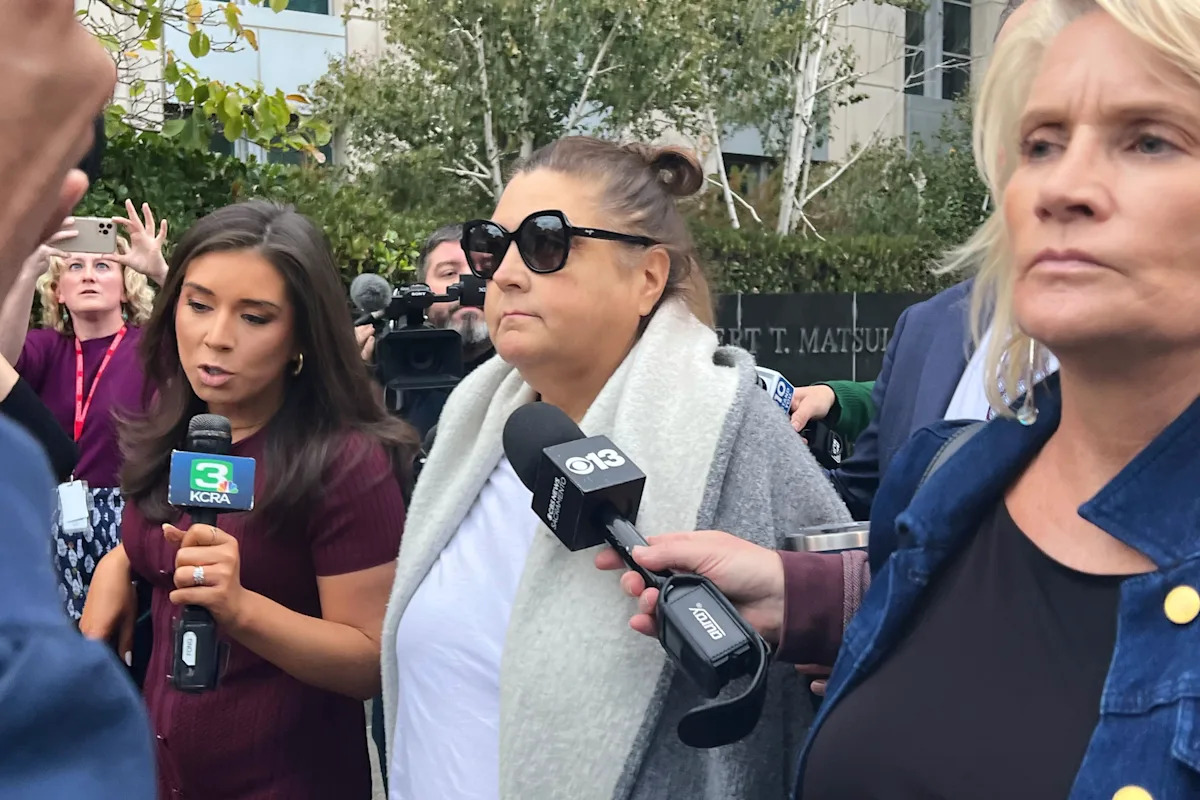
On Wednesday, a diminished Williamson appeared in Sacramento Superior Court to enter a not-guilty plea. Her lawyer, former U.S. Attorney McGregor Scott, later released a statement noting Williamson was awaiting a liver transplant.
“I am as angry today,” Scott said, “as I have been in a very long time.”