
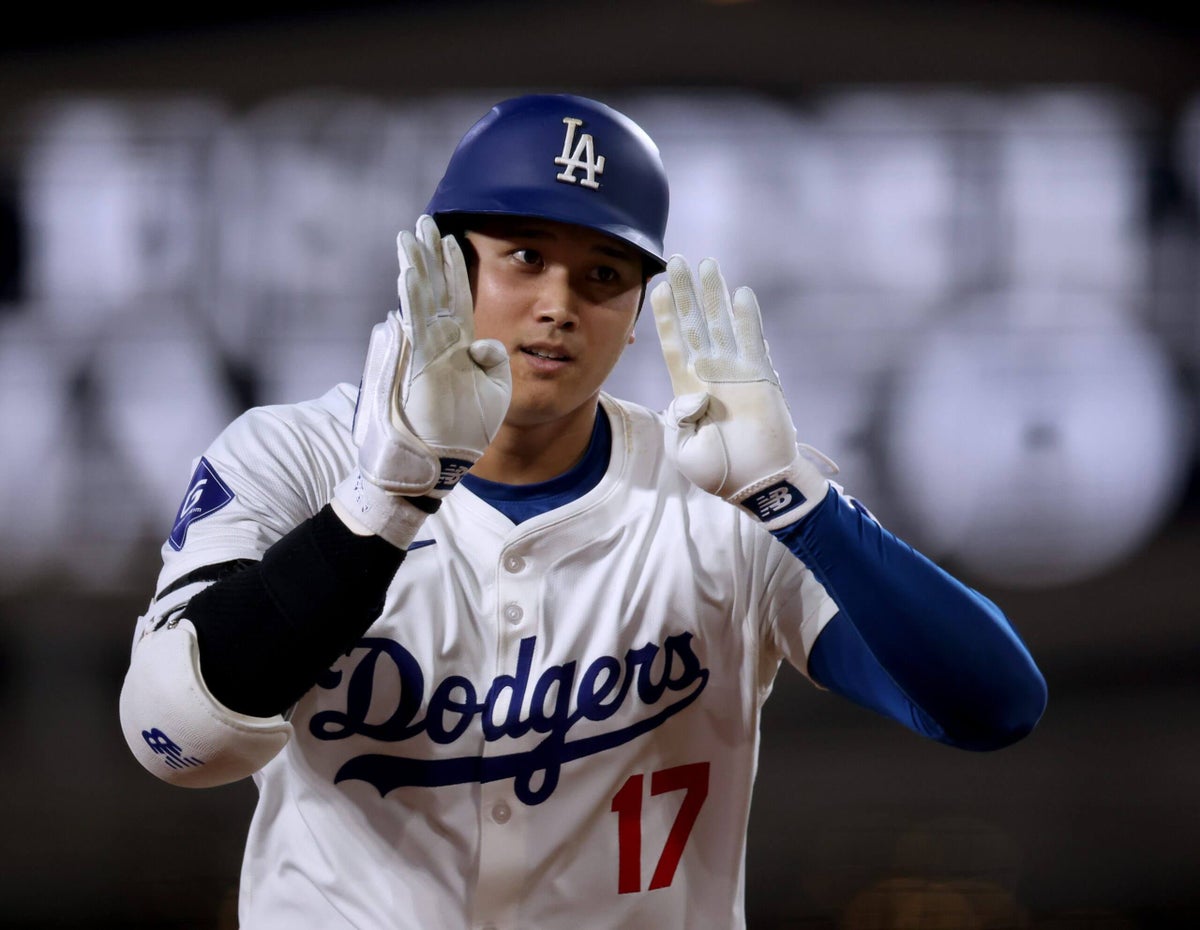
Comprehending what Shohei Ohtani can do on a baseball field is difficult, much less properly celebrating it. The Los Angeles Dodgers superstar is more than just the best player on the planet; he’s a unicorn normalizing something that should not be possible.
“I think it’s the limitations of the human brain,” Dodgers president of baseball operations Andrew Friedman tried to explain during the Dodgers’ second consecutive title run this past October. “We can’t comprehend just how special this is and how unique.”
There is no higher regular-season baseball honor than the Most Valuable Player award, and even there, Ohtani is starting to run out of company. He was selected as the National League’s MVP on Wednesday, his fourth league MVP in five seasons. Ohtani joins Barry Bonds as the only players to take home the award more than three times.
Shohei Ohtani, living legend. pic.twitter.com/SdM36jAXUq
— Los Angeles Dodgers (@Dodgers) November 14, 2025
This time, Ohtani won it over fellow finalists Kyle Schwarber of the Philadelphia Phillies and Juan Soto of the New York Mets. Like the three times he won before, the voting was unanimous.
“It’s definitely special (that) I was able to be able to do that while I’m still young,” Ohtani said through an interpreter while on a conference call with reporters. “But what makes it special is it was unanimous. And I’d like to thank all the writers for voting for me.”
Ohtani added later that he expects to have a full season on the mound in 2026, another year removed from surgery, and hopes to be in the rotation on Opening Day.
“I do plan on being able to pitch off mound from the beginning of the season,” he said. “The biggest thing is to be able to stay healthy throughout the season and hopefully be able to start and end the season on the mound.”
Ohtani did not establish milestones, as he did in 2024, when he spent his year away from pitching and became the first player in baseball history to slug 50 home runs and steal 50 bases in a single season. He did not bend what was previously believed to be possible, as he did in each of his two MVP seasons in 2021 and 2023 while with the Angels in Anaheim.
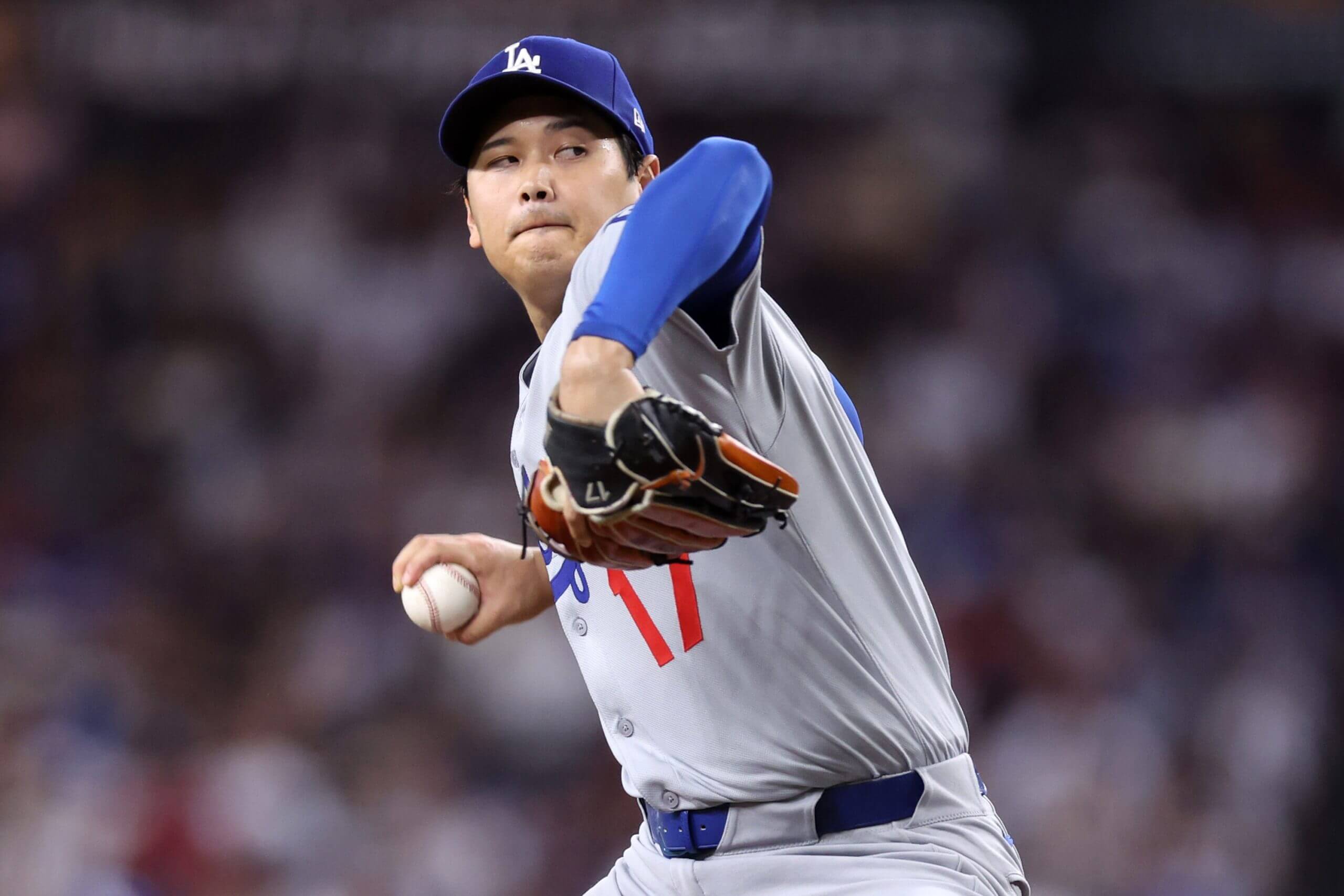
Shohei Ohtani had a 2.87 ERA and 1.90 FIP with 62 strikeouts over 47 regular-season innings. (Chris Coduto / Getty Images)
Instead, Ohtani’s 2025 will be remembered as the year he put all of the elements of his game together on the brightest stage while authoring an unprecedented return from a second major elbow ligament reconstruction. Months before Ohtani authored perhaps the greatest baseball individual performance the game has ever seen — three home runs at the plate and six shutout innings on the mound with 10 strikeouts to help the Dodgers clinch the pennant over the Milwaukee Brewers — Ohtani was treating major-league games as a rehab assignment.
His rehab from his 2023 surgery had been a part of the dynamic ever since he’d signed with the Dodgers ahead of the 2024 season. He continued that rehab assignment across the globe and in his home country. Ohtani was feted and followed by flashbulbs with his every movement at the Tokyo Dome in March as he slugged a home run on Opening Day and continued a throwing progression in front of millions of onlookers in person and on television.
When he faced hitters for the first time, it drew a crowd of dozens of reporters waiting outside of Citi Field well before that night’s first pitch, hoping to catch a glimpse of Ohtani bullying a Dodgers staffer into submission.
Even more startling was when, 22 days later, Ohtani was on the mound against the San Diego Padres and touched 100.2 mph in his first big-league inning in 21 months. Ohtani had had enough of the rehab process. He felt that throwing simulated games in the afternoon and leading off at the plate in the evenings was draining him. So he essentially began a rehab assignment in big-league games. His stuff never seemed to skip a beat. He threw the hardest pitch of his career to date — a 101.7 mph fastball to Kansas City’s Vinnie Pasquantino — in his third start back.
Shohei Ohtani, 100.2 MPH and 101.7 MPH back-to-back. ⛽️ pic.twitter.com/MBLIKBlRYG
— Rob Friedman (@PitchingNinja) June 28, 2025
Those around the Dodgers marveled at how quickly his command dialed back to its usual norms, something some pitchers never quite grasp after a second surgery. Ohtani threw three times in September and did not allow a run. Over five innings on Sept. 15 against the Phillies, he did not allow a hit.
Ohtani wound up throwing 47 innings with a 2.87 ERA in his return to the mound, producing the equivalent FanGraphs WAR as a pitcher alone (1.9) as Boston’s Brayan Bello, all as a side quest while still being perhaps the most feared slugger in the sport. His 1.014 OPS led the NL. His 55 home runs represented a career high and broke his own Dodgers franchise single-season record, while being just one fewer than the number Schwarber wound up hitting.
Ohtani somehow remained “underrated,” Friedman said in October. What he did was still mind-boggling to comprehend.
Finally, a postseason audience witnessed it. Though Ohtani’s playoff success did not factor into his MVP selection (votes must be submitted before the playoffs begin), he continued to showcase his skills.
He pitched Game 1 of the NL Division Series against the Phillies, becoming the first pitcher ever to lead off in a postseason game. His first two-way postseason included some turbulence. He scuffled mightily to hit during that series, though he did take the win as a pitcher in that Game 1 start. Ohtani pitched twice against the Toronto Blue Jays in the World Series, including taking the baseball on short rest to start Game 7, and allowed seven runs, three of which came on Bo Bichette’s three-run homer in that final game.
It also included some singular moments of magic. Against the Brewers, Ohtani nearly cleared Dodger Stadium in his first at-bat of Game 4. Then he did it a few innings later; no left-handed hitter had hit a ball out of the ballpark since the 1970s until Schwarber did so in the NLDS, and then Ohtani. By the time his third home run landed in the pavilions in left center, Ohtani had already completed a gem on the mound.
“There’s a reason he’s the greatest player on the planet,” manager Dave Roberts said that night. “This is a performance that I’ve just never seen. No one’s ever seen something like this.”
In Game 3 of the World Series against the Blue Jays, Ohtani showed the world something else they’d never seen. He’d pounded Toronto through his first four at-bats, slugging a pair of doubles and two home runs to will the Dodgers to a 5-5 tie. Toronto manager John Schneider saw enough and put him on with intentional walks each of the next four times he went to the plate in an eventual 18-inning marathon. When Ohtani came up a ninth time on the night, he was walked on four pitches. It marked the first time in any game since 1942 that a batter had reached safely nine times, and no one had ever reached more than six times in a World Series game.
“We’re still running out of words to describe a once-in-a-ten-generational player,” Dodgers first baseman Freddie Freeman said.
Now, Ohtani has even more hardware.