
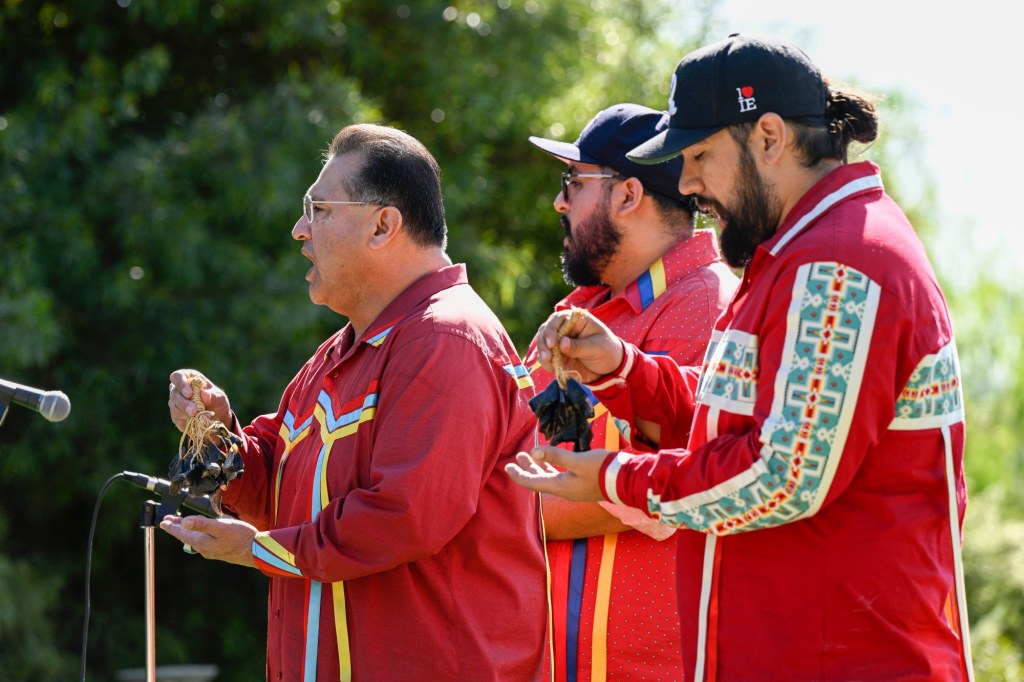
Each fall, when the oak trees turn color in the foothills above Highland, I think about my grandparents, my parents James and Rowena Ramos, and the generations who lived and prayed on this land long before it was called California. Those same hills were my classroom growing up on the San Manuel Indian Reservation, where elders would gather us and remind us that the land remembers. Those lessons stayed with me — not as history, but as a way of living.
Every November, communities across the United States observe National Native American Heritage Month — a time to reflect, recognize, and honor the history, culture, and ongoing contributions of Native peoples. For many, it’s a month of acknowledgment. For those of us in tribal communities, it’s personal.
As the first and only California Native American ever elected to the State Assembly, I carry the stories of my ancestors and the struggles of my people into every conversation I have at the Capitol. I am a proud member of the Yuhaaviatam clan of the Serrano people, and I was raised right here in the San Bernardino Mountains. That land, and the people on it, have shaped my values—and my purpose.
National Native American Heritage Month is not just about history. It’s about action. It’s about making sure that the lessons of the past lead to change in the present. In the last year alone, we’ve passed laws to protect sacred sites and ancestral remains (AB 977), expand the rights of Native students to wear traditional regalia at graduation (AB 1369), provide law enforcement support through tribal policing reform (AB 31), reform tribal grant programs to ensure equity for small and non-gaming tribes (AB 221), and provide tax relief for all military veterans, including Native Americans who have served our country (AB 53).
Each of these efforts reflects years of advocacy — not just from me, but from tribal leaders, educators, and youth who continue to push for equity, respect, and visibility.
The Inland Empire is home to some of the oldest tribal communities in the country. It is also home to new generations of Native youth who deserve to see themselves reflected — in their schools, in their textbooks, in leadership, and in the law. That’s why we have worked for over 25 years hosting the California Indian Education Conference at California State University San Bernardino, hosting tens of thousands of students who learn about local tribes, languages, and traditions each year.
Local teachers in the San Bernardino and Riverside districts have been among the first to bring these lessons into their classrooms — and the feedback from students has been powerful. When children learn that their communities are built on the ancestral lands of living tribal nations, they begin to understand the true story of California and their place within it.
These are not symbolic efforts. They are steps toward restoring truth and dignity to California’s story. For too long, the experiences of Native Americans have been left out of our state’s education system, often reduced to footnotes or stereotypes. Changing that narrative begins in the classroom — but it doesn’t end there. It extends into how we make laws, how we protect land, and how we ensure that future generations inherit both opportunity and understanding.
National Native American Heritage Month is also a time to confront the hard truths of our shared history. California once sanctioned violence and dispossession against Native peoples. Between 1846 and 1873, it is estimated that up to 16,000 Native Americans were murdered in cold blood, and the state spent over $1.7 million to fund militias that hunted and killed them. The Native American population in California plummeted from an estimated 150,000 in 1848 to just 30,000 by 1873. Families were torn apart, languages nearly lost, and cultures suppressed. Yet through all of this, tribal communities endured. We rebuilt. We educated our children. We preserved our stories. And today, we are contributing to the future of this state in every sector — from education and public safety to business, the arts, and government.
That resilience defines who we are as Native people — and it shapes how I serve the Inland Empire in my capacity as a state Assemblymember. When we protect sacred sites, we protect California’s heritage. When we empower Native students, we invest in our state’s future leaders. When we give tribes a voice in policymaking, we strengthen democracy itself. Today, California’s tribal nations are a major economic force, contributing $35 billion annually to the state’s economy and supporting over 184,000 jobs.
Whether your family arrived a generation ago or a century ago, we all share a responsibility to understand the land we call home.
National Native American Heritage Month is an invitation to learn, to listen, and to engage. Ask questions. Visit a tribal museum or cultural center. Teach your children about the first peoples of this land. Understanding our past is not about guilt — it’s about growth. It’s about ensuring that the next generation inherits a more honest and inclusive story of who we are as a state.
The story of California is not complete without the story of its first people. Our stories are still being written — and they are part of California’s future. I am grateful to the many residents, educators, and local officials who continue to learn, ask questions, and stand with California’s first people. Our heritage is alive — and it continues to guide us forward.
James Ramos represents California’s 45th Assembly District. He is chair of the Select Committee on Native American Affairs and a member of the Yuhaaviatam of San Manuel Nation.