
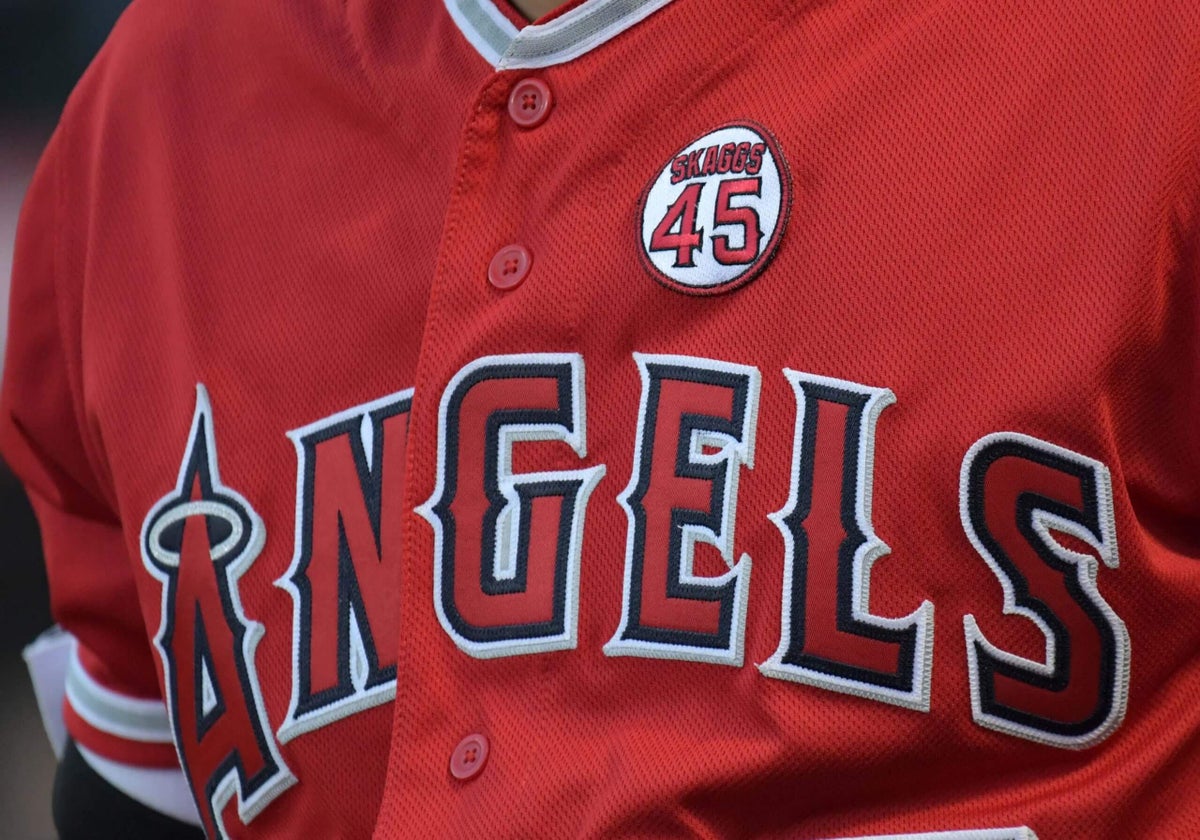
SANTA ANA, Calif. — The wrongful death lawsuit brought by the family of former pitcher Tyler Skaggs against the Los Angeles Angels is about to enter its sixth week, with the two sides sparring over the validity of testimony from one of the team’s top executives.
In a statement on Friday, an attorney representing the Angels said that the judge in the case had “denied taking any action” on a perjury claim made by an attorney representing the Skaggs family. The Angels’ attorney, Todd Theodora, also said the Skaggs family lawyers had dropped the issue.
However, court transcripts from the sidebar where this conversation between the judge and both sides’ attorneys took place, as well as a separate court filing, indicate the dispute over Angels VP for human resources Deborah Johnston’s testimony has yet to be resolved.
Last week, Johnston testified in court that the team had notified Major League Baseball of drug use by Eric Kay, the team’s former communications director, and that the league and team were working together on Kay’s drug testing and treatment. This differed from what Johnston said in her deposition testimony; she said in court that she had found new information in documents since then, but could not recall which specific documents.
MLB has denied that they were ever notified, and at the end of court on Wednesday, Skaggs family attorney Rusty Hardin accused Johnston of perjury. He also requested permission to issue a mid-trial subpoena to MLB, so they could respond to Johnston’s testimony.
Kay is serving 22 years in federal prison for providing the fentanyl-laced pill that Skaggs ingested, leading to his death on July 1, 2019. The family is suing the Angels, arguing that the team knew or should have known that Kay was distributing pills to players.
“Rightfully, Judge (H. Shaina) Colover denied taking any action on Mr. Hardin’s false and unfounded claim that Deborah Johnston committed perjury,” Angels attorney Theodora wrote to The Athletic on Friday. “In fact, after counsel for the team showed convincingly that Ms. Johnston had testified truthfully and in good faith, Mr. Hardin dropped the matter.”
In response, Hardin told The Athletic on Sunday, “Any suggestion that the judge has ruled on this matter is untrue, and inaccurate. And any suggestion that we’ve abandoned the matter is simply not true.”
He added: “I stand by our statement, both in court, and the brief,” referring to a motion Skaggs lawyers filed after the sidebar, requesting permission to take a mid-trial deposition of MLB.
In a transcript obtained by The Athletic from the sidebar, the judge makes no formal judgment on Johnston’s testimony and suggests that someone from MLB could testify in the Skaggs family’s rebuttal case — after the Angels’ defense rests.
The day after Johnston’s testimony last week, an MLB spokesperson responded, saying: “Neither MLB or The Drug Oversight Committee, which is responsible for administering and overseeing MLB’s Drug Policy and Prevention Program, was notified of or involved in the treatment of Eric Kay.”
On Nov. 12, Hardin told the judge he believed “perjury had been committed by (Deborah) Johnston.” Theodora immediately denied Hardin’s claim in court.
On Friday morning, the two sides conducted the sidebar with the judge outside of her courtroom, at the request of Theodora. It was conducted on the record, with a court reporter present. While the judge said that testimony can sometimes change from what was said in a deposition, she offered no formal opinion on whether or not Johnston’s testimony was false or perjurious.
After the sidebar ended, the Skaggs attorneys filed a motion to allow for a mid-trial subpoena of MLB — citing what they maintained was “false testimony,” and saying that it would be “patently unfair and highly prejudicial to allow Johnston’s surprise testimony to stand unchallenged.”
In the sidebar, the judge acknowledged her understanding of Hardin’s perspective in making his initial complaint.
“I don’t think there was any ill will,” the judge said of Johnston’s testimony. “I think it’s just obviously shocking testimony when we were here at trial after many, many years, and all of a sudden hearing things for the first time. I get the reason why there would be surprise or why there would be frustration.”
The judge did admonish Hardin for bringing up the complaint about Johnston at the very end of the day on Wednesday, preventing the Angels from being able to adequately defend the claim.
And she noted that it’s not uncommon for witnesses to change their live trial testimony from their deposition, as was the case with Johnston. She said it will happen to witnesses on both sides.
“If there’s some big bomb that needs to be dropped, we need to do that when there’s time that we can actually have a meaningful discussion,” the judge said, noting that she doesn’t want the case played out in the media.
Part of the Angels’ case is a contention that they acted responsibly by sending Kay to Dr. Erik Abell, the team’s Employee Assistance Professional. The Skaggs side has argued that the Angels didn’t follow protocol because Abell didn’t work with MLB, or report it to MLB in any capacity.
Angels team doctor Craig Milhouse testified to his belief that the Angels had followed protocol because the team’s EAP program is an arm of MLB. Johnston’s testimony was different from Milhouse’s because she directly tied the Angels’ treatment of Kay to MLB on multiple occasions throughout her questioning.
“When there is an illegal drug, or we go through an investigation and we find somebody has used illegal substances on property, one of the options is to terminate,” Johnston testified. “But another option is to work with MLB, as we did in this case.”
Theodora has said that Johnston’s testimony was truthful. He has previously requested that Abell be able to testify about his treatment of Kay, citing Kay’s willingness to waive his doctor-patient confidentiality.
However, the judge ruled against allowing the Angels to conduct that questioning because Abell asserted the privilege in his deposition. Because of that, the judge said, it would be prejudicial to suddenly allow an entirely new line of questioning after the trial began.
Theodora argued in the sidebar that Hardin’s perjury allegation opened the door for Abell to testify fully about his treatment with Kay. The judge rejected that argument, asking why the privilege was only waived days before Angels team doctors were set to testify.