
In the wake of the devastating January 2025 Palisades and Eaton fires, a coalition of leading homebuilders has launched the Builders Alliance, a nonprofit organization using technology, collaboration and shared resources to help Angelenos rebuild their homes faster and more affordably.
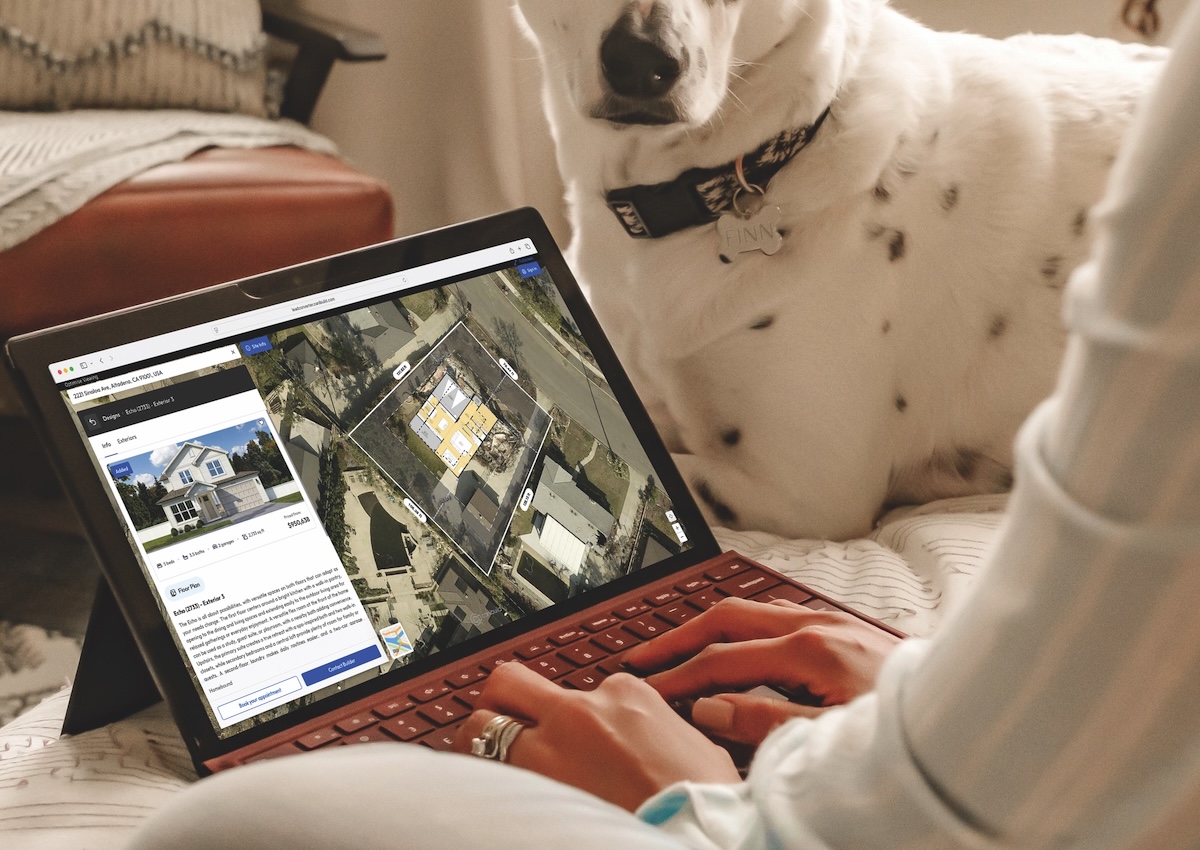
At the heart of this initiative is the Builders Alliance Portal, a free, artificial intelligence-powered digital platform that matches homeowners with pre-designed, permit-ready home plans tailored to their specific lots, zoning requirements and budgets. Designed to eliminate confusion and sales pressure, the portal enables homeowners to browse only the plans that fit their property and price range, providing what the Alliance calls “clarity, transparency and accessible options without obligations.”
“Our goal from the very beginning was to take what’s typically an overwhelming, piecemeal process and make it simple, centralized and empowering,” said Bea Hsu, founding chief executive of Builders Alliance. “For a homeowner who’s just lost everything, the first question is always, ‘Where do I even start?’ The Alliance was built to answer that question.”
The Alliance brings together 10 licensed homebuilders – including ARCA, Brookfield Residential, Christopherson Builders, Empress Builders, Genesis Builders, Homebound, Metricon Homes, Richmond American Homes, Stonefield Restorations, Thomas James Homes and Woodside Homes – each offering a range of pre-approved and custom designs. By leveraging shared resources, these firms aim to reduce costs and shorten construction timelines for displaced families.
The AI-driven portal, developed in partnership with Canibuild, uses advanced mapping software to analyze local zoning data and display only homes that can legally fit on a given lot. Homeowners simply enter their address to explore curated plans with transparent pricing, view resilience options like IBHS Wildfire
Prepared Standards and compare builders side-by-side.
“The technology behind the portal allows people to see, in real time, what’s possible for their specific property,” Hsu explained. “It’s not theoretical – it’s visual, practical and immediate. We wanted to bring a sense of progress to a moment that can otherwise feel paralyzing.”
The creation of the Builders Alliance was a key recommendation of Project Recovery, a joint initiative from the Urban Land Institute Los Angeles, UCLA Ziman Center for Real Estate and USC Lusk Center for Real Estate. Released in March 2025, the report gathered more than 100 industry leaders to develop actionable solutions for post-disaster housing recovery.
“The Builders Alliance offers fire victims a way to rebuild expeditiously and cost-effectively through the combined market power and capacities of homeowners and homebuilders,” said Stuart Gabriel, director of the UCLA Ziman Center for Real Estate. “This is the best opportunity for the largest number of displaced families to return to their neighborhoods as quickly as possible.”
Unlike traditional design-bid-build processes, which can leave homeowners navigating fragmented contracts and unpredictable costs, the Builders Alliance model emphasizes transparency and efficiency. Each participating builder commits to managing all stages of construction – from permitting to move-in – while maintaining clear communication and standardized pricing.
Importantly, the Builders Alliance itself does not build homes or engage in sales. Instead, it serves as a neutral connector, offering reliable information and choices. The organization does not promote specific builders within the portal; results are filtered objectively based on zoning compatibility and user-selected criteria such as square footage, price and bedrooms.
“We’re not here to sell – we’re here to support,” said Hsu. “Our role is to make the path forward clearer, more efficient and better supported. The builders maintain control of their projects, and homeowners maintain control of their decisions.”
As rebuilding efforts scale up, the Builders Alliance plans to continue adding new builders and home plans while collaborating with local jurisdictions to streamline permitting. The organization’s broader vision extends beyond recovery – toward redefining how cities respond to disaster in the future.