
Sacramento’s ambitious plan to address its severe homelessness crisis has long-faced bureaucratic roadblocks and pushback from locals, and a recent rebuke from the federal government could throw an even bigger wrench in the city’s plans.
Since 2018, subsequent mayoral administrations have made big promises to implement a variety of temporary housing measures meant to help the city’s 6,615 homeless individuals.
Around 60 percent of the city’s homeless population was unsheltered as of 2024, according to the most recent Homelessness Point-In-Time Count by Sacramento Steps Forward.
Measures ranging from building 1,000 ‘tiny homes,’ to building 20 new shelters across the city, to ‘safe parking lots’ for homeless people living out of their cars have been proposed.
All of those plans have only been partially implemented and have collectively cost the city millions of dollars.
Disagreements between local departments and agencies, as well as NIMBYism from residents and dangerous behavior from some of the homeless people, have forced delays, cancellations and early closures of sites that opened for just a few months.
One of the city’s proposed plans for a safe parking lot at the Franklin Light Rail Station in south Sacramento is now on the chopping block as well after the federal government called it ‘reprehensible’ and ‘dystopian.’
The plan outlined reserving about 20 percent of the station’s parking lot for 60 to 80 registered vehicles that homeless people live out of. The site would also offer 24-hour security, portable restrooms and showers.
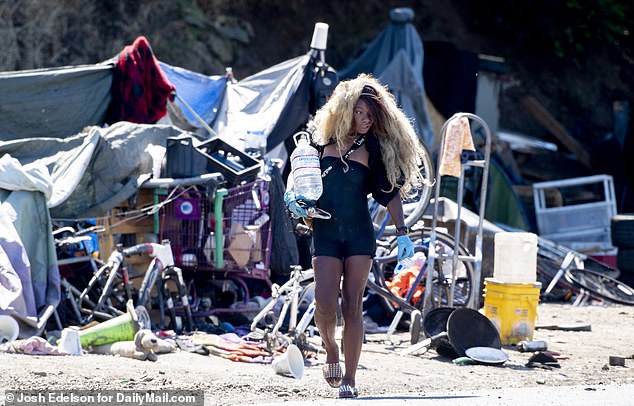
Since 2018, subsequent mayoral administrations have made big promises to implement a variety of temporary housing measures meant to help the city’s homeless population
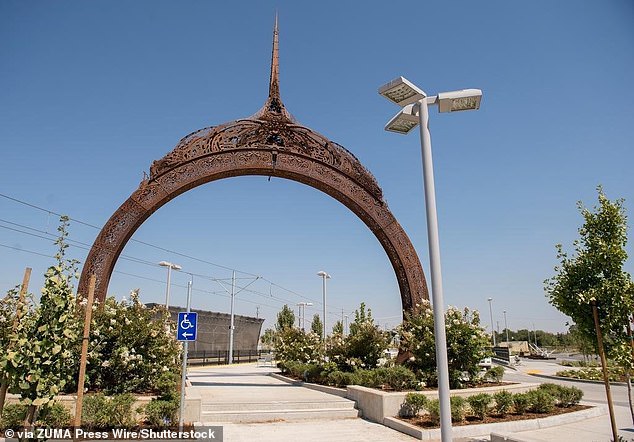
One of the city’s proposed plans for a safe parking lot at the Franklin Light Rail Station in south Sacramento (pictured) is now on the chopping block after the federal government rebuked it
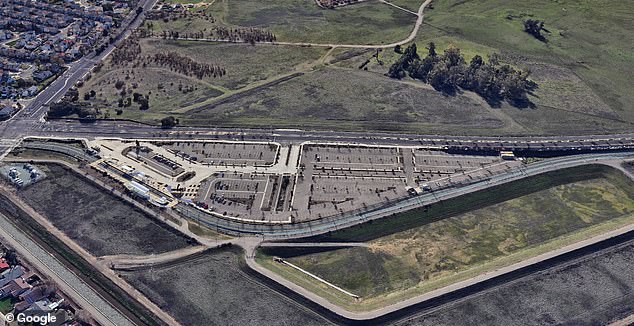
The plan outlined reserving about 20 percent of the station’s parking lot for 60 to 80 registered vehicles that homeless people live out of. This aerial view shows the size of the rail station’s parking lot
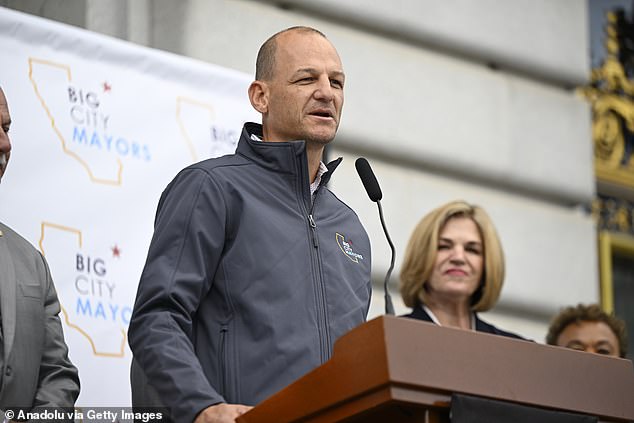
Sacramento Mayor Kevin McCarty has backed plans to address the city’s homelessness crisis
The proposal was announced over the Summer, and it was always dependent on approval from the Federal Transit Administration (FTA).
A spokesperson from the US Department of Transportation, which oversees the FTA, told the Sacramento Bee that it would not approve the request, calling it ‘ridiculous’ and slamming California Governor Gavin Newsom for designating ‘commuter parking as a homeless encampment,’ rather than addressing the cost of living.
The federal response to the plan sent a clear message to local officials that they had to pivot. Councilmember Caity Maple said the city must change its strategy and called it ‘unfortunate’ that the project was politicized.
Patrick Kennedy, a Sacramento County Board supervisor, said: ‘I don’t know that it’s going to be possible to change their mind based upon the outlandish language that was in their response.’ Although he still said the site should be pursued through a formal application.
Locals have also been up in arms at the growing homelessness issue. One person wrote on social media: ‘Oh joy, I was just driving around south sac today wondering why there is so few homeless sites.’
Another said of the new homeless camps: ‘They should build these around the capital and more next to King Newsom’s mansion in Napa.’
While a third added sarcastically: ‘Just what we need. Let’s attract more homeless.’
And another said: ‘Oh good more ground going to be filled with p**s, s**t, and bio waste and drug paraphernalia. What a beautiful city we live in.’
Since 2019, there have been at least 20 safe parking sites proposed in Sacramento, but only three ever opened, and none remain operational.
The first site opened in 2021 at a city-owned garage. Less than two months later, the entire structure had to be shuttered after a homeless man started a fire that caused around $500,000 in damages.
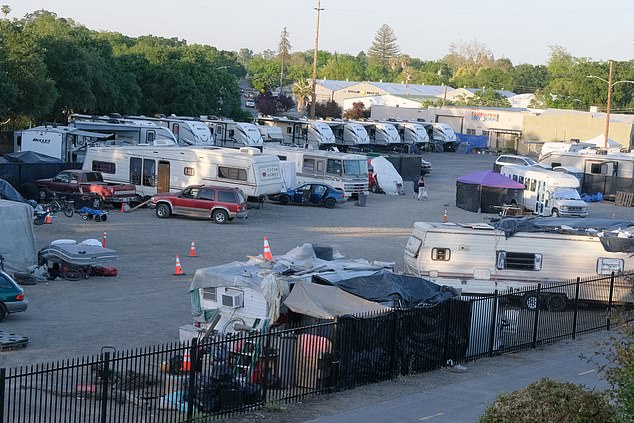
One of Sacramento’s failed homeless sites was this safe parking site that the city spent $617,000 fencing off and paving before the plan fell apart due to a disagreement between local officials and a local agency
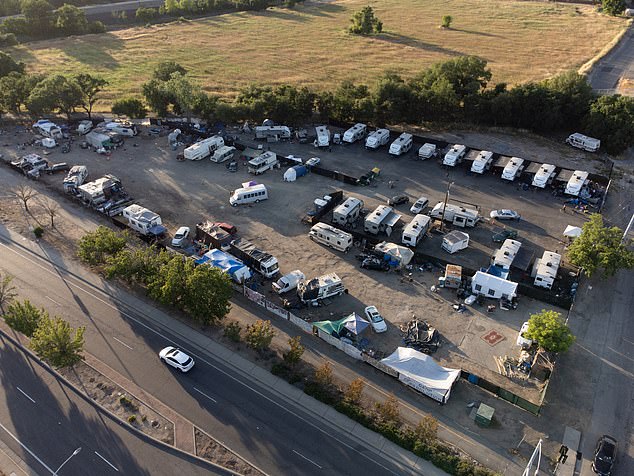
The site eventually became Camp Resolution (pictured), which was a self-governing homeless encampment largely composed of disabled seniors. It was closed by the city in August 2024
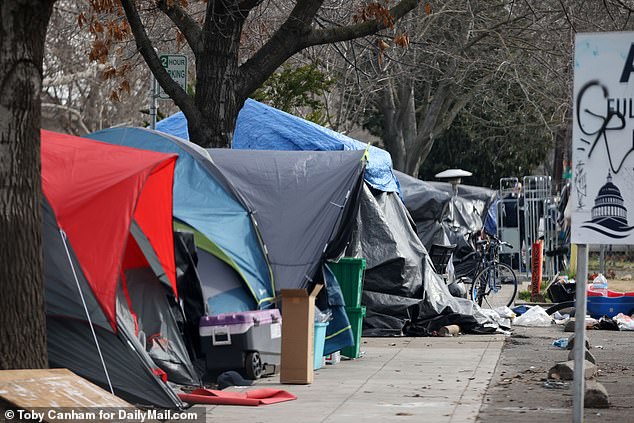
Sacramento has a homeless population of 6,615 people, and around 60 percent of the city’s homeless population was unsheltered as of 2024
City officials then spent about a year proposing new homeless sites. One of the more spectacular failures occurred when the city spent $617,000 to pave and fence off a site in North Sacramento before local officials and the Central Valley Regional Water Quality Control Board disagreed over how many cars would be allowed.
That site eventually became Camp Resolution, which was a self-governing homeless encampment largely composed of disabled seniors. Camp Resolution was closed in August 2024.
Other plans have only been partially implemented. In 2018, former Sacramento Mayor Darrell Steinberg announced that he wanted to build 1,000 tiny homes.
Now, seven years later, the city offers 111 tiny homes in two shelters. City leaders, including current-mayor Kevin McCarty, continue to push for additional tiny homes at sites throughout the city.
Pushback against tiny home plans from nearby residents is a consistent struggle for officials. Local sentiments are made clear at community meetings between the two groups.
At one of those meetings this year, a resident said: ‘When this community faces its challenges, how is it going to be addressed? Because often with people experiencing homelessness, if they don’t have the right services, it bleeds out into the neighboring communities. So what is the plan to address any of this?’
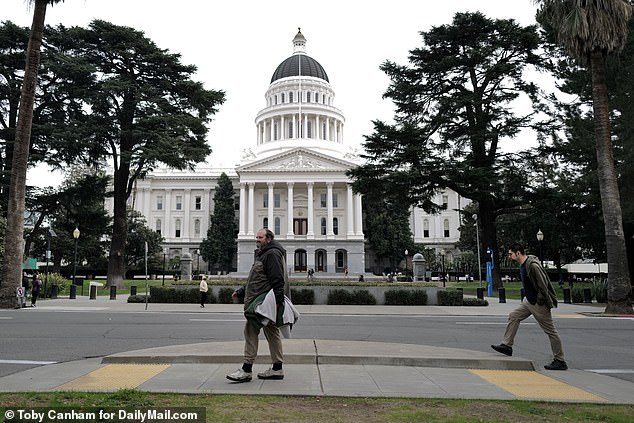
NIMBYism and pushback from locals creates consistent struggles for Sacramento officials in a city where the homeless issue is even visible on the grounds of the State Capitol building
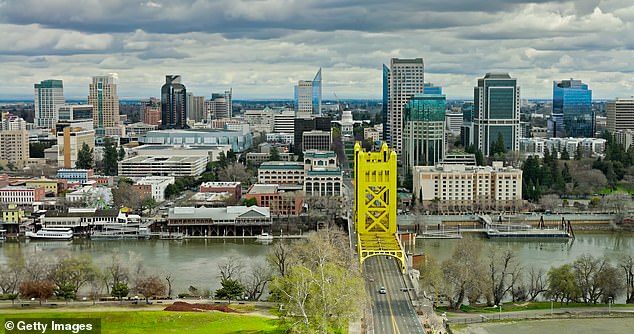
Although Sacramento’s plans to address homelessness have faced myriad issues, the city’s active efforts do seem to be having a positive impact. The total homeless population in 2024 was down 29 percent from a record high in 2022
Her statements were met with widespread applause from other concerned locals in the room.
Although the city’s many plans to address homelessness have faced delays, cancellations and limited implementation, its active efforts do seem to be having a positive impact.
The total homeless population in 2024 was down 29 percent from 2022, when it was at a record high of 9,278 people. The total number of unsheltered homeless people was down 41 percent over the same period, dropping from 6,664 to 3,944.
In 2022, Sacramento’s number of unsheltered homeless people was slightly higher than the total number of homeless people in the city today.