
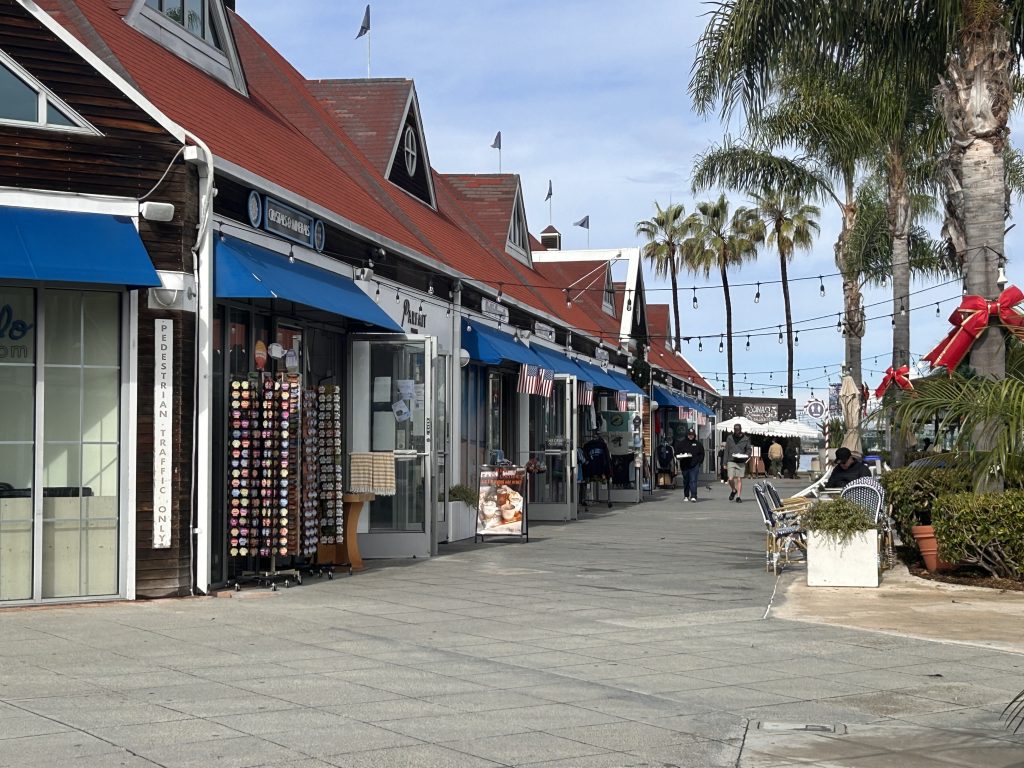
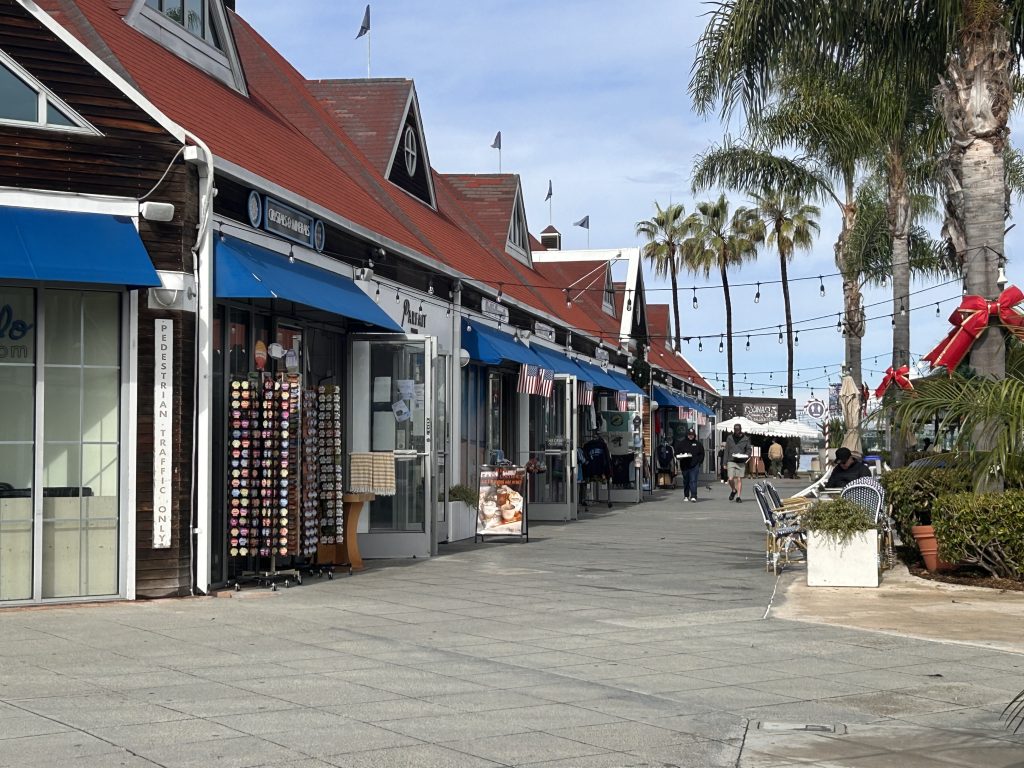
 The Coronado Ferry Landing on Nov. 11, 2025. Photo by Dani Schwartz.
The Port of San Diego is blaming years of deferred maintenance for its decision to end the Coronado Ferry Landing’s longstanding lease, despite claims from the operator and city leaders that negotiations were prematurely cut short.
In October, the Port decided not to renew its lease with Port Coronado Associates (PCA), which has operated the Ferry Landing since the 1980s and had proposed a $20 million redevelopment of the waterfront site.
“Port staff’s main concern with PCA’s proposal,” a letter from Port leadership to Coronado Mayor John Duncan reads, “is that the amount they propose ($20 million) to invest to improve and modernize the Coronado Ferry Landing, as has been promised to the public, is insufficient after deducting the amount needed to correct the safety and maintenance deficiencies that currently exist on the site.”
The Port says that much of PCA’s included work should have been performed under the current lease and that an independent assessment informed this position. Many of the buildings, the Port notes, still have original roofing, windows, plumbing, HVAC and electrical systems dating to the 1980s.
“PCA said they were not given notice of these maintenance deficiencies,” the letter continues, “but surely as the tenant responsible for such upkeep, they should know the current state of their leasehold. PCA has an obligation under its lease to ‘perform all maintenance, which includes all painting, repairs, and replacement necessary to maintain and preserve the Leased Premises.’”
A second letter sent to PCA reiterates that their proposal says that “Port staff cannot recommend a proposal that attempts to convert overdue maintenance into a substitute for the comprehensive upgrades required under the lease, and that continues to disregard critical waterside needs essential to the long-term viability of the project.”
The Port contends that PCA’s proposal should have included upgrades to the ferry pier, which the agency says is “significantly degraded.”
Additionally, the Port said that PCA’s proposal estimated phase-one construction beginning in 2028, further delaying needed maintenance.
But Christian Herrera, vice president of development and operations for PCA, said that PCA was not given a chance to address any concerns the Port had or submit a revised proposal. In October, he said that he had no knowledge of any maintenance concerns from the Port, and believed PCA was a tenant in good standing.
“We followed every process, provided every document, responded to every request,” Herrera said during the Nov. 11 meeting of the Coronado City Council. “Then, with no advance notice or stated concerns, we were told negotiations were over and our proposal was rejected.”
Herrera said that PCA has been trying to work with the Port on its redevelopment policy for years. PCA argues that halting negotiations violates the Port’s own policy: Lease extensions or renewals are often renegotiated when tenants propose substantial reinvestment projects, a process that is governed by Board Policy 355 (BPC 355).
The policy states that the Port must respond to proposals in writing within 30 days of receipt, “either advancing the proposal for further review or identifying additional information needed.” If the Port took the latter option, the tenant would have 60 days to submit a revised proposal. Herrera said that the Port did not adhere to this policy.
The uncertainty has also affected subtenants at the Ferry Landing.
Spiro Chaconas, owner of Spiro’s Greek Cafe at the Ferry landing, said the Port’s silence on his lease extension is casting a shadow over his business’s future. Chaconas has operated in Coronado for nearly three decades.
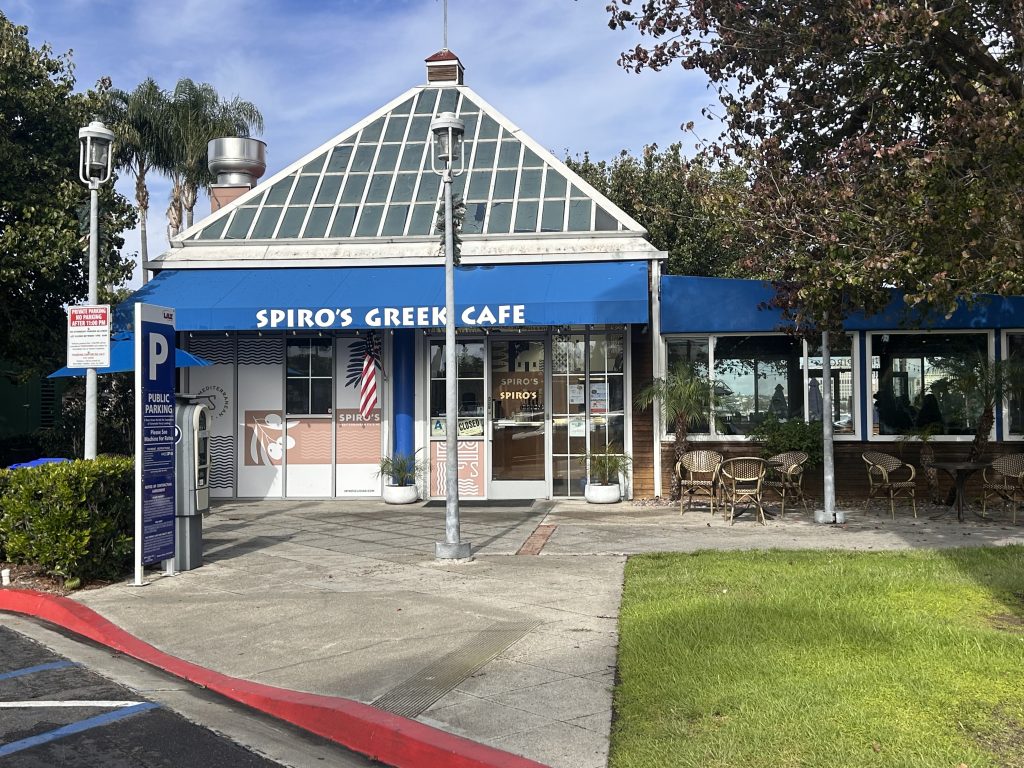 Spiro’s Greek Café at the Ferry Landing on Nov. 18, 2025. Photo by Dani Schwartz.
Despite repeated requests for a lease extension, he said, he has received no concrete information, leaving him unable to plan for the future.
“We need at least 10 years in order to know what we’re doing,” Chaconas said, noting that he recently spent about $500,000 remodeling his restaurant but that uncertainty about the future makes any additional investment risky.
A spokesperson for the Port said that it cannot discuss these negotiations in detail due to a current threat of litigation, but it said in late October that the Port is exploring “short-, mid-, and long-term options” for the site, and that businesses within it will have opportunities to keep operating.
The Port has also defended its decision to consider PCA’s proposal in closed session, saying real estate negotiations are allowed to be held confidentially under the Brown Act.
Coronado leaders disagree. Mayor John Duncan said the decision should have been made public. He argued that, given the scale and potential precedent of the decision, the Port was setting a policy, not simply negotiating one lease.
“If the Port is making policy decisions about how it manages land in our city, that has to happen in public,” he said.
During its last meeting, several Coronado City Council members discussed whether the Port’s decision could pave the way for higher-intensity uses at the site, like a hotel that was considered in a previous redevelopment concept but removed after residents balked.
However, the Port approved an updated master plan in 2024 that prohibits additional hotel rooms in Coronado, limiting what any future operator could bring to the site.
For now, the property’s future remains unclear.
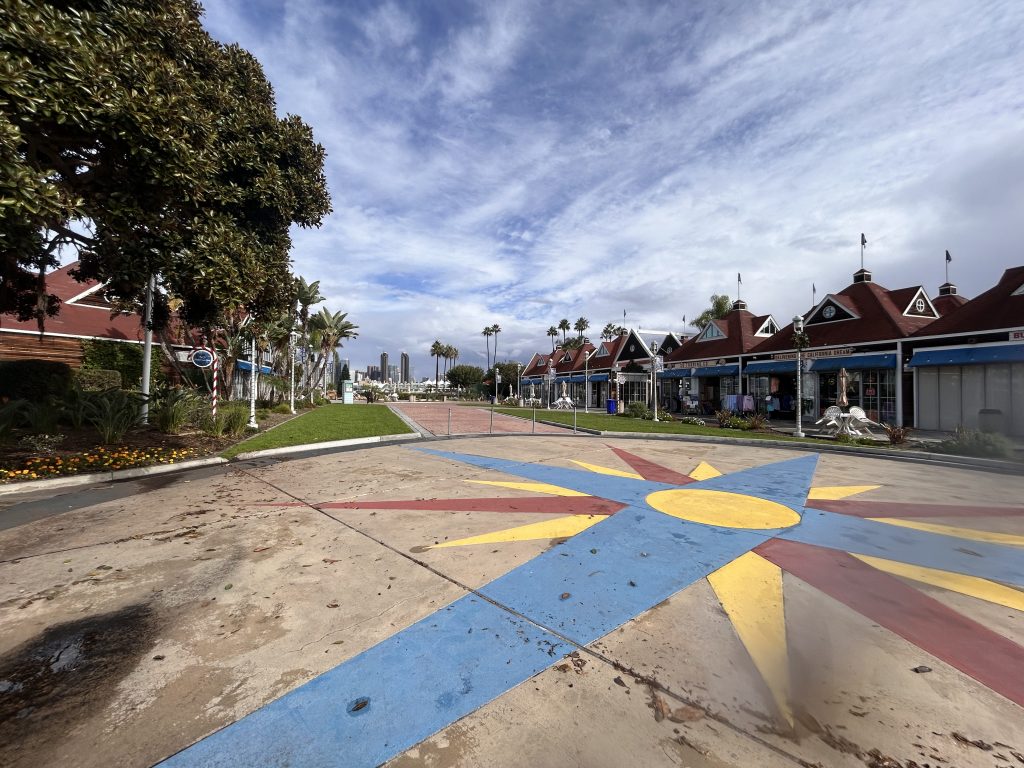 The Coronado Ferry Landing on Nov. 18, 2025. Photo by Dani Schwartz.