

The Bay Area’s “King of Trash” has taken fire from all directions, catching an FBI bribery case while ensnared in personal and political feuds. But that won’t stop him from walking the red carpet — and wrestling back control over his story.
Cal Waste Solutions CEO David Duong — the Oakland recycling mogul and power broker whose company hauls San Jose’s waste — stepped back into the spotlight last week to premiere a documentary he commissioned about his family’s riches-to-rags-to-riches journey from Vietnam to the United States.
“The King of Trash,” directed by Los Angeles documentarian Errol Webber, debuted Nov. 13 at the Pruneyard Cinemas in Campbell to a well-dressed crowd of friends and family, with all the bells and whistles of a swanky movie premiere.
“We hope this film can be broadcast out to the Vietnamese American community, many of whom, just like our family, lost everything,” Duong told San José Spotlight at the premiere.
Despite belonging to Oakland, Duong said he selected a theater in Santa Clara County for the premiere because it’s a symbol of Vietnamese American success in the U.S. San Jose boasts the largest Vietnamese population for a city outside Vietnam.
“We’re sharing our story with the community here, first,” he said.
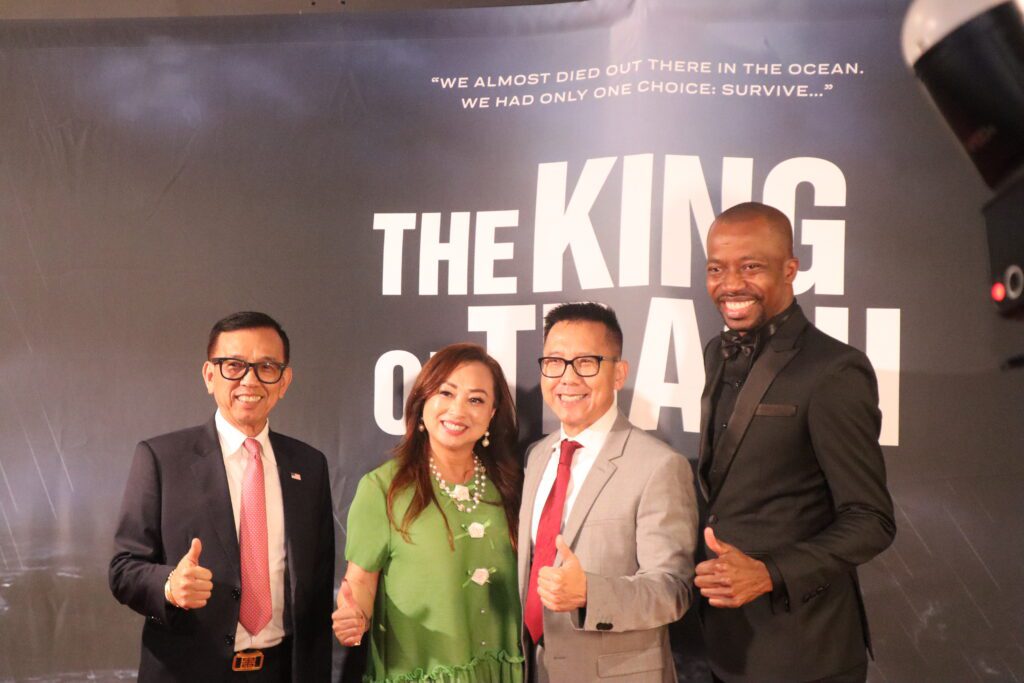 Cal Waste Solutions CEO David Duong (left) with his siblings, Kristina and Victor Duong, and filmmaker Errol Webber on the red carpet for “The King of Trash” premiere at Pruneyard Cinemas in Campbell on Nov. 13, 2o25. Photo by Brandon Pho.
The film is about family resilience — a ubiquitous ideal among the thousands of people who left their old lives behind in Vietnam at great personal risk after the 1975 Fall of Saigon. The hour-long film begins with the Duong family’s loss of their successful paper mill enterprise in Vietnam under changing regimes, forcing a precarious escape attempt by sea where they were captured by a Soviet ship and sent to a refugee camp in the Philippines. Webber filmed dramatic reenactments of some events on location in Vietnam.
“We wanted to find a way to visualize the perils that they had in Vietnam, in the exact places they escaped through,” Webber told San José Spotlight. “Finding the actors to play a young version of all of them was wild.”
After a year sustained on rations, the family won passage to San Francisco, cramming 16 relatives into two tiny studio apartments in the Tenderloin. From there, the family would scour the city streets for cardboard and other recyclable materials. The children worked too, after school through midnight. It was a period where family members, interviewed throughout the film, described being spit on and judged by strangers, until they could pay for hauling trucks and eventually a warehouse in West Oakland. The family secured a city waste contract in 1993. Over the following years, the family’s business expanded to San Jose and, eventually, back to Vietnam.
The focus turns to Duong’s company in the documentary’s second half. In interviews, Cal Waste Solutions truck drivers and executives wax reverent about their CEO who made a recycling empire out of nothing. The film also explains Duong’s rationale for returning to Vietnam with an international branch of the company founded in the mid-2000s, citing the country’s environmental struggles and lack of infrastructure to deal with solid waste.
Duong briefly addresses one of his chief controversies among older, politically-observant Vietnamese American refugees in the Bay Area — his relationship with the Vietnamese government.
“Our parents lost everything. We should not forget the past,” Duong said on the red carpet. “But some of the past you can forgive.”
Throughout the film, Duong explains his incentive to help the country didn’t boil down to ideology, even if he felt the recoil of anti-Communist reactionaries. That’s about as far as “The King of Trash” goes in touching on Duong’s current controversies.
The film’s theme about resilience takes on new meaning when factoring a topic not mentioned: Duong’s alleged role in an Oakland bribery scheme that led to the indictment of former Mayor Sheng Thao, as well as Duong and his son Andy.
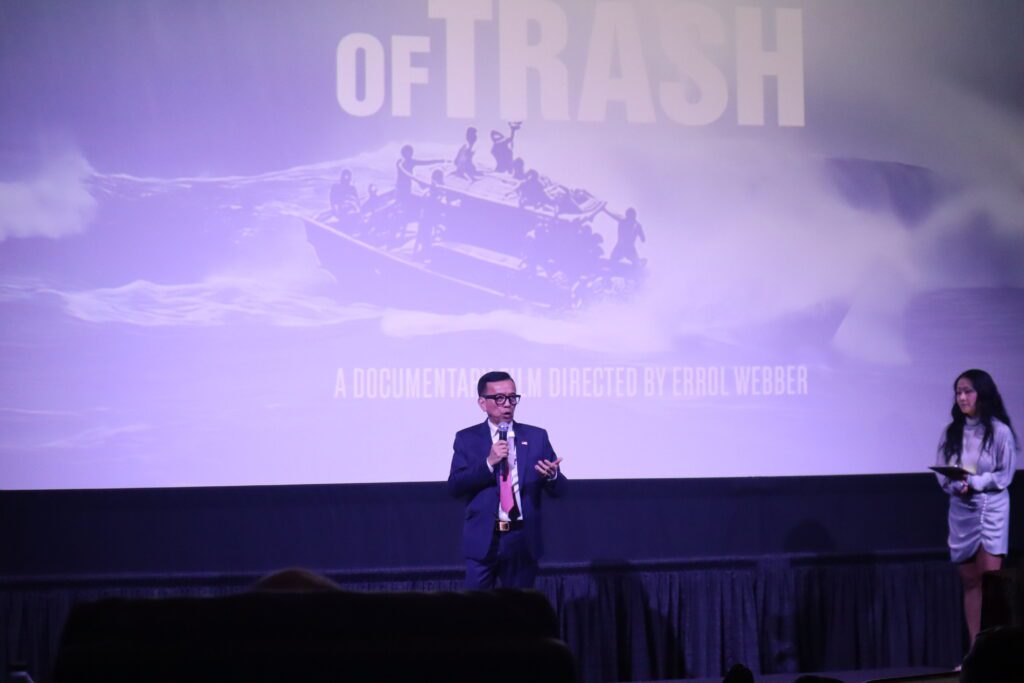 Cal Waste Solutions CEO David Duong addresses friends and family at a screening of “The King of Trash.” Photo by Brandon Pho.
The Duongs are accused of paying $95,000 in bribes to Thao and her partner, Andre Jones. In exchange, Thao allegedly promised Oakland would do business with the Duongs’ housing company, extend their recycling company’s waste hauling contract and appoint senior city officials selected by David, Andy and an unnamed local business associate.
The Duongs also allegedly promised to pay $75,000 for negative mailers targeting Thao’s opponents when she ran for election in 2022 and $300,000 for a “no-show job” to Jones, according to the federal indictment.
The case faces the Duongs with possible prison time — and threatens the very success the documentary celebrates. A text-over-black prologue at the start of the movie states: “We keep moving through every storm.”
Duong did not respond to questions about the ongoing FBI investigation.
Separately, in recent years, David Duong became the center of a web of courtroom dramas and lawsuits between older Vietnamese American figures in San Jose’s Little Saigon.
The Vietnamese American Business Association, an entrepreneurial advocacy group he founded, became a lightning rod for debate among Little Saigon’s refugee generation over whether to do business in the homeland, which is a Socialist Republic under the singular rule of the Community Party. His organization fueled a contentious restraining order battle between a San Jose councilmember he’s friendly with, Bien Doan, and Hai Huynh — a prominent local bail bondsman who is critical of David Duong. Testimony in that case from the recycling mogul, who was called to the stand, spurred several other lawsuit battles in Little Saigon’s older political circles. Anti-Communists also protested against David Duong’s contract with San Jose in front of City Hall last year.
In “The King of Trash,” the Duong family seems to fight battle after battle. The film’s most startling and vulnerable moment arrives toward the end. Webber’s camera is allowed inside the hospital room where David Duong and his siblings attempt to speak with their ailing mother in her final moments alive. David Duong’s sister, Kristina, confesses to dueling emotions about the care of her mother, weighing the desire to hold onto her and the reality of prolonging her pain.
The screening’s exclusive guests included Phuc Tran, chairman of the Oakland Vietnamese Chamber of Commerce.
“What affected me the most was the family sticking together and being united. They built on the legacy of their father,” Tran told San José Spotlight.
Webber said the family had some kind of film about their lives on their minds for several years. But deciding on a title was an instant no-brainer.
“They call him the king of trash? That’s the name of the film right there,” Webber said.
Contact Brandon Pho at [email protected] or @brandonphooo on X.
Editor’s Note: Cal Waste Solutions has donated to San José Spotlight.