
By Dan Walters, CalMatters

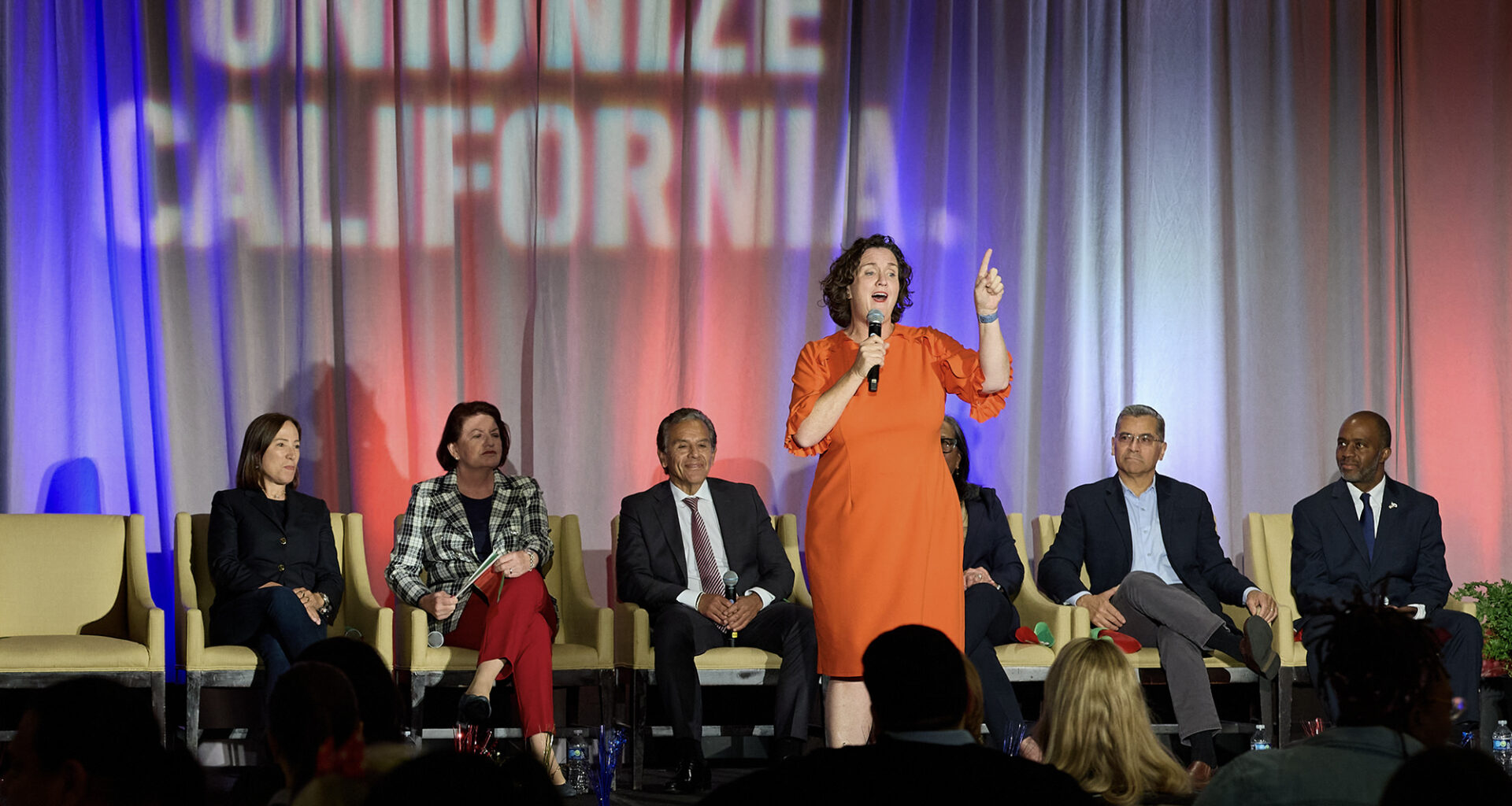
Former U.S. Rep. Katie Porter speaks during a gubernatorial candidates’ event hosted by the California Federation of Labor Unions, AFL-CIO and the State Building and Construction Trades Council in Sacramento on May 12, 2025. Photo by Fred Greaves for CalMatters
This commentary was originally published by CalMatters. Sign up for their newsletters.
Getting elected governor of California is a difficult task, requiring the creation of a large apparatus to plan and execute a campaign strategy and raising tens of millions of dollars to pay for it.
That’s why, as California’s population soared in the post-World War II era, those who aspired to govern the state typically declared their ambitions at least two years out, even if they were already occupying other offices.
That bit of political history is offered because California voters will elect a new governor in less than a year, and filing candidacy paperwork will open in just a few weeks, but the field of candidates seems to change almost daily.
Some who were in have dropped out, such as Lt. Gov. Eleni Kounalakis and former state Senate leader Toni Atkins. Meanwhile, some who considered a run — such as former Vice President Kamala Harris — backed away, and at least one who had opted out may jump back in. And names of other potential candidates continue to pop up.
The cloud of uncertainty underscores not only the daunting logistics of a California campaign, but perhaps some hesitancy about trying to govern a state that in many ways may be ungovernable.
Gavin Newsom will cede the office, probably to mount a campaign for president, with the major issues that plagued California when he became governor in 2019 still unresolved, and in some cases even worse.
Uncertain water supply, sub-par public education outcomes, an acute housing shortage, rampant homelessness, high levels of unemployment and poverty, crushing costs of living and a chronically unbalanced state budget are just a few of the critical issues awaiting whoever survives the forthcoming campaign.
There are a few would-be governors who announced early, such as former Congresswoman Katie Porter, former Los Angeles Mayor Antonio Villaraigosa and former Attorney General and Congressman Xavier Becerra.
However, their ability to raise the immense amounts of money needed to finance a campaign is hindered by uncertainty over who else might jump in. The lesser known candidates, such as state schools Superintendent Tony Thurmond, former Controller Betty Yee and former Assemblyman Ian Calderon, are even more disadvantaged.
The cloudy picture on the Democratic side doesn’t affect the two most prominent Republicans running, Riverside County Sheriff Chad Bianco and former television personality Steve Hilton, but their roles hinge on whether one will place second in the top-two primary election in June or if two Democrats emerge as finalists in the November election.
A very wealthy businessman, Republican-turned-Democrat Rick Caruso, is among those still dithering. Another billionaire, Tom Steyer, dumped a bunch of money into a personal campaign for Proposition 50, Newsom’s partisan congressional gerrymander, implying he’s thinking about it.
Congressman Eric Swalwell, who has become one of President Donald Trump’s most persistent critics, is reportedly weighing a run. Pestering Trump worked for Adam Schiff, who rode it into a U.S. Senate seat, so it might help Swalwell, given voters’ rampant dislike of Trump.
And then there’s Attorney General Rob Bonta, who — somewhat surprisingly — took himself out of contention early and said he would seek re-election. It was surprising because Bonta is a notorious publicity hound who issues some sort of announcement virtually every working day. Tuesday’s version was intervening in a lawsuit over legislation dealing with art theft.
The buzz this week is that Bonta is reconsidering a run for governor due to the lack of an obvious frontrunner.
So who is ahead?
A recent poll by UC-Berkeley’s Institute of Governmental Studies found that among the declared Democrats, Porter was leading at 11% of registered voters, but Sheriff Bianco was the overall leader at 13%.
Those weak numbers tell us that it’s wide open, and it’s impossible to identify a probable winner.
This article was originally published on CalMatters and was republished under the Creative Commons Attribution-NonCommercial-NoDerivatives license.