
Marybeth Collins
California applies more than 2.5 million pounds of PFAS-based pesticides every year, embedding “forever chemicals” into soil systems, water sources, and agricultural landscapes at an unprecedented scale. New mapping from the Environmental Working Group (EWG) reveals that 15 million pounds of these pesticides were applied statewide from 2018 to 2023 — a major, unregulated pathway for PFAS to enter environments already struggling with chemical persistence.
Widespread Use Across California’s Agricultural Heartland
According to EWG’s analysis of state pesticide-use records, 52 PFAS pesticide active ingredients were applied across 58 counties over six years. Fresno, Kern, San Joaquin, and Imperial counties led statewide totals, collectively accounting for more than 5.5 million pounds.
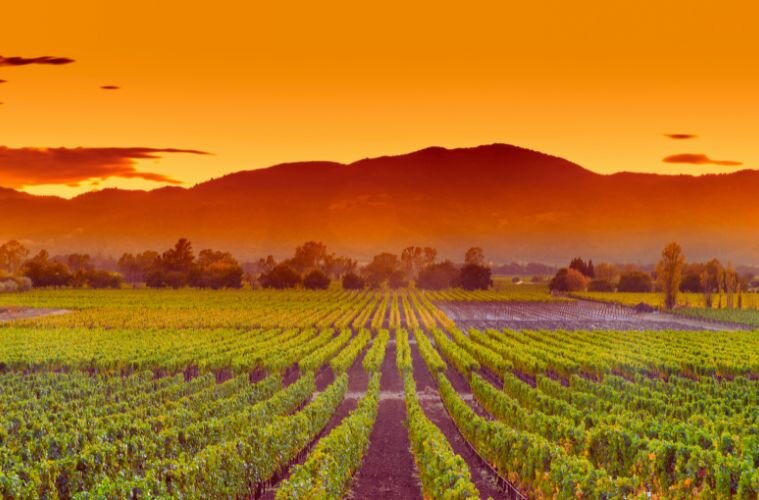
These pesticides were mostly used on some of California’s most economically significant crops, including almonds, pistachios, wine grapes, alfalfa, and tomatoes.
Alexis Temkin, Ph.D., a senior toxicologist at EWG, said in the group’s November 2025 briefing,
“The scale of PFAS pesticide use in California is alarming, especially given what we know about these chemicals’ persistence and potential health harms.”
External Research Underscores the Environmental Stakes
A growing body of independent research reinforces that agricultural PFAS use has consequences far beyond field boundaries:
PFAS uptake into crops and fodder
A 2024 peer-reviewed study in Agriculture concludes that PFAS accumulate in fruits, vegetables, grains, and animal feed, which can result in “contamination of livestock and their food products.” This means PFAS pesticides may enter wildlife and human food chains long after application.
Soil mobility and groundwater infiltration
Research published in Science of the Total Environment found PFAS can migrate more than 9 meters through soil and enter groundwater at depths reaching 17 meters, supporting concerns in California’s major agricultural basins where groundwater is already stressed.
Atmospheric and dust distribution
Studies from the Norwegian Institute for Air Research show PFAS can travel via windblown particulates and deposit far from their point of use — a relevant concern in the Central Valley, where agricultural dust is a persistent air-quality issue.
Statewide water contamination trends
California’s State Water Resources Control Board (CARB) has identified PFAS contamination in over 400 public water systems, with agricultural sources increasingly recognized as contributors alongside industrial and urban pathways.
Regulatory Lags Contrast With Global Action
Despite the scale of use, California has not introduced targeted restrictions on PFAS pesticides. The U.S. EPA has approved at least 66 PFAS pesticide active ingredients, and industry disclosure loopholes mean additional PFAS may be present as inert ingredients.
Other jurisdictions are moving faster:
Maine adopted the first statewide ban on PFAS pesticides, effective 2030.
Denmark banned six PFAS pesticide ingredients in 2025 after linking them to groundwater contamination.
The European Union declined to renew the herbicide flufenacet due to risks from its breakdown product, trifluoroacetic acid (TFA), now detected in rainwater and surface waters worldwide.
These international actions highlight the widening gap between global scientific consensus and U.S. policy direction.
Ecosystem Implications: Soil, Water, and Wildlife Exposure
The environmental implications extend well beyond agricultural productivity:
Soil Persistence and Declining Soil Health: PFAS molecules resist degradation, meaning agricultural soils become long-term reservoirs. Research from UC Riverside shows PFAS can alter soil microbial communities, affecting nutrient cycling and soil resilience.
Threats to Aquatic and Riparian Systems: Runoff and infiltration from treated farmland may increase PFAS loads in rivers and wetlands. U.S. Geological Survey sampling has already detected PFAS in California river otters, amphibians, and fish — indicating food-web exposure.
Transformation Into Other Persistent Chemicals: Several PFAS pesticides degrade into trifluoroacetic acid (TFA), a highly mobile, ultra-short-chain PFAS now detected in precipitation and surface waters globally. Scientists warn that agricultural inputs may be a major environmental source.
A Growing Case for Monitoring and Policy Action
Many high-use counties — including Fresno, Kern, and Imperial — contain communities already facing cumulative environmental burdens from air pollution, nitrate contamination, and groundwater overdraft. PFAS may intensify these disparities.
Experts increasingly agree that PFAS pesticides represent a significant and overlooked source of environmental contamination. Without systematic monitoring of PFAS in agricultural soils, groundwater, and crops, California may be locking in decades of chemical persistence.
Non-PFAS pesticides and integrated pest management techniques exist, and researchers emphasize that consumers should not reduce produce consumption. Instead, the focus is shifting to upstream prevention: phasing out PFAS pesticides before contamination becomes unmanageable.
Do you live in California? Check out the total pesticide use in your county.
New for 2026: Startups & Spotlights
Recognizing emerging innovators and standout teams driving measurable progress.
Entries close December 31, 2025.