
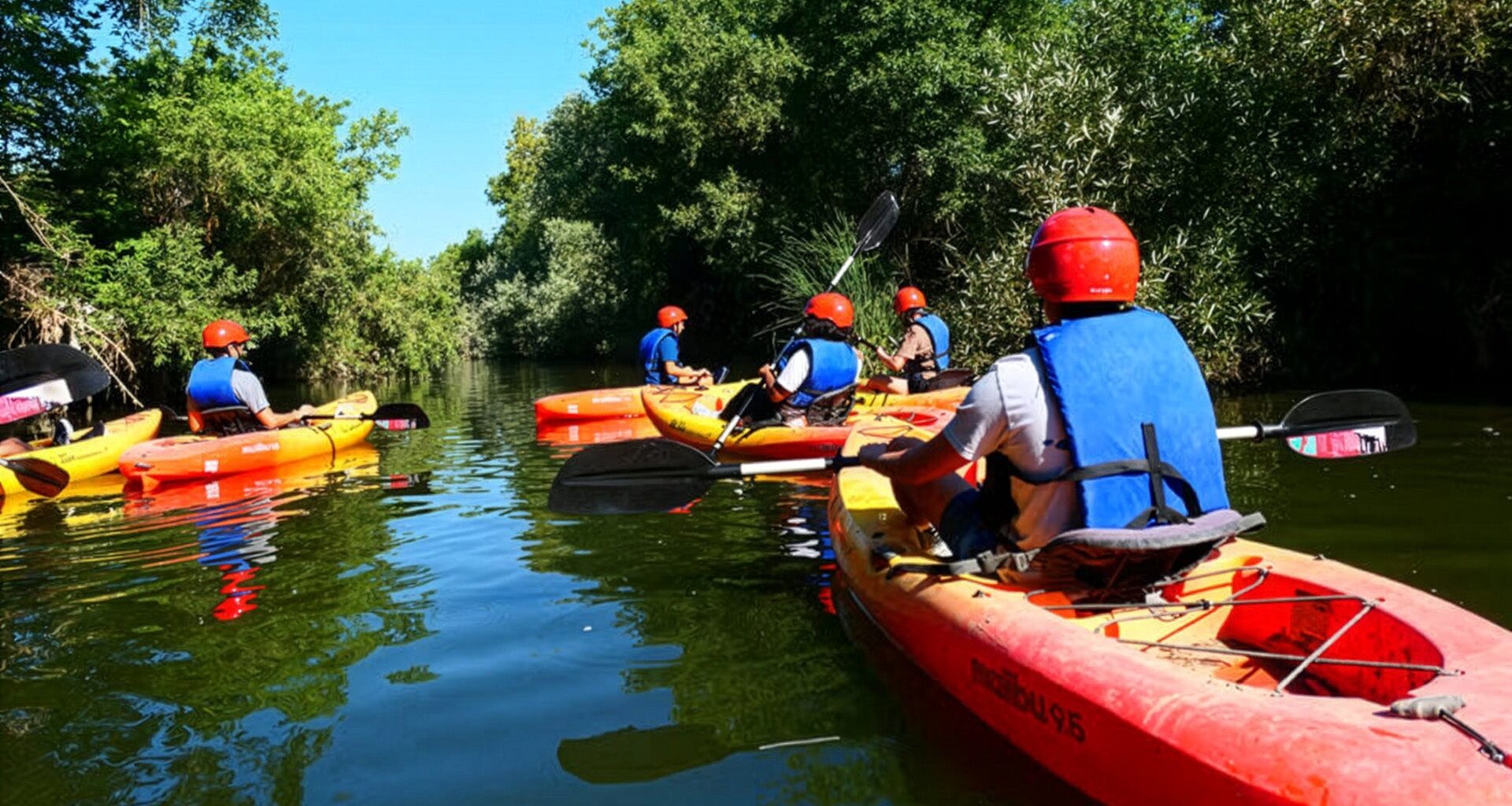
Each month, a group of high school juniors from across Los Angeles gathers to explore the city they call home. They kayak the L.A. River, tour civic institutions and meet the people who keep the city running, from water engineers to city planners. By the end of the year, they no longer see Los Angeles as just a collection of neighborhoods, but as a living, interconnected system they can help shape.
That transformation lies at the heart of the Los Angeles Service Academy (LASA), a program of USC Dornsife’s Huntington-USC Institute on California and the West (ICW) that offers students a hands-on introduction to how their city works.
“LASA is one of the best things we do through the institute — ambitious, thoughtfully planned and exuberantly carried out,” said program founder and USC Dornsife historian William Deverell, who co-directs ICW. “These students get to learn how metropolitan Los Angeles is put together.”
Hands-on learning turns Los Angeles into a living classroom
Founded more than a decade ago, LASA helps young Angelenos understand their role within the city’s infrastructure, history and civic systems. As the program has expanded, its day-to-day leadership has been guided by ICW co-director Elizabeth Logan, who serves as LASA’s executive director.
During the school year, monthly meetings bring students face-to-face with real-world challenges facing the city and community leaders working to solve them. Recent sessions have explored issues as varied as food insecurity, urban planning and sustainability. In September, students spent a day volunteering at the Los Angeles Regional Food Bank, where they helped sort 19 tons of produce for families across the county.
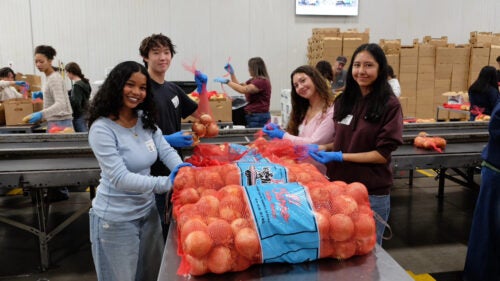 LASA students volunteered at the L.A. Regional Food Bank, helping more than 58,000 pounds of produce reach area families. (Photo: John Lee.)
“I realized just how little I knew about how to combat food insecurity in Los Angeles,” reflected Madalyn, a student at University High School in Los Angeles. “So many families find solace in the work of the food bank, and I’m grateful to have been able to help.”
“I realized I could make a significant impact on our city, even with a slight contribution,” said Noah, another participant from Polytechnic School. “I’m eager to return with more people to make a difference in our city and help those in need.”
In October, the cohort toured the historic Los Angeles Memorial Coliseum — host to the 1932 and 1984 Olympic Games — and met with city planners preparing for the 2026 FIFA World Cup and 2028 Olympic Games. Students learned how civic events can spark long-term improvements in accessibility, public transportation and sustainability.
“The lesson was eye-opening in showing me how the city is designed with so much intentionality,” said Madalyn. “It made me rethink a lot of civic operations that I take for granted and appreciate how urban design has the power to transform our lives for the better.”
Donor support expands opportunities for civic engagement
Through hands-on learning and meaningful civic engagement, LASA empowers young people to see Los Angeles as a place they can actively shape.
That mission resonates deeply with Allan Scholl (MA ’60, PhD ’73), a USC Dornsife alumnus and retired educator who, with his wife Marina, supports LASA alongside estate gifts for scholarships in history and classics.
“Having spent a career in secondary education, hearing about LASA’s mission immediately got my attention,” Scholl said. “What resonates with me most is its purposeful attempt to engage students in real-life activities within a broader collegiate setting at USC Dornsife and the Huntington-USC Institute on California and the West.”
Scholl says LASA represents the kind of hands-on, integrative learning that can ignite a lifelong passion for history, civic engagement and community service. “I hope our support, along with that of other supporters, will continue to provide students with this outstanding opportunity to engage with the world outside of the classroom,” he said.
A lasting legacy of civic curiosity and community leadership
As LASA continues to grow, so too does its reach. Alumni often credit the program with influencing their college applications, professional aspirations and commitment to public service. Many return each year for reunions — some even as donors or mentors to new cohorts.
“We know LASA has made a difference,” Deverell said. “Students often write about their LASA experiences in college essays. Graduates have told us that LASA influenced their professional goals and college-level work.”
For both Deverell and Scholl, that continuing impact is the true measure of success. “The word ‘service’ is very much a part of the learning process,” said Scholl.