
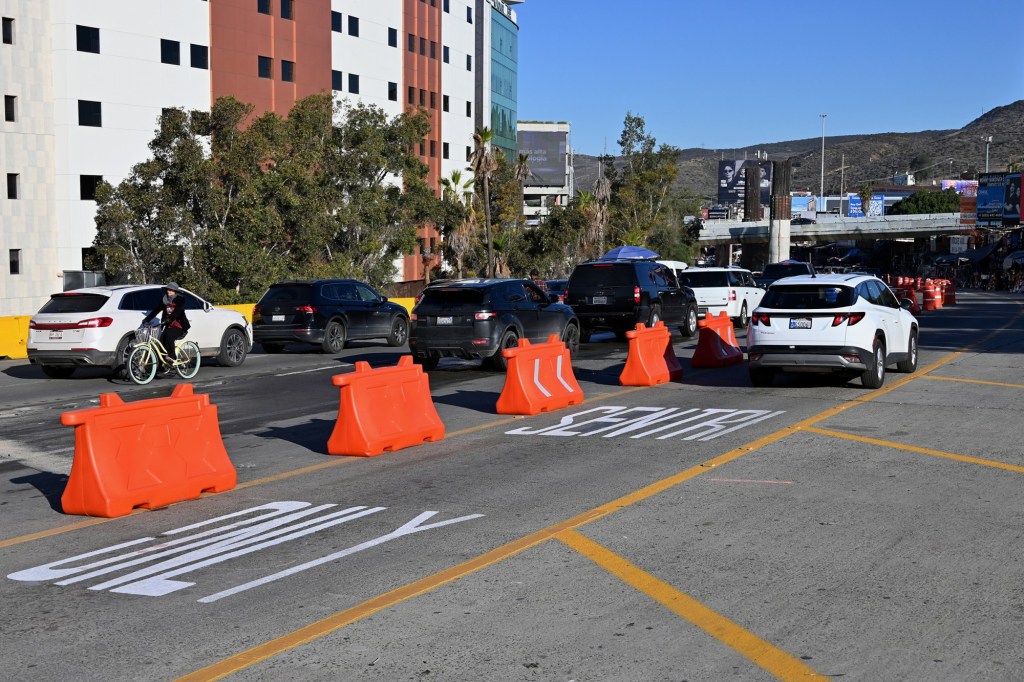
Border commuters enrolled in trusted traveler programs such as SENTRI or Global Entry woke up Wednesday morning with a new option to get in line at the San Ysidro Port of Entry.
Travelers can now access the busy port of entry via the new access route on Tijuana’s Calle Segunda or the existing one on Boulevard Padre Kino. This change is part of a four-month pilot program previously announced by U.S. Customs and Border Protection and the city of Tijuana.
“This is an example of the great things we can achieve when authorities coordinate in a binational way,” said Tijuana Mayor Ismael Burgueño in Spanish early Wednesday before inaugurating the new entryway.
Those with SENTRI or Global Entry can use the two designated lanes on Calle Segunda, also known as Benito Juárez, from 4 a.m. to 11 p.m. daily, the mayor said. Entry through Boulevard Padre Kino will continue to be available 24 hours a day.
There was hardly any wait to cross through Calle Segunda during the first hours of operation on Wednesday, but officials expect that to change as word gets out. Burgueño crossed into San Diego around 5 a.m. to try out the new access point himself; it took him less than three minutes.
Tijuana police officers were stationed at the entrance on Wednesday to verify that drivers had the required documents before getting in line and let people know about the change.
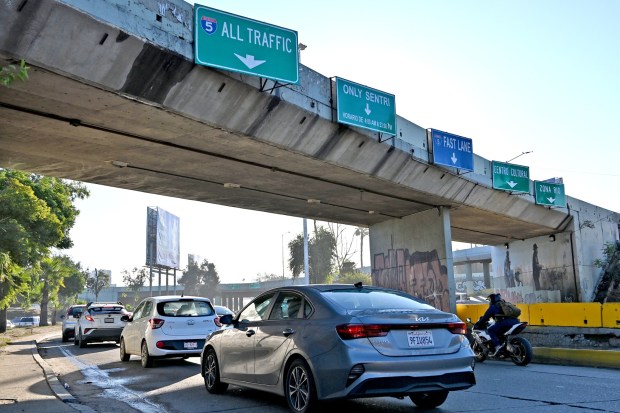 A second vehicle access point for SENTRI and Global Entry travelers crossing the border through the San Ysidro Port of Entry opened Wednesday. (Carlos Moreno / For The San Diego Union-Tribune)
The Calle Segunda access was previously designated for regular all-traffic lanes for those with non-chipped travel documents. With the recent change, Paseo de los Héroes is now the only access point for all traffic.
The Ready Lane for those with eligible documents, such as U.S. passport cards or RFID-enabled visas, does not change and will continue through Vía Rápida Oriente.
Burgueño said that, based on traffic studies, the city does not expect this change will lead to worse traffic on Paseo de los Héroes. However, if it does, it would affect the city “much less” than the SENTRI traffic when it had only one entrance, he added.
Traffic through the SENTRI lanes represents 42% of all border traffic at the San Ysidro Port of Entry, compared to 14% for the regular all-traffic lanes, according to Customs and Border Protection data from October 2024 through August 2025.
During peak hours, the SENTRI lane on Boulevard Padre Kino would sometimes back up for miles, extending all the way to Lázaro Cárdenas High School in Zona Río. Congestion could cause a headache for both those trying to join the border line and those just driving through the city.
CBP previously said that the pilot program “will be monitored closely and evaluated to determine its long-term feasibility and whether the changes will be made permanent.”
Burgueño said that officials will observe whether border commuters adopt the new route. He added that the upcoming busy holiday season will be an ideal time to test the pilot program. “I believe that in the end, we will realize that we made a very good decision,” he said.
Global Entry and the Secure Electronic Network for Travelers Rapid Inspection, better known as SENTRI, are CBP programs. Members must undergo a vetting process. Once approved, they can cross the border through dedicated lanes with less wait time than the regular lanes.