
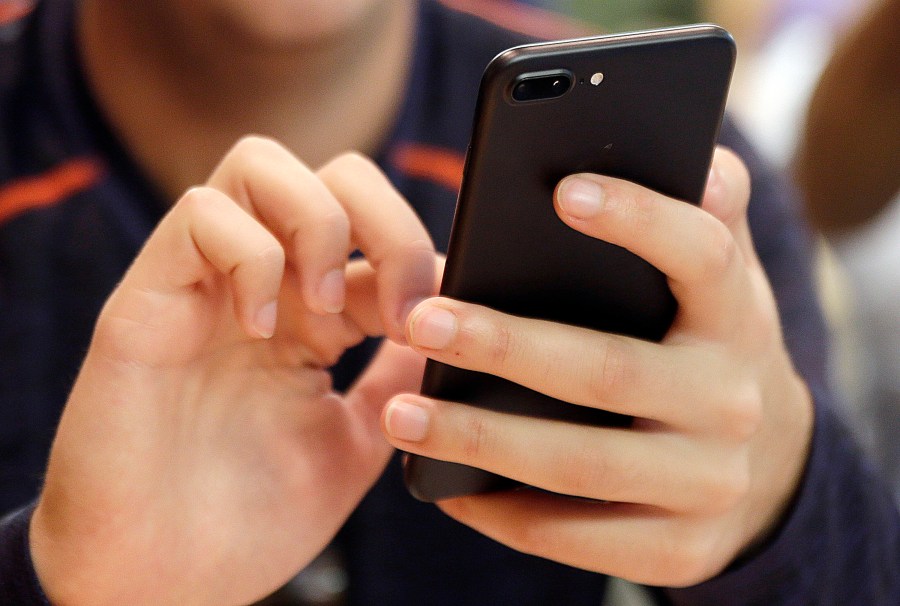
BAKERSFIELD, Calif. (KGET) — Bakersfield City School District students can expect a new policy limiting smartphone use in schools to take effect by the start of their fall semester in 2026, according to school district officials.
The BCSD Board of Education heard a presentation on the community’s feedback for a new smartphone restriction policy for students during its meeting Tuesday night.
Assembly Bill 3216, also known as the Phone-Free Schools Act, requires California school districts to adopt a policy that limits or bans students from using smartphones during school hours by July 1, 2026.
Attorney accused of crashing into DUI checkpoint fails to show for 2 hearings
Gov. Gavin Newsom signed the law on Sept. 23, 2024.
“We know that excessive smartphone use increases anxiety, depression, and other mental health issues — but we have the power to intervene,” Newsom said in a previous statement. “This new law will help students focus on academics, social development, and the world in front of them, not their screens, when they’re in school.”
The policy, once adopted by the board, would be updated every five years.
“We have to create a policy because of Assembly Bill 3216, which requires us to involve significant stakeholder participation to develop a policy to limit student smartphone use,” BCSD Executive Director of Instructional Support Services Tim Fulenwider said at the meeting.
The school district received feedback from students and families through meetings and surveys from September through October, according to Fulenwider.
The surveys included responses from over 10,000 BCSD community members: 6,918 4th through 8th grade students, 2,088 parents and 1,007 school district employees.
According to the surveys, most students with a phone said they use it “once in a while” and their main use for it is to communicate with their family.
Many students also said they believe smartphone use doesn’t affect their learning, although they agreed phones cause some problems related to bullying or social media, according to the survey.
Phone use also increases as students get older, Fulenwider said.
Parents and school staff supported lockable pouches, classroom pockets or keeping phones inside backpacks, but still wanted their children to have access to a phone for emergencies, according to Fulenwider.
Among school staff, 6th through 8th grade teachers reported phone use as interfering with learning more frequently than teachers of other grades, according to survey results.
Most school employees believe phones harm student behavior and prefer a partial ban on smartphones, as well as a strict definition of emergency situations, Fulenwider said.
Employees said the school district should also address other devices such as smartwatches.
In the survey, parents also wanted a strict definition of the emergency situation rule, which requires schools to allow phones during emergencies.
Many parents responded they felt strongly their kids need phones for emergency reasons and their main reason for supplying the phones was for emergency contact.
However, most parents also believe students’ phone use negatively affects their social skills and bullying-related concerns. They favored a “partial ban” where phones can’t be shown during the day or limited use, Fulenwider said.
But during in-person meetings, both parents and school employees said they supported a complete ban on phones except as law allowed. Parents also said in the meetings that major problems included bullying, safety and privacy concerns and cheating.
Parents asked for resources for students with phone addiction and internet blocking tools, and school staff also said resources should focus on mental health and addiction.
After the presentation, a couple board members brought up concerns about students’ phones being turned off as it would block location services from parents.
Area 3 Trustee and Clerk Pro-Tem Chris Cruz-Boone said students losing the ability to take their phones out to let their families know everything is fine during security issues can cause problems until BCSD figures out a new system.
Cruz-Boone said BCSD schools have been trying different things. She asked if principals could have more autonomy to figure out how that practice works on the ground.
“Is our intention to implement one strategy throughout district or to leave the policy flexible — I hate to use the word ‘flexible,’ but — nuanced enough that different protocols can be implemented at different schools?” Cruz-Boone said.
While BCSD doesn’t have a separate policy addressing students’ phone use, it does prohibit cell phones, smartwatches, pagers and other mobile communication devices during school hours under their “Conduct of Pupils” policy.
Device use is only allowed for the following:
In the case of an emergency, or in response to a perceived threat of danger
When a teacher gives permission to the student to have or use a mobile communication device with any “reasonable limitation” set by that teacher
When a licensed physician or surgeon determines that phone possession and usage is necessary for the student’s health and well-being
When phone possession or usage is required by the student’s individualized education program
The policy also bans any “listen-in” or audio recording tools when students are allowed to use their phones. It was last revised in November of 2022.
The Kern High School District does have a board policy titled “Mobile Communication Devices,” which only allows students to use their phone during class in the same situations BCSD listed.
Never miss a story: Make KGET.com your homepage
The KHSD policy says it prohibits students from using their phones in a way that violates other people’s privacy rights.
This policy was first adopted in December of 2020 and last updated in December of 2021.
The BCSD Board of Education is slated to get a first reading of the phone policy in December.
Copyright 2025 Nexstar Media, Inc. All rights reserved. This material may not be published, broadcast, rewritten, or redistributed.
For the latest news, weather, sports, and streaming video, head to KGET 17 News.