
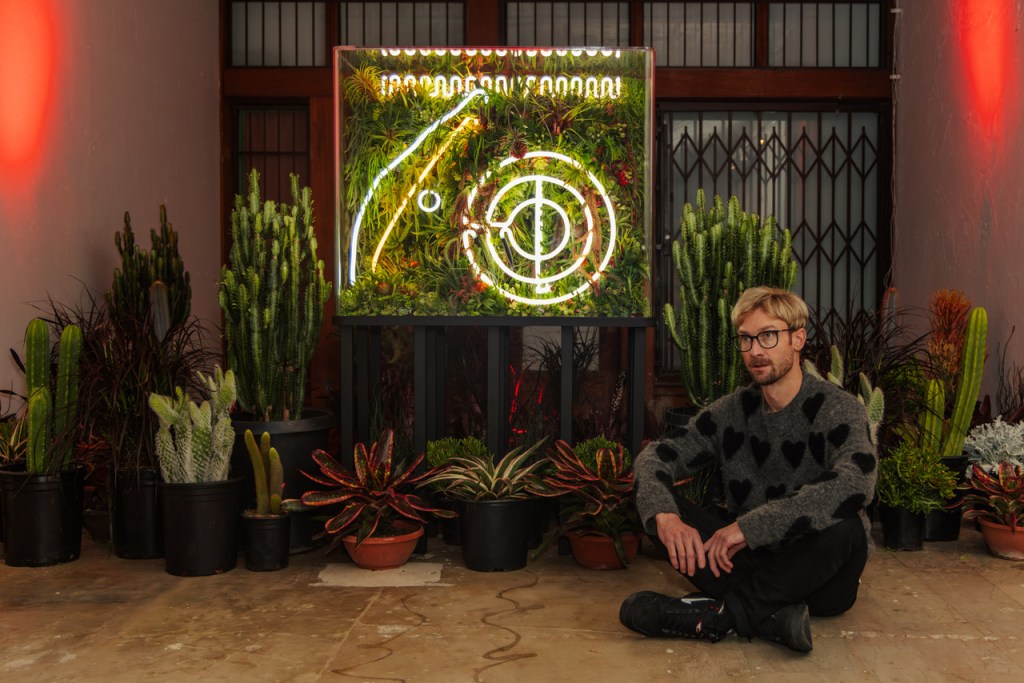
In a move to inspire up-and-coming artists while also promoting downtown San Diego as a cultural hub, a local hotel group has launched a residency program that will partner with UC San Diego’s esteemed Stuart Collection.
The downtown Granger and Guild hotels, both refurbished historic boutique properties developed by San Diego-based Oram Hotels, will effectively become homes away from home for visiting artists while they research and create artworks in connection with UC San Diego’s Stuart Collection Emerging Artists Program. The initiative launched this month with Los Angeles-based sculptor Max Hooper Schneider, who will live and work from the 96-room Granger in the Gaslamp Quarter as he develops a major new artwork for the UCSD campus.
In the meantime, a piece of his work called “The Extinction of Neon 6” resides at the Granger for guests to see.
The Stuart Collection of public artworks, which was established on campus in 1981, recently got a financial boost to its Emerging Artists Program when San Diego philanthropist Irwin Jacobs donated $500,000, and art collectors and commissioners Jill and Peter Kraus of New York also contributed $500,000.
While showcasing original artwork in a hotel as part of the overall decor isn’t especially unique in today’s hospitality industry, housing the artists themselves during their creative process is, says art adviser and curator Jennifer Findley. She was appointed by Oram Hotels to become their first director of arts and culture.
“Hotels will typically own the art or work with a local gallery, but in the art world it’s usually not great art,” said Findley, who also is founder of La Jolla-based JFiN Collective, an art advisory and consulting firm. “This is different. We’re putting really great art in an area that will be inhabited (by guests) and at the same time we’re trying to create a larger dialogue with artists from the Stuart Collection.
“It’s very unique to think about a hotel as an incubator for ideas. This program can be an inspiration for an artist not based in this community.”
Oram co-founder Kevin Mansour says the residency program is less about beautifying his own hotels and more about developing downtown San Diego as a recognized destination for the arts.
“The core of this is we’re looking to develop an arts and cultural hub in downtown,” Mansour said. “That’s one of the big goals, so we are planting the seeds of that. We believe in every great city, arts is a great component, and we believe downtown San Diego has not had that.”
Mansour differentiates the hotels’ art initiative from a gallery or museum experience.
“At a gallery you stare at the wall; here you will drink coffee with your friends, and some of the pieces you can actually touch,” he said. “Jennifer has curated it to blend in with the design of the hotel. It’s as if we collected art into our living room.”
Oram Hotels’ efforts are coming at the same time that the Downtown San Diego Partnership is also trying to bring greater recognition to the city’s central core as an artistic hub. It recently hired someone to oversee establishing what would be the city’s first Downtown Arts District.
In addition to hosting Schneider as its first artist in residency, Oram Hotels also has committed to subsequently work with Mexico City-based collective RojoNegro and fashion designer Carla Fernández, who will arrive in 2026 for their hotel stays downtown. Mansour said he’s hoping the Granger’s sister property, The Guild Hotel, will also become a residential base for artists
Meanwhile, The Guild will host curated exhibitions and collaborative activations with Findley’s help, but those artists won’t be a part of the residency program, she said.
For those who are selected to take up residence in the downtown hotels, it will provide a much-needed creative respite, Findley said.
“With the Stuart Collection program, they were staying anywhere UCSD could put them up, but if the artists are creating work for San Diego, they should experience San Diego and downtown as a very specific community, which is very inspirational for artists,” Findley said. “They don’t want to be in just the rarefied world of a university.”