
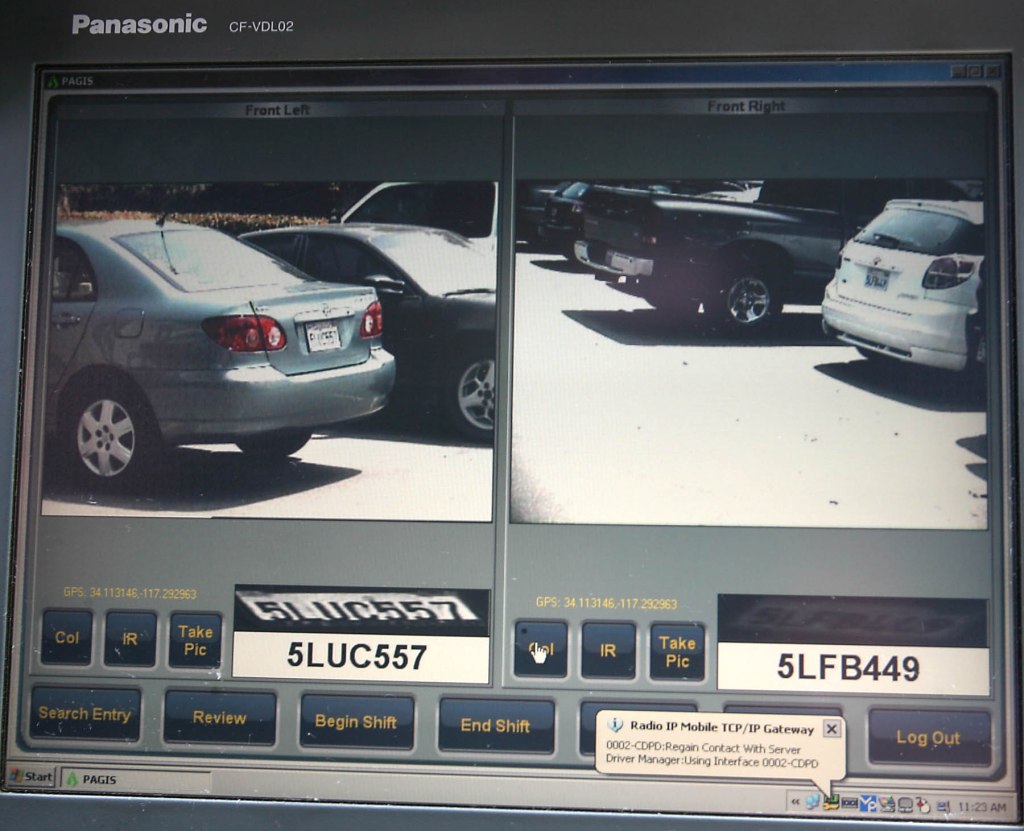
San Diego is proving what’s possible when technology and community work together to make cities safer. Through collaboration between law enforcement, neighborhoods, faith communities and businesses, Flock License Plate Readers, or LPRs, have led to tangible results — solving 600 criminal cases, finding missing children and recovering $5.8 million in stolen property. Of last year’s homicides, a license plate reader was used to help solve 11 of them, and four would not have been solved without the technology.
When clearance rates increase, crime decreases. San Diego is experiencing fewer reported violent crimes, an average 37 fewer reported incidents each month. Auto thefts have gone down by 20%.
These aren’t theoretical wins. Each number is the story of a life changed, harm prevented and communities protected. And yet, even as residents across San Diego benefit, much of the conversation in public policy circles misses the point.
One of the government’s most sacred responsibilities is to keep its citizens safe. To do that, it needs modern tools.
There are several truths that must be acknowledged:
— License plate readers capture images of vehicles and license plates that are visible in public — in other words, plain-view public information.
— The data is automatically deleted after a short, fixed period (typically 30 days).
— Every use is logged, creating a permanent, auditable record.
This is a limited tool that enables focused, accountable investigation. As Cynthia Adams, president of the Oakland NAACP, says, “These cameras are designed to detect only vehicles associated with a crime, removing the subjective judgment that too often leads to disproportionate stops and harmful interactions with Black and Brown residents. It is a clear example of how technology can support safer, fairer policing.”
Public safety is a shared responsibility among all levels of government and the citizens government serves. The question is how to collaborate without compromising autonomy and trust.
Collaboration rests on two principles:
— Contractual clarity: Cities must agree to explicit, transparent agreements defining data access, usage and limits.
— Local control: The city, county or business that signs the contract decides who can access data, for what purpose and for how long. Californians have decided that state law should bar federal access to local license plate reader data. Elsewhere, community members have set even stricter rules. Each decision carries tradeoffs but those choices belong to the local community.
These principles guide Flock’s approach. There are no backdoors, secret feeds or hidden access. Every customer of Flock determines with whom it shares and for what uses. And every query leaves digital breadcrumbs, documented in an audit log. In fact, Flock has endured intense scrutiny because we’ve voluntarily chosen transparency; the result is stronger, more accountable technology.
The San Diego Police Department has been a national leader in establishing clear and consistent guardrails that its license plate reader program operates within. SDPD’s concerns and feedback have directly impacted the enhanced compliance and privacy-focused tools we have built out this year and will continue to announce in the coming months. These include:
— Limits on federal agencies: Within the Flock platform, federal agencies cannot access California license plate reader data; nor can they access statewide or national lookup.
— Search filter blocking: Search filters provide built-in guardrails for certain agencies to prevent searches tied to license plate readers uses prohibited by law or by agency policy, specifically in the areas of immigration enforcement and reproductive health care. These filters are in place across California, automatically and comprehensively blocking those searches.
— Required offense types: To prevent vague search reasons, we are soon rolling out a required offense type dropdown for every license plate reader search. This means that every single search will be tied to a specific offense or case (“homicide”, “missing person”, etc.).
Technology changes. But principles shouldn’t.
We remain committed to protecting the vulnerable, supporting first responders and upholding constitutional integrity.
Let’s regulate the issues, but let’s protect the efficacy of proven technology with honesty, courage and common sense. The goal isn’t to live in a world without tradeoffs, it’s to make those tradeoffs consciously, together.
The San Diego model shows what happens when we stop fearing technology and start governing it wisely: Communities become safer, partnerships grow stronger and trust deepens.
Langley is founder and CEO of Flock Safety.