
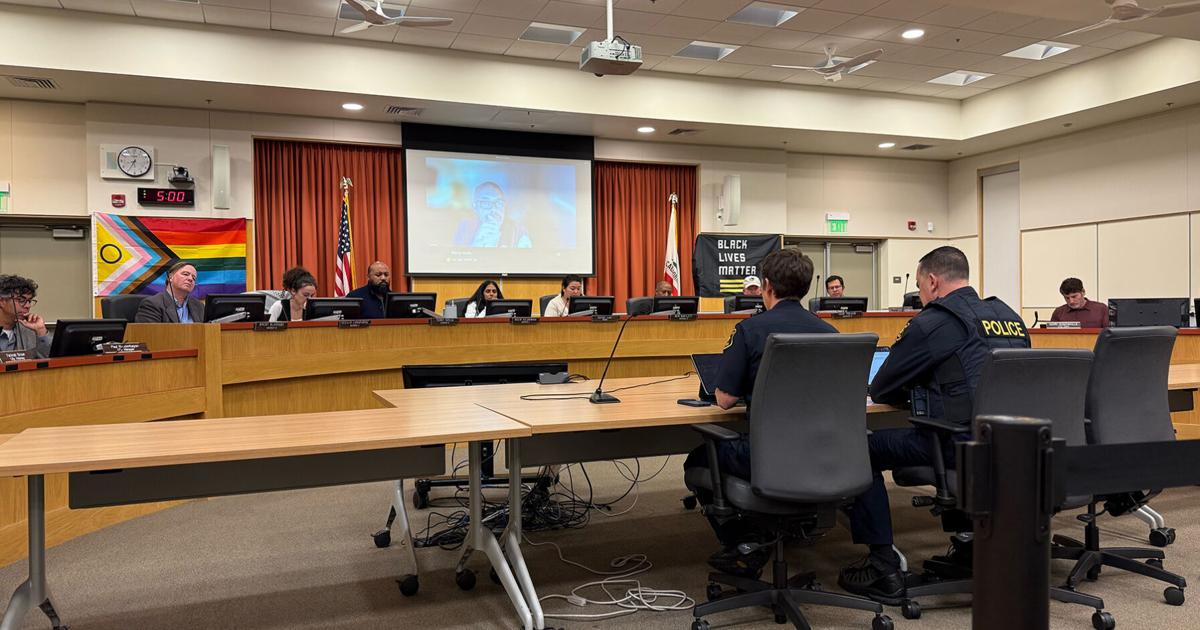
The Berkeley City Council voted Tuesday to direct the city manager to begin the process of acquiring drones for first response operations in Berkeley. The council also voted for a pause in Mills Act applications, which help homeowners preserve properties deemed historic landmarks.
Here’s what you need to know:
Item 31: Unmanned Aerial Systems and Drones as First Responders. After a lengthy discussion lasting just under two hours between the council, Berkeley Police Chief Jennifer Louis, Police Operations Captain Joe Okies, Fire Chief David Sprague and Deputy Fire Chief Keith May, the city voted to take the next steps in assessing drone use for first response in Berkeley.
The item, which was approved 8-1 — Councilmember Cecilia Lunaparra registered the only no vote — instructs the city manager to begin the process for the “Berkeley Police Department to acquire and use Unmanned Aerial Systems (UAS) including drones as First Responders,” according to the item. This will include looking into the various vendors and developing use policies, according to Louis.
“Very important pieces of a use policy will always include transparency and accountability,” Louis said. “It will be instrumental to us to ensure that those pieces exist in our use policies and are very clearly articulated.”
This item came in response to a recent Public Safety Commission vote, which unanimously made a positive recommendation in favor of potential acquisition and use of drones in the city. The process will follow Berkeley’s Surveillance Technology Ordinance, or STO, which requires auditing, transparency and data protection for acquiring and using surveillance technology.
During the discussion, Okies highlighted that other neighboring municipalities are already implementing this technology. According to Okies, since San Mateo began using first response drones, it has seen a significant drop in response times for incidents and can clear calls without police presence. Louis noted that with continued staffing shortages, Berkeley’s adoption of this technology would allow the department to better allocate current resources.
“It always strikes me when we start to talk about the different ways we can use these technologies that there’d be so many opportunities for both fire and some of our city departments to use (them) to increase efficiencies,” Louis said.
While the majority of the council agreed with the practical applications of drone usage outlined by the BPD and BFD leaders — including car chase surveillance, conducting threat assessments, search-and-rescue operations and improved fire response — the council peppered the chiefs with questions on privacy concerns, the potential cost of the program and potential use cases outside the scope of the departments.
Councilmember Shoshana O’Keefe was especially concerned about the privacy implications, asking if the drones’ onboard thermal imaging technology could view people in their homes — for example, while using the bathroom.
Louis said that while the drone could see a thermal outline of a person, it wouldn’t be able to see specifics beyond “someone in a seated position.” In an effort to address privacy concerns, Louis noted that their use case policy would be informed by “Berkeley values,” STO regulations, and guidance from the council and public.
O’Keefe also expressed excitement about the potential for drones being used in search-and-rescue missions at the Berkeley Marina. She noted that her husband often goes kite surfing and believes it would be a good idea to have a drone stationed at the marina at all times.
Louis said that she plans to come back to the council in February with next steps.
Item 30: Pausing Berkeley authorization for Mills Act agreements. The council also unanimously approved pausing Mills Act agreements. The Mills Act, a state law passed in 1972, allows municipalities to help homeowners preserve historic buildings while receiving a reduction in property taxes.
Councilmember Mark Humbert, who authored the resolution, said that the policy was not about devaluing landmark preservation in the city but rather about the current budget constraints the city is facing.
“I think that pausing is the only responsible course,” Humbert said. “The Mills Act was passed at a time when California homes and commercial properties, especially those which were historic but distressed, were much more affordable … Even our most distressed properties now go for prices that tend to lock out all but the most affluent … and those folks by and large do not need these tax breaks.”