
By Bo Tefu and Joe W. Bowers
California’s 2025 School Dashboard Shows Progress — but Persistent Gaps for Black Students Remain
California’s 2025 School Dashboard shows steady gains in key academic and engagement indicators — but also underscores that African American students continue to face some of the state’s widest achievement gaps.
Released last week, the Dashboard reports improvement in English language arts (ELA), mathematics, graduation rates, and attendance as schools continue recovering from the pandemic.
State Superintendent of Public Instruction Tony Thurmond said the results should motivate deeper support for students. “Seeing modest improvement on every Dashboard indicator should encourage us to deepen our investments in every child’s progress,” he said. “We must not rest until all students’ outcomes represent their brilliance and potential.”
Gov. Gavin Newsom echoed that message, calling the progress meaningful but incomplete. “These Dashboard results… show progress, [but] we know there’s more to do to take achievement to the next level,” he said.
African American students showed gains in both ELA and math, narrowing the distance from grade-level standards. They remain 51.3 points below standard in ELA and 95.8 points below in math — still far from proficiency but improving. Chronic absenteeism among African American students also fell to 29.8%, a significant decline from pandemic-era highs.
State Board of Education President Linda Darling-Hammond said the findings reflect the impact of statewide efforts to reengage students. “We’re getting more students reengaged… graduating students in greater numbers and getting more of them prepared for college and careers,” she said.
Districts showing broad improvement include Culver City Unified, Dinuba Unified, Healdsburg Unified, and New Haven Unified, which strengthened instructional programs and expanded wellness supports.
But the California School Boards Association cautioned against overstating the gains. CEO Vernon M. Billy said the state must take greater accountability for accelerating progress. “Year after year, Sacramento measures the performance of LEAs but not its own,” Billy said, adding that closing gaps “is not just a challenge for school districts and county offices of education — it is a state-level obligation.”
Work & Education: Milestones Are Shifting for Young Californians
A new policy brief from the Public Policy Institute of California says the path from school to work is changing for young Californians, with many reaching major milestones later than earlier generations. The researchers say these shifts reflect changing economic conditions, rising education levels, and new challenges facing teens and young adults.
The report finds that young people today are more likely to stay in school longer and earn degrees, but many still struggle to connect to stable jobs. As the brief notes, “While these young adults are a small share—roughly 11% of 16- to 24-year-olds in California—they amount to nearly half a million young adults.”
The brief says unemployment has increased for young Californians since 2022. Roughly “11% of 16–24-year-olds were not in school or working in 2024—lower than post-Great Recession but higher than pre-pandemic.” The researchers also point out that young adults now tend to live with parents longer, delay marriage, and have fewer children, even as more people earn four-year degrees.
Fewer Californians between 16 and 22 are working compared to earlier generations. But those 24 and older work at higher rates, which the authors link to stronger economic conditions after the Great Recession and rising education levels.
As the report puts it, “About half of Californians aged 24 are employed (56 %), 16% are working while in school, and 10% are still in school (and not working).” The report notes that men work at slightly higher rates than women, although the gap has narrowed over time.
The researchers also highlight racial and gender disparities. Young Black and Latino Californians have higher rates of being out of school and work compared to White and Asian peers.
Yet the brief states, “Compared to earlier generations, young Californians today are in school and/or work at higher rates.” For instance, about 12% of 20-year-olds born between 2003–2005 were disconnected, versus 16% of those born between 1985–87.
The authors say California can support young adults by expanding job training, strengthening school support systems, and using statewide data to identify students at risk of falling behind in work or education. They note that “the biggest rise in disconnection happens around the end of high school” and recommend programs that “connect schoolwork with college and career readiness.”
The report states that California’s economic future depends on helping young adults stay linked to school and work. The researchers call for stronger job training, better school support, and improved data systems to identify students at risk. They add that targeted help in the final years of high school could keep more young people on track to reach key education and employment milestones.
Republicans Demand More Transparency From Dems on Capitol Renovation Costs
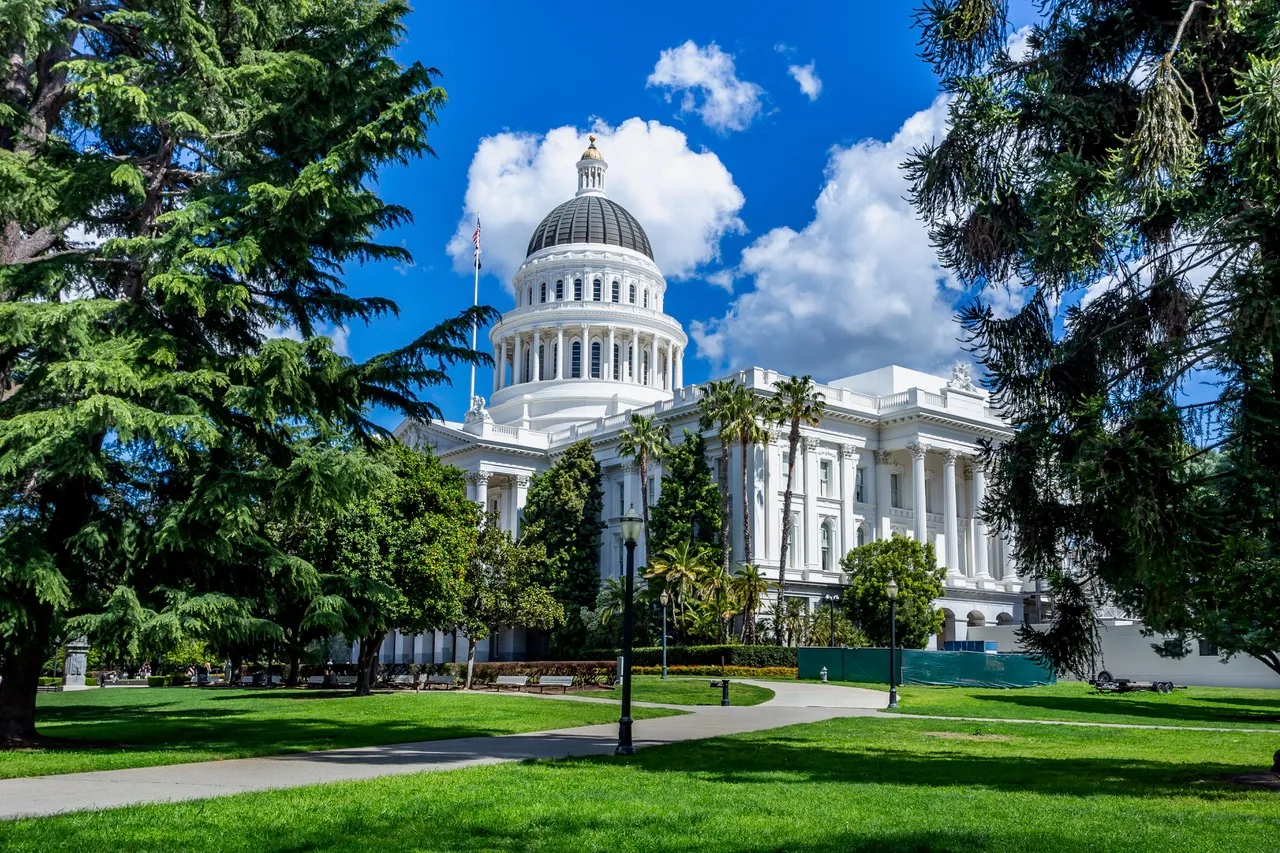
Republican lawmakers are demanding clearer answers from Democratic leaders about the soaring cost of California’s Capitol Annex renovation, a project that began at $453 million but is now believed to top $1 billion. For more than three years, the Legislature’s Joint Rules Committee has declined to release updated cost estimates or financial records, drawing growing frustration from lawmakers and the public.
GOP legislators say the refusal to disclose basic financial information raises serious questions about accountability. They argue that taxpayers deserve full transparency on how much the project will cost, why spending details remain hidden, and how far expenses have climbed since construction began.
According to reporting from KCRA, thousands of contractors and consultants tied to the Annex have signed nondisclosure agreements, preventing the public from seeing how tax dollars are being used. Despite Gov. Gavin Newsom acknowledging earlier this year that the secrecy was “inappropriate,” the financial details remain sealed.
This week, Assemblymembers Joe Patterson (R-Rocklin) and Josh Hoover (R-Folsom) sent a letter directly to Newsom urging him to order state agencies to release all remaining project records. Their request includes invoices, cost-overrun reports, contractor communications, and correspondence with legislative leaders.
“Californians should have the right to know how their tax dollars are being spent,” said Hoover. “We deserve accountability and answers, not more excuses.”
Patterson issued his own warning about the lack of transparency, saying, “What are they hiding? Keeping secrets from the public like this is a sign that something is seriously wrong, and we deserve to know what it is.”
Republicans also noted that Newsom has criticized secrecy around renovation projects in other states, which they say makes the lack of information on California’s own billion-dollar effort even more troubling. They argue that the governor should apply the same standards of openness at home.
California at COP 30: Newsom Announces Record Growth in Battery Storage, Clean Energy
Gov. Gavin Newsom announced at COP30 that California has reached 16,942 megawatts (MW) of battery storage, a milestone state officials say is strengthening the electric grid and accelerating the state’s shift to 100% clean energy. Leaders say the expansion shows that climate action and reliable, affordable electricity can go hand in hand.
The new total reflects rapid growth in clean energy infrastructure. Officials note that batteries now capture excess solar and wind power and release it during peak demand, helping the state maintain grid stability and reducing reliance on fossil fuels.
Battery storage has surged 2,100% since Newsom took office in 2019, with about 1,200 megawatts added in the past six months alone. California has now built roughly one-third of the storage capacity it expects to need by 2045 to meet its clean energy goals. Of the total capacity, 13,880 megawatts come from large utility-scale projects, while behind-the-meter systems on homes, businesses, schools, and local government facilities provide another 3,062 megawatts.
Newsom announced that California is joining the Global Energy Storage and Grids Pledge, becoming the first subnational entity to participate. The pledge sets international targets to deploy 1,500 gigawatts of energy storage, double worldwide grid investments, and build 25 million kilometers of transmission by 2030.
The governor criticized President Trump’s energy policies, saying, “Donald Trump’s reckless energy agenda puts China first and America last. While Donald Trump is failing, the Golden State is leading. We’re deploying more battery storage than any state in America, building a stronger grid, cutting pollution, and making abundant clean energy even more affordable.”
The state has now gone three consecutive years without issuing a Flex Alert, a sign of the grid’s growing reliability. Flex Alerts are a call to consumers from the state to conserve energy ahead of anticipated shortages.
Officials also note that renewable energy already supplies nearly 67% of in-state retail electricity sales, and California plans to retire all coal power by the end of the year.
State leaders say the rapid expansion of battery storage and clean energy resources demonstrates that California’s grid can meet growing demand while cutting pollution. They point to strong reliability during extreme weather, increased renewable generation, and the planned retirement of fossil fuel plants as evidence that the state is on track to achieve its 100% clean electricity goals by 2045.
No Delay: Edison CEO Vows Quick Compensation for Eaton Fire Victims
Edison International CEO Pedro Pizarro has pledged rapid payouts to victims of the Eaton Fire, which destroyed more than 6,000 homes and claimed 19 lives in January 2025.
The fire in Eaton Canyon is believed to have been caused by a century-old transmission line that re-energized through induction, when magnetic fields from nearby live lines electrify dormant lines.
Pizarro said the first settlement offers will reach applicants by the end of November. Victims must agree not to pursue legal action against Edison, and payments will be made within 30 days of acceptance. So far, 580 people have applied for compensation, which the company expects to recover through a state wildfire fund designed to prevent utility bankruptcies.
“We are committed to moving swiftly to support those affected by the Eaton Fire,” said Pizarro. He added that the company is working closely with both victims and authorities to ensure prompt assistance while addressing legal and investigative requirements.
The fire has prompted a series of lawsuits claiming Southern California Edison (SCE) failed to properly maintain its equipment. Legal claims include negligence and inverse condemnation, a California rule that holds utilities strictly liable for wildfire damages caused by their equipment, regardless of fault.
Investigations into the fire remain ongoing, led by the Los Angeles County Fire Department and Cal Fire. Edison is cooperating fully, providing information to authorities and working with lawyers representing victims to review claims and expedite settlements.
Legal experts note that accepting settlements may limit victims’ ability to pursue lawsuits, but many residents see the quick payments as crucial for immediate recovery, including housing and personal needs.
The Eaton Fire is one of California’s deadliest recent wildfires, and Edison’s settlement program is a significant step in providing relief. Officials say the investigation into the fire’s cause continues, and Edison emphasizes that it is focused on both supporting victims now and preventing future fires through improved equipment maintenance and safety practices.
California Leaders Push Back Against Offshore Drilling as Trump Admin Moves Forward
California officials are preparing to challenge federal plans to allow new offshore oil and gas drilling along the state’s coast, warning the proposal threatens coastal communities, marine ecosystems, and the state’s clean energy goals. Gov. Gavin Newsom, speaking at COP30 in Brazil, called the plan “dead on arrival” in California. “We will do everything in our power to protect California’s coastline, our communities, and our environment from this reckless proposal,” he said.
The Trump administration reportedly plans six offshore lease sales off California between 2027 and 2030, the first new drilling along the Pacific Coast in decades. State leaders argue the plan undermines the state’s ambitious climate agenda and risks economic losses to tourism, fisheries, and recreation industries.
Lt. Governor Eleni Kounalakis also spoke out against the plan, saying, “California will not stand by while federal officials gamble with our environment and economy. Our coastlines are irreplaceable, and our residents deserve protection from oil spills and environmental degradation.”
California Attorney General Rob Bonta added, “We are prepared to use every legal tool at our disposal to stop these leases. California’s laws, communities, and environment come first.”
Environmental groups have joined state leaders in opposition. Pete Stauffer, Ocean Protection Manager at the Surfrider Foundation, said, “The federal administration’s offshore oil drilling plan will damage coastlines and communities while threatening coastal recreation and tourism industries that contribute billions of dollars to our nation’s economy.”
Advocates including Oceana, NRDC, and Earthjustice warned that expanded drilling could trigger oil spills, harm marine life, and endanger public health.
Industry analysts note Pacific Coast leases may be less attractive than Gulf leases due to stricter regulations and limited infrastructure. California has avoided offshore drilling since the 1980s, following the 1969 Santa Barbara oil spill, which sparked the modern environmental movement.
California’s opposition aligns with a broader coalition of lawmakers and advocacy groups. Earlier this year, Senators Alex Padilla (D-Calif.) and Cory Booker (D-N.J.), along with Representatives Jared Huffman (D-CA-2) and Frank Pallone (D-NJ-6), led a letter signed by more than 100 congressional members urging the administration to halt new offshore leases.
Padilla emphasized, “Opening new offshore leases off our coasts threatens the environment, coastal economies, and communities that depend on a healthy ocean. We cannot allow short-term fossil fuel interests to outweigh public safety and economic security.”
Newsom added, “California will defend its communities, environment, and economy against this unnecessary and risky drilling initiative.”
Waymo to Offer Freeway Rides for Self-Driving Taxis in California
Waymo announced Wednesday that its self-driving taxis will begin traveling on freeways in Los Angeles, Phoenix, and the San Francisco Bay Area, marking a major milestone for autonomous vehicle technology.
Previously restricted to city streets, Waymo said its technology is now ready for higher-speed freeway conditions. “Freeway driving is one of those things that’s very easy to learn but very hard to master when we’re talking about full autonomy without a human driver as a backup, and at scale,” said co-CEO Dmitri Dolgov. “It took time to do it properly.”
Waymo, a spinoff from Google, appears to be the first U.S. company offering fully autonomous freeway rides without human specialists on board. In a 40-minute test ride in Northern California, the vehicle merged on and off ramps, obeyed speed limits, maintained safe distances, and avoided a human driver attempting a dangerous maneuver, the company reported.
Safety remains a key concern. About 18% of traffic fatalities occur on highways and expressways. “In order to predict what’s going to happen 10 seconds from now, the car has to sense what’s happening much farther down the road,” said Wendy Ju, associate professor at Cornell University.
Srikanth Saripalli, director of the Center for Autonomous Vehicles at Texas A&M University, praised Waymo’s record, noting the company has passed over 100 million miles without a human behind the wheel.
Waymo plans a gradual rollout of freeway rides, monitoring performance before full customer availability. “The Waymo driver goes up to the posted speed limit. So, for example, if the speed limit is 65, that’s the maximum speed limit, and it does not exceed it, unless in extraordinary circumstances,” said product manager Jacopo Sannazzaro.
The expansion comes amid increasing competition from Tesla, which has begun offering robotaxi rides in Austin and San Francisco, though its service still includes employees in the vehicle. Other companies, including Amazon’s Zoox and several Chinese tech firms, are also racing to expand autonomous taxi services.
Waymo also announced plans to more than double the number of cities it serves, with new cold-weather locations including Denver and Detroit. It will introduce a new van, the Zeekr RT, supplementing its Jaguar fleet, and will start curbside service at San Jose’s airport, the second major airport for Waymo after Phoenix.
Pablo Abad, Waymo product manager, said, “We do not expect Waymo to make congestion worse on the freeways,” citing no measurable impact in areas where robotaxis already operate.
Waymo’s freeway rollout marks a major step for self-driving cars in California. “This has been a long time in the making,” said co-CEO Dmitri Dolgov. With safety-tested autonomous vehicles now navigating highways, the state is poised to lead in the future of robotaxi transportation.
Related