
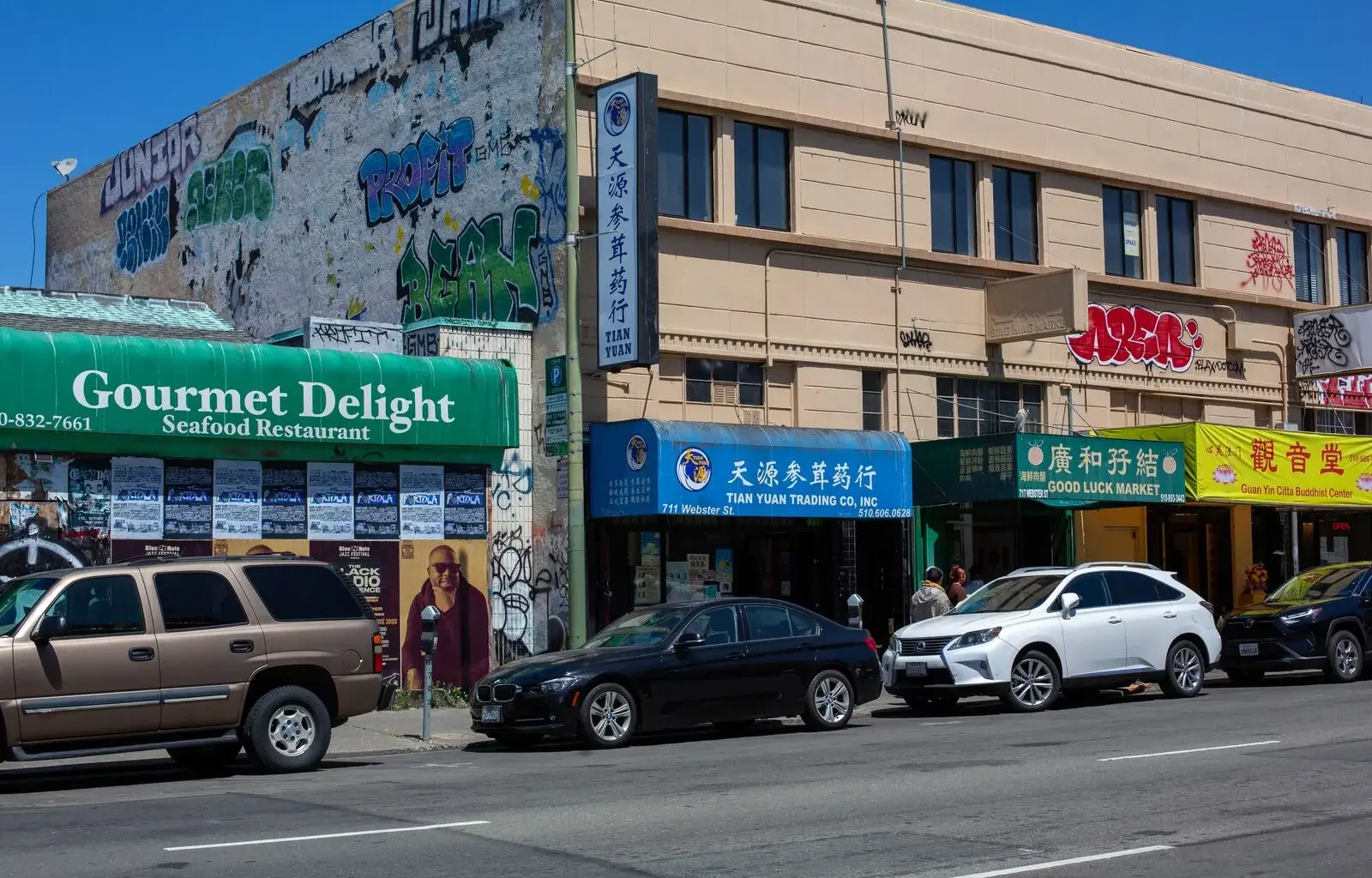
Small and new Oakland businesses could get significant tax breaks under a plan announced today by two councilmembers and Mayor Barbara Lee.
Councilmembers Zac Unger and Janani Ramachandran, along with Lee, are angling to put the tax relief measure on the June 2026 primary election ballot.
Under the proposal, many small businesses that make less than $1 million per year would not have to pay the city tax on their earnings in 2027. The exemption would apply to classes of businesses that include retail shops, restaurants, salons, and others.
“These are the kinds of ground-level businesses that drive foot traffic and promote neighborhood vibrancy,” the officials promoting the measure wrote in a press release.
Additionally, new businesses of any size that open in a commercial space in Oakland in 2027 would not have to pay the gross receipts tax in 2028, up to $1 million.
”Crime, regulations, tariffs, and competition from online retailers and delivery services mean that some of the businesses that define Oakland are barely hanging on,” Unger wrote in his newsletter today. San Francisco and other cities have implemented similar relief programs successfully, he said.
The city would set aside $3 million to cover the lost revenue, Unger told The Oaklandside. In 2023, the businesses that would be eligible for these breaks generated $1.6 million in taxes. But, Unger said, the temporary relief for new businesses is an “opportunity cost, not a hard cost,” as it could attract businesses that aren’t yet in Oakland and aren’t expected in the budget.
The City Council will first need to vote on whether to place the item on the ballot. Then voters will get the final say, as this plan would alter a previous measure passed by voters that set the business tax rates.
“By easing some of these initial tax burdens for new and emerging businesses, the city is helping entrepreneurs build sustainable operations from day one, and hopefully attracting new businesses to fill our vacant spaces,” said Stephanie Tran, president of the Oakland Chinatown Chamber of Commerce at Thursday’s meeting of the council’s Rules and Legislation Committee.
For several years, local businesses have raised alarm about rising costs, public safety concerns, and empty corridors that haven’t bounced back since the COVID-19 shutdown. Over the summer, Lee announced reforms to the permitting process for new businesses, aiming to decrease bureaucratic hurdles.
“I want to be honest about the fact that City Hall has not always sent the message that we value our business community. That changes now,” Unger wrote.
At the same time, the cash-strapped city relies on every tax dollar brought in to fund essential services.
The City Council’s rules committee voted Thursday to move the tax relief item forward one step. On Dec. 4, the same committee will schedule it for discussion.
“*” indicates required fields