
The San Francisco Giants are going to prioritize pitching this offseason. They’ve explicitly said this, but you could have guessed as much after looking at their roster for three seconds. They need pitchers, and they need lots of them. That’s why this series of free-agent profiles started with a couple of pitchers and will make sure to cover Zac Gallen before the Giants sign him in a couple of weeks.
However, even though the Giants finished the 2025 season with encouraging developments on the offensive side, it would be surprising if they didn’t make any lineup improvements. The homer-happy finish might be sustainable over a full season, but there’s a big difference between hoping that can continue and expecting that to continue. Nobody except the rest of the National League wants to see the Giants run it back with their lineup.
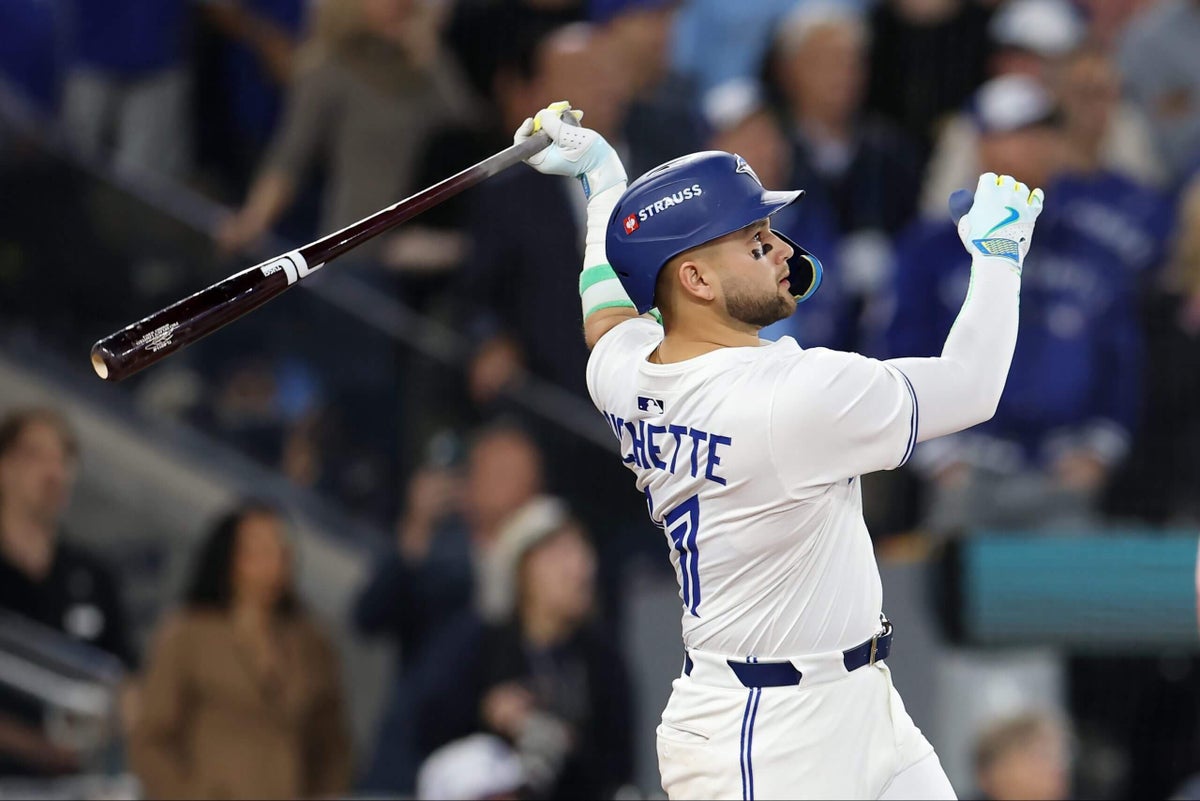
Let’s start with someone who probably earned himself an extra $25 million last month, even though he couldn’t “run” or “move without pain.” Bo Bichette has just about everything the Giants might want in a lineup upgrade. That’s the good news and the bad.
Why the Giants might want Bichette
Contact. Bat-to-ball skills. Above-average power for a middle infielder. He doesn’t turn 28 until March. Right-handed, with only minor platoon splits.
Is that a description of Bichette, or is it a description of exactly what the Giants should be looking for in a second baseman? Yes. The answer is yes, it is. The Venn diagram of qualifications and desired qualifications is a single circle, and it’s hard to find reasons Bichette shouldn’t be the Giants’ top offensive target. If you’re wondering where it would leave Casey Schmitt, who might be part of a younger offensive core, note that Bichette is only 361 days older than Schmitt. He would offer the same sense of sustainability that Schmitt might, just for a lot more money.
This all assumes Bichette would move to second, even though his only professional experience there came in five World Series games. His defensive numbers at short have been declining for a while now, though, and a move to second is inevitable. He’d be joining an infield with Matt Chapman, Willy Adames and Rafael Devers, which would seem like an easier sell than most. That’s an infield that could be together for a long, long time.
There are boring logistical reasons to want Bichette, too. He’d give the Giants another player with experience at shortstop, allowing for even more lineup permutations and contingency plans. He would also be another right-handed bat to nestle between the left-handed hitters (Devers, Jung Hoo Lee and, eventually, Bryce Eldridge).
There are red flags that we’ll get into, but they won’t be enough to overwhelm the simple truth that Bichette would make the Giants’ lineup much, much better at a position where they’re hoping for average production, at best. He hits the ball hard, and in an increasingly low-average era, Bichette has been pretty good at hittin’ ’em where they ain’t, which is a skill the Giants desperately want to improve, team-wide.
There you go. Almost everything the Giants might want from a lineup upgrade, right down to his youth. It’s almost enough to make you preorder a City Connect Bichette jersey.
Almost.
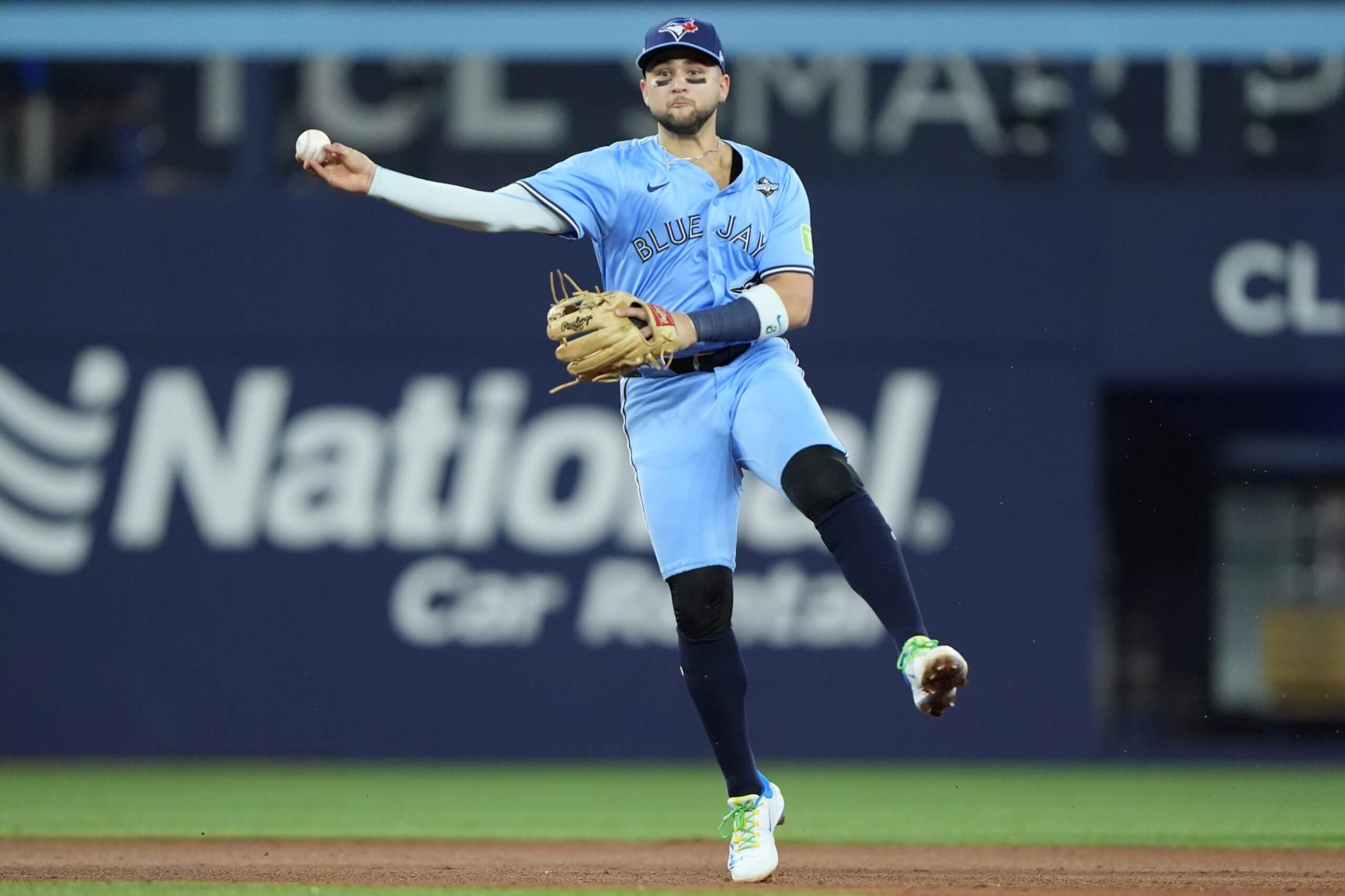
If the Giants pick up Bo Bichette, he would be learning a position and coming off a knee injury at the same time. That seems less than desirable for everyone involved. (John E. Sokolowski / Imagn Images)
Why the Giants wouldn’t want Bichette
His contract is going to be silly. Absurd. Whatever you’re thinking, it’s going to be higher. This is going to be the new Xander Bogaerts deal, where you look back in a few years and wonder how it ever made sense. Our own Tim Britton is pretty good at free-agent estimates, and he has Bichette getting eight years and $212 million. My guess is Bichette beats that projection.
This would be an investment. The Giants can make only so many of those, and they’ve already yoked the fate of the franchise to several players over the next several years, most of them on the offensive side. With Chapman, Adames, Devers, Lee and Bichette, the Giants would owe more than a half-billion dollars to five players, none of whom is likely to win the MVP in any given season. These are all good players, and some of them can have long stretches of greatness, even. But that’s a lot of money for players who might not crack a list of the top 30 hitters in baseball. Bichette’s relative youth is appealing, but he’d be another long-term commitment to a good-not-great player.
There’s also the question of his defense. Though Bichette’s knee injury was the result of a September collision at home plate and not any sort of lingering issue, he would still be learning a position and coming off a knee injury at the same time. That seems less than desirable for everyone involved. And it’s not like the shortstop market is so robust that there won’t be teams wanting him to stay at his original position, either. The next-best option is Ha-Seong Kim, and after that, it’s Isiah Kiner-Falefa, maybe? If teams want to pay money for a shortstop, their options this offseason are Bichette, Kim and miscellaneous. Teams expecting to pay second-baseman money for their second baseman might have to sit this one out.
The only kind of teams that can go after a player like Bichette are teams that are printing money (Los Angeles Dodgers, New York Yankees) or owned by a free spender (New York Mets, the Peter Seidler-era San Diego Padres). If your argument is that the Giants should be one of those teams, I can’t disagree. If that’s the case, Bichette would be the perfect player to go goofy on. He’s the right fit at a premium price, the perfect impulse purchase for a newly wild ownership group.
The Giants will not be one of those teams. Forget it. Which means someone like Bichette will take up a big chunk of what the Giants are willing to spend. He’d affect how they spend in 2029. He’d affect how they spend for the rest of this offseason. He’d indirectly put a lot of pressure on Giants player development to deliver major-league-quality pitchers, and quickly, because they’d have less money to spend on free-agent starters and relievers, now and in the future.
Do you have faith in the Giants to develop those pitchers right away and complement them well with relatively inexpensive free agents? If so, then throw caution to the wind and live a little, dang it. Bichette might be right for you.
If you’re … not as easily convinced they can do that, Bichette is a luxury, not a necessity. Don’t burden future payrolls for a 120 OPS+ when you might have an inexpensive guy capable of a 100 OPS+ in-house. Save that money for the Tatsuya Imais of the world, because the Giants aren’t likely to find one of those from their farm system soon.
Verdict
I went into this expecting Bichette’s age and production to make him a perfect fit for the Giants’ lineup, and that’s still true, at least in theory. But, boy, that would be a lot of money for an infield that might not get a single MVP vote in any given season. Pitching and the outfield are where the Giants need to focus, which makes Bichette a pretty easy pass, even if he’d make the 2026 Giants much better than they otherwise might be. You can’t totally ignore 2030 when you’re playing general manager.
Assuming there is a 2030.
And when you put it that way …
(No. The Giants probably should not sign Bichette to play second base.)