
What’s at stake?
Homelessness has been steadily increasing over the past decade, despite record levels of funding. Local leaders have been criticized for not coordinating enough or being held accountable to outcomes.
Leaders hope this partnership will resolve some of those challenges.
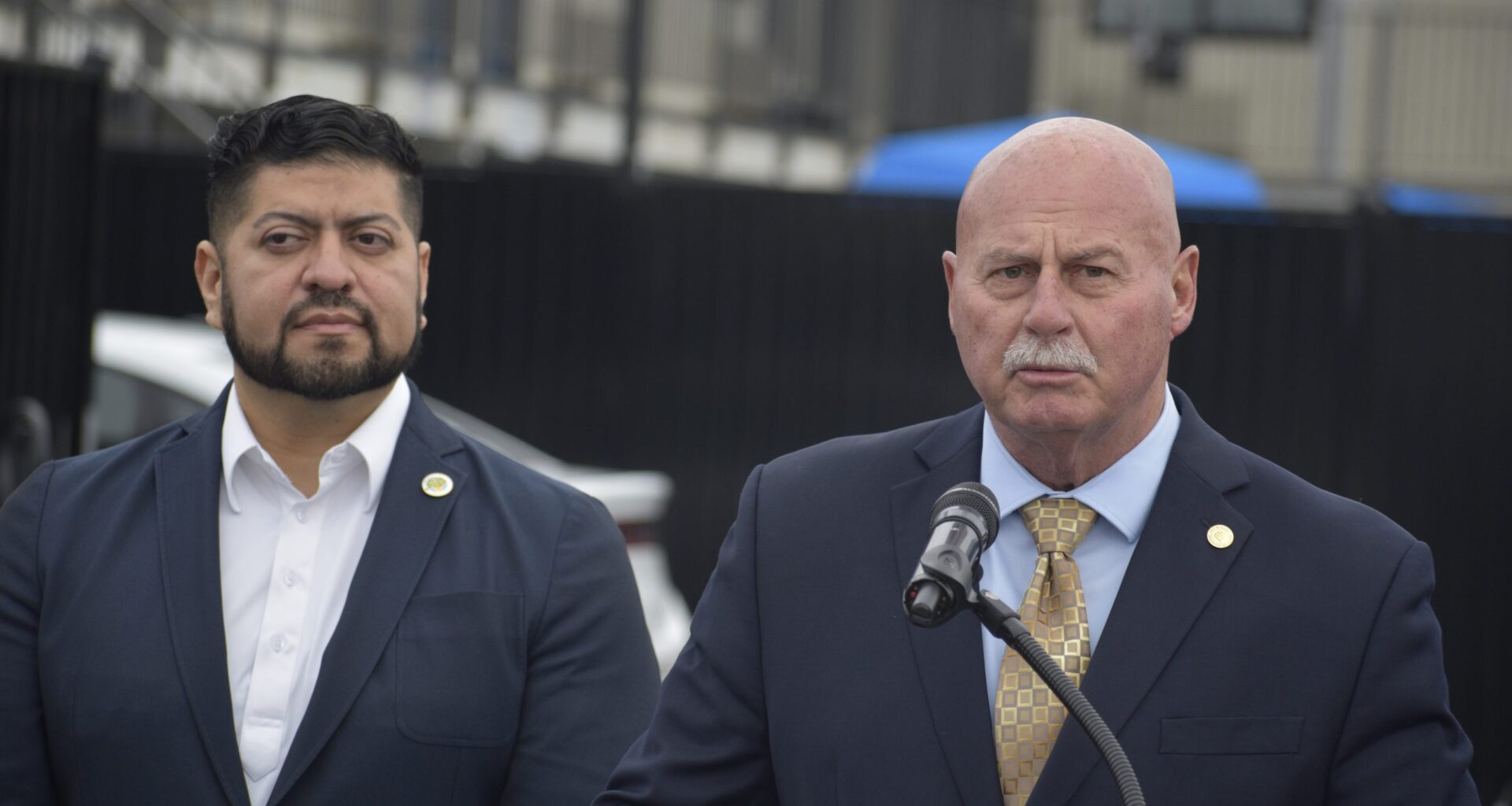
Fresno’s city and county leaders joined a collection of unhoused service partners at a Friday news conference to tout what they described as significant progress toward a new local partnership aimed at solving the region’s homelessness crisis.
The news is a major narrative shift on homelessness. Historically, the two parties have butted heads on who is responsible for what when it comes to providing resources for the unhoused — with county officials claiming the issue is a city problem.
Fresno County Supervisors Luis Chavez and Garry Bredefeld, both ex-city councilmembers, made campaign promises last year to renew efforts to have City Hall and the Hall of Records collaborate more often.
Chavez said on Friday that, during meetings held quietly by the city and county and other relevant homeless supportive service providers over the last several months, a memorandum of understanding is being crafted by the two camps to best tackle the growing homelessness crisis. He said the old way of doing things was not getting the results either party wanted for themselves, or for some of the region’s most vulnerable.
“What we were doing was essentially reshuffling folks around,” Chavez said. “I think with this new era of collaboration, that’s going to end.”
Fresno Mayor Jerry Dyer said there is currently no tentative date for when the MOU might get finished between the city and the county when asked by Fresnoland during a brief media scrum following the news conference.
“We’re not going to rush it. We have time, so we want to do it right,” Dyer said.
Both Chavez and Dyer added that the MOU will make it clear which of the two parties “is responsible for what” when it comes to providing local homeless services, and introduce accountability methods to track the spending of housing funds across Fresno’s many supportive service organizations.
Five years ago, a Fresno County Grand Jury report found a severe lack of coordination across the multitude of agencies working to serve unhoused residents.
“We want to know exactly how the money is spent,” Chavez said, “and, more importantly, how it helps those folks that are in crisis that don’t have housing or substance abuse or mental health services, transition out from that situation and out of that crisis into a long-term sustainability model.”
The city has also been looking toward the state for new ways to address its local homeless issues. Fresno recently entered an agreement with Caltrans, the state’s transportation agency, to be able to clear encampments on highway rights of way.
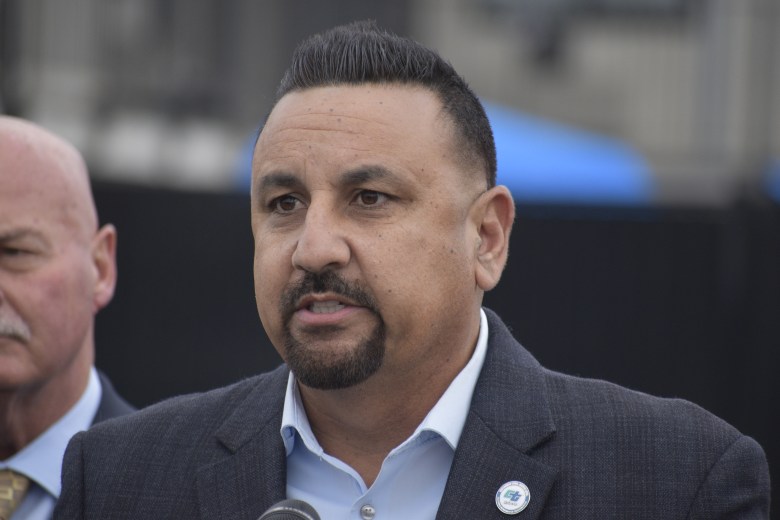 Michael Navarro, a regional manager for Caltrans. Pablo Orihuela | Fresnoland
Michael Navarro, a regional director for Caltrans, said at the Friday news conference that the state has removed 19,000 homeless encampments since 2021.
Friday’s news conference was held inside the recuperative care facility on 4080 N Blackstone Ave — the former Fresno campus of SOUL Housing, a service provider that left town “without an exit strategy,” Dyer said, placing about 200 in-house patients at risk of homelessness, and laying off 39 employees with few hours notice. The legality of their exit has been under investigation by the Fresno City Attorney since last month.
Katie Wilbur, executive director of RH Community Builders’ — a local supportive services group that has taken over the Blackstone facility in the interim — said her group plans to vacate the facility by the end of January. She added that “anybody who still needs” supportive services will move with RH Community Builders after they vacate the premises.
When asked what the property owner of the Blackstone facility has said amid the transition, Dyer said they wanted the city to buy the property to run as a shelter — but there is no appetite for that. Fresno County records show that the property is owned by Sushilaben Patel and Prabhatbhai Patel.
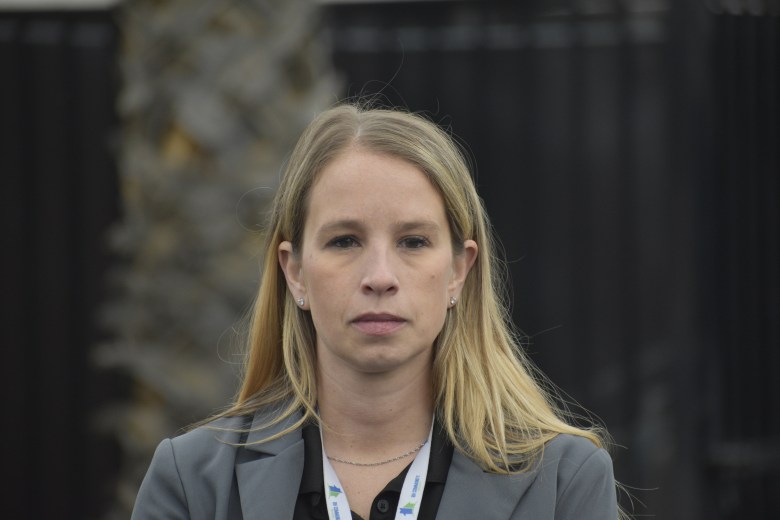 Katie Wilbur, executive director of RH Community Builders. Pablo Orihuela | Fresnoland
The sudden closure of the SOUL housing facility quickly drew media scrutiny to the city’s own homeless shelters, which could face closure following a reduction in available state and federal funding to keep the beds open. Two of the city’s homeless shelters announced earlier this year that they will close due to a lack of funding.
The city opened up those shelters using funding from the state’s Homekey program — a pandemic-era policy that saw billions of dollars go to cities and counties across California toward the opening of shelter sites for the homeless. The money came with strings attached, requiring the city’s and county’s buy-in on eventually turning those shelter sites into permanent housing.
But the money to make sure those beds actually result in permanent homes was never guaranteed, and is often hard to come by.
Dyer reiterated that requirement on Friday by saying that there was “never any intent” by the city to permanently run the homeless shelter that they opened up using the state’s pandemic funding. He added that the city is looking at options to transition shelter residents away from the sites, aware of the impending shutter date for many of his city’s shelters.
“That’s our commitment, and if we don’t have a place for them to stay, then we’ll delay our transition out,” Dyer said. “Simple as that. We’ll figure out a way to pay for it and partner with the county and other organizations in the state to make sure we do that.”
Friday’s news conference also doubled as a resource fair for the remaining residents at the Blackstone facility. The fair included county and state organizations like the Department of Motor Vehicles, who provided patrons with resources to get an ID card. Dyer said Friday’s fair was a spiritual successor to a similar event that happened last month.
Dyer ended the news conference addressing the shelter residents and homeless residents present at the news conference.
“We love you right where you’re at, but we don’t want to leave you where you’re at,” Dyer said.
Relatively speaking, the county has made moves this year that signal a new, increased desire to take a leadership role in addressing the local homeless crisis.
Early last month, the county took over as the managing partner for the Fresno Madera Continuum of Care — a local coalition of homeless supportive service groups. And earlier this week, Fresno’s Board Of Supervisors OK’d the County Administrative Office to open “Office Of Housing And Homelessness,” a new department to specifically focus on tackling local unhoused issues.
The Fresno Madera Continuum of Care reported earlier this year that homelessness in the region has continued to grow now for over a decade.
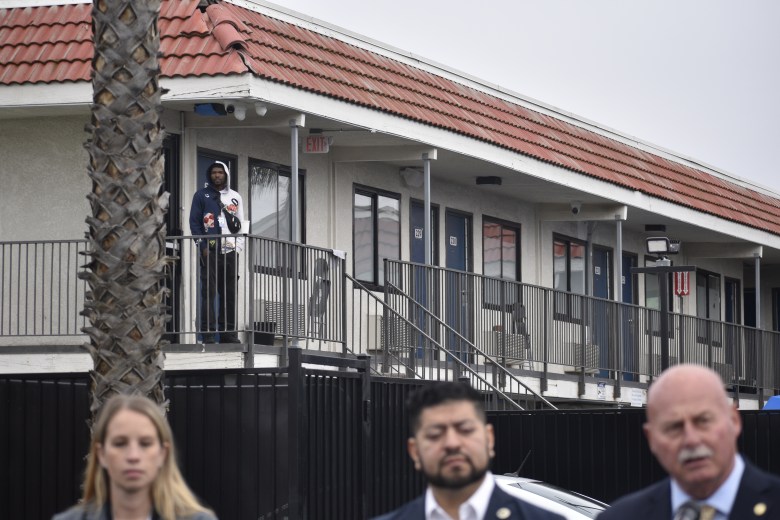 A resident of the 4080 N Blackstone facility watches over Friday’s news conference between the city and county. Residents watched along from the balcony and from the ground level Pablo Orihuela | Fresnoland
Related