
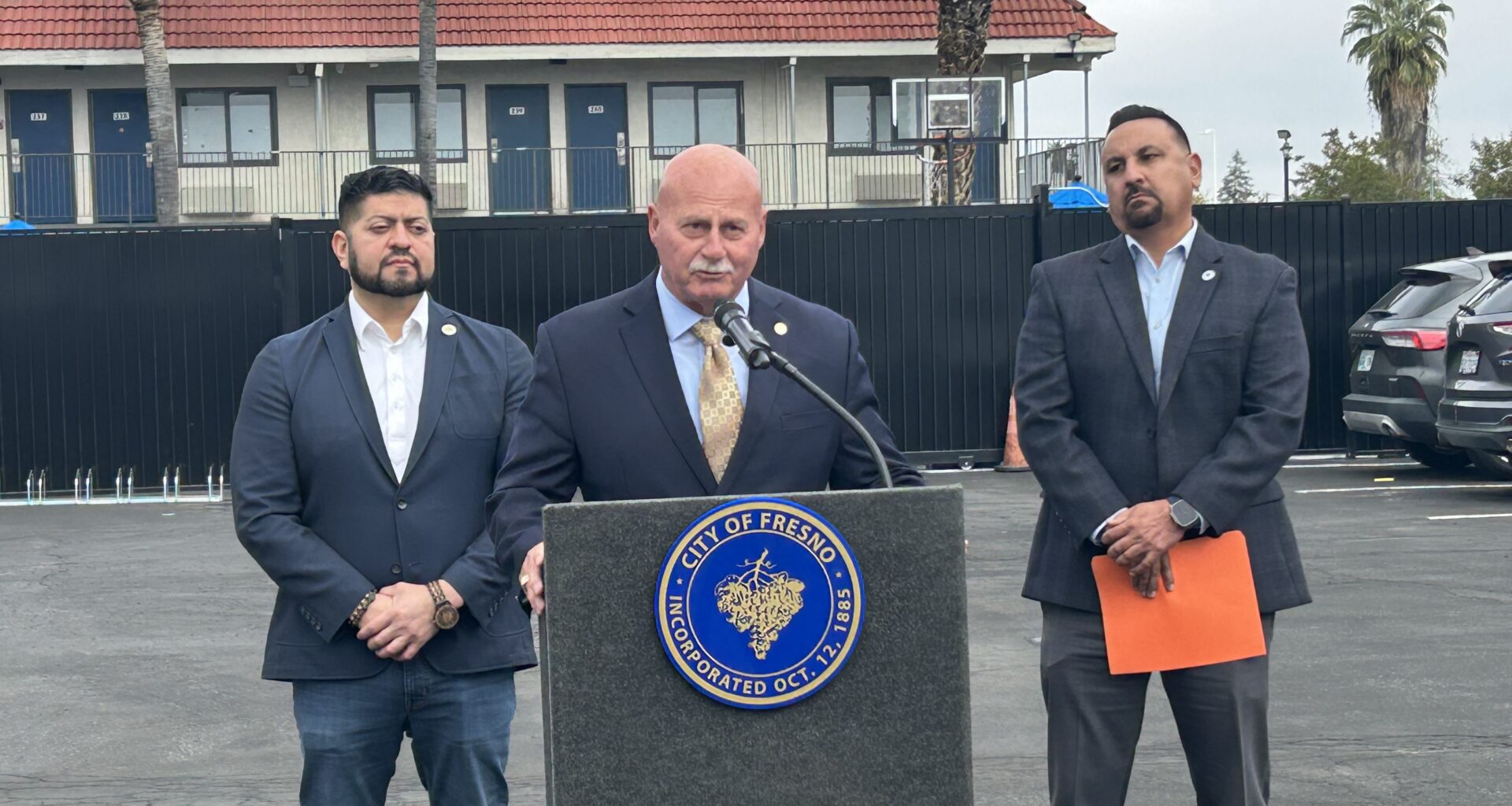
FRESNO, Calif. (FOX26) — State, county, and city officials are strategizing ahead of losing hundreds of shelter beds in Fresno.
Jerry Dyer, Mayor of Fresno, said, “Government alone is not the answer, but government with working together and government with nonprofit organizations, coming alongside each other, that is the answer.”
In late October, Soul Housing lost funding to house about 200 people.
Some not only lost shelter but also jobs and resources.
Within 24 hours, Mayor Jerry Dyer, RH community builders, and Calviva Health rallied together to keep the shelter running until the end of the year.
They are planning for the exit plan of more shelters within the next seven years.
Mayor Dyer said, “We’re going to only do so if we can ensure that every single person here has a place to go, whether that’s permanent housing or into another shelter bed.”
Mayor Dyer, alongside Fresno County District 3 Supervisor Luis Chavez, is making transitional housing a focal point.
Supervisor Luis Chavez, Fresno County District 3, said, “It’s about to be 30 plus degrees next week. It’s cold, and the best thing that we can provide somebody during the season is a shelter, food, and resources.”
The question is how to ensure permanent housing and funding for resources.
Supervisor Chavez says it will come down to budgeting, starting at the federal level.
Supervisor Chávez said, “The federal government is now changing its strategy as well.”
However, he continued, “They are not focusing anymore on the housing first strategy, diverting funds to more transitional facilities and resources for substance abuse, for mental health.”
Fresno leaders are collaborating with California Governor Gavin Newsom’s office to secure all available grants.
Including the Governor’s Newsom’s Safe Task Force, which has cleaned 19,000 encampments since 2021.
But other than collecting nearly 400,000 cubic yards of trash, the project connects people to housing resources.
Mayor Dyer said, “We’re thankful for the partnership that we have with Caltrans under the new safe task force that the governor created. We’re working side-by-side with them certainly here. We can’t do this alone. We need state resources.”
Supervisor Luis Chavez said, “More importantly, so they can transition away from being out in the streets to being self-sufficient and God willing have them be in a place of employment full-time, that’s always the goal.”
Both city and county leaders say the task isn’t easy and it will take collaborative work.