
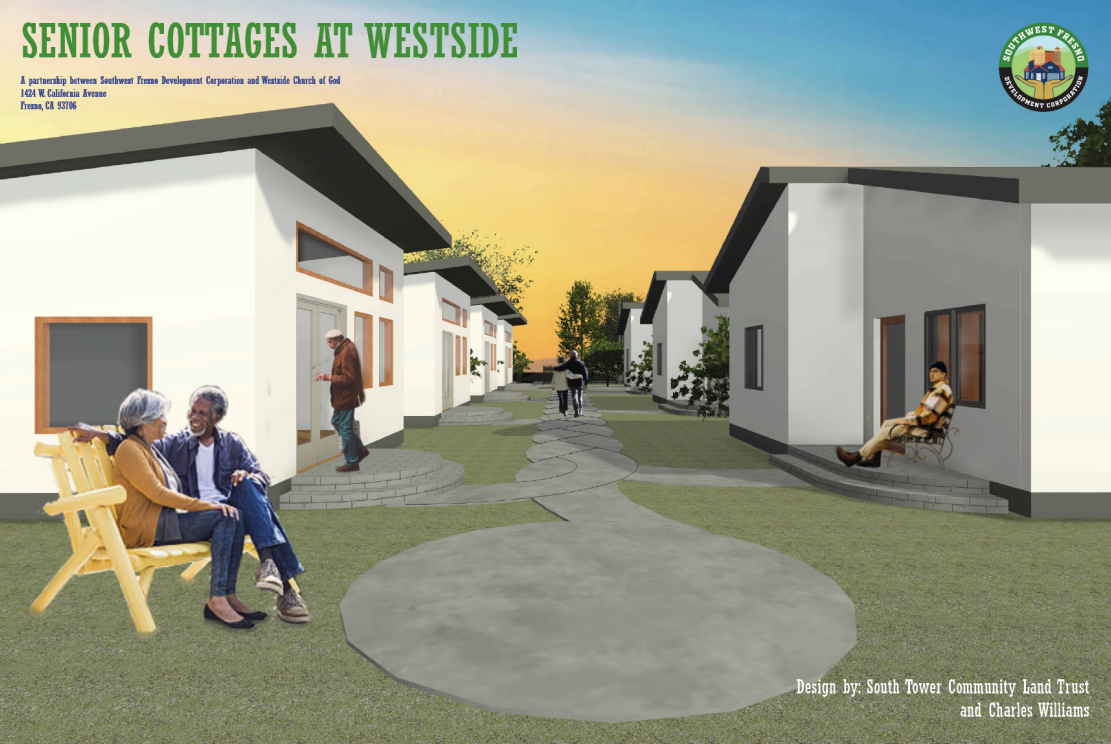
A first-of-its-kind project in Fresno aims to transform an acre of empty church land into a community of mini cottages for seniors facing housing insecurity.
The Westside Church of God will lease a one-acre parcel of its four acre property to the Southwest Fresno Development Corporation, where 21 small cottages will be built. Organizers say the project represents a promising path toward building more affordable housing in an area of the city with a deep history of redlining and segregation that has lagged in development.
The development is part of the Yes in God’s Backyard (YIGBY) national movement, enabling faith-based institutions to build affordable housing on its underutilized land. Nearly 1,900 acres of church land that qualify for affordable housing development has been identified in Fresno County, alone.
The senior cottages at Westside Church, near Cesar Chavez Boulevard and Crystal Avenue, will include a mix of one- and two-bedroom cottages, ranging from 400 to 600 square feet. The cottages will be rented to eligible seniors at $500 to $750 a month. All units will have one bathroom, and be connected to city sewer and water with solar for electricity.
Seniors age 55 and over whose earnings are at or below 60% of the area median income will be eligible, Allysunn Walker, president and CEO of SWFDC, told The Bee. Senior citizens represent one in 20 residents of Fresno County, but account for one in five calls for homeless services, she said.
“It’s a way for the church to get involved in a way that helps the church steward over what God has given us,” Walker said.
YIGBY influenced by tiny home movement
Tiny home communities have existed on a small scale for decades to combat homelessness. In recent years, the model has gained momentum in cities across the country for its lower costs, quicker construction and potential to offer residents more freedom compared to other traditional housing solutions.
Empowering faith-based institutions to build on their underutilized land takes the tiny home movement one step further.
The Yes in God’s Backyard movement started in San Diego in 2019 with a 26-unit complex for low-income veterans and seniors built at Bethel AME Church. After that project proved to be a success, state lawmakers passed the Affordable Housing on Faith Lands Act in 2023, streamlining development for faith-based institutions to convert their land into affordable and supportive housing.
Researchers at the Terner Center for Housing Innovation at UC Berkeley estimated 171,000 acres of land owned by faith-based organizations and non-profit colleges in California qualify for development under the new law. This includes nearly 1,900 acres in Fresno County.
Bishop Paul Binion of the Westside Church of God said the new law enabled the church to bolster development in southwest Fresno, where he has lived for the past five decades.
Over the years, Binion witnessed the rest of the city grow in development, and wondered why southwest Fresno was not receiving the same level of investment.
Binion co-founded the Southwest Fresno Development Corporation in 2016, working to provide pathways to housing security for his community.
“We’re building a community within a community,” Binion said.
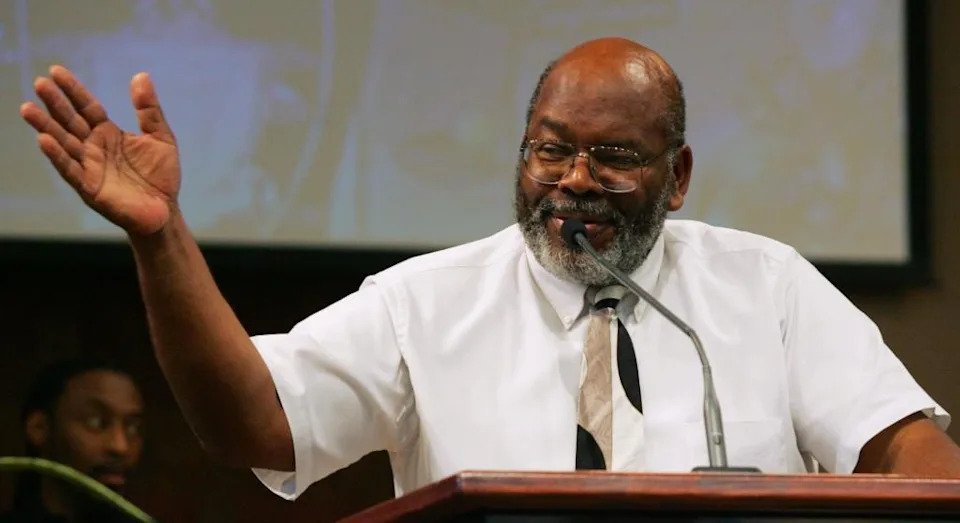
The Rev. Paul Binion speaks to the congregation of Westside Church Of God in this photo from 2012. There are 40th anniversary pastoral celebration events for Paul and Valarie Binion on May 5 and May 7 in Fresno.
Not just housing
Organizers have a lofty vision for the development — they want it to be a place of community and support for seniors.
The cottages will be arranged as a courtyard, with porches facing one another, and connected by sidewalks.
Green spaces like raised garden beds, walking trails, trees and flowers are included in the plans, Walker said. Many churchgoers at the Westside Church of God have shown interest in living in the mini cottages once construction is complete, Binion said.
“The social isolation of seniors is what creates their health to decline,” Walker said. “We want to make sure there are opportunities for socialization and partnership.”
Organizers hope to have the first phase of the development, which includes eight of the units, completed by the end of 2026.
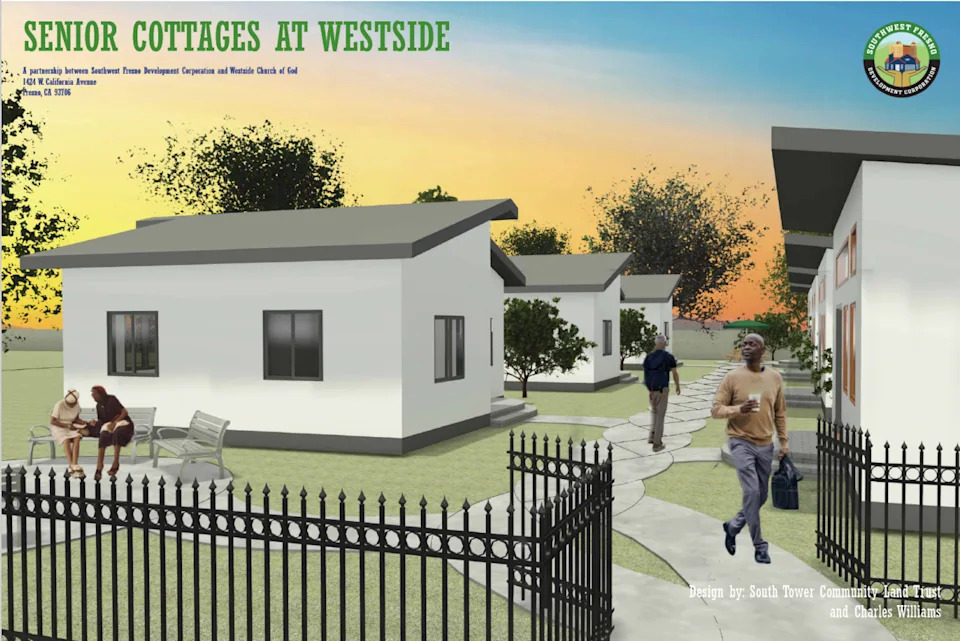
Designs for the senior cottages at Westside Church of God in Fresno.
More than $1 million in grant funding has been raised for the project, including funds from the City of Fresno, the Chan Zuckerberg Initiative, the Silicon Valley Community Foundation, Mechanics Bank and Wells Fargo.
“What people need to understand is that southwest Fresno can be a contributor to the local economy and to Fresno,” Walker said. “It’s not a drain on Fresno’s resources. It’s not the armpit of the city. It really is a vibrant and beautiful area.”
On top of the small cottages for seniors project, the Southwest Fresno Development Corporation is helping the city prepare the community for its “No Place Like Home” program, which plans to build 1,000 homes in southwest Fresno over the next 10 years.
To do so, the corporation launched an initiative to provide homeownership education and housing counseling services to future homebuyers and current homeowners.
“Otherwise, if these homes are built and investors come in and buy them all, they’ll rent them back to folks who live here at levels they can’t afford,” Walker said. “It’ll eat into their savings. They’ll never be able to eventually save and buy a home. And they’ll also extract all the equity, all the wealth building potential.”
In the last three years, about 700 people have taken the class, about 300 have received a down payment assistance certificate and about 40 have successfully purchased a home, according to Walker.
“My whole thing is how do we bring information to this community so they can be self-determined financially and make the decisions that they want to make and participate in the economy in a way that they can afford,” Walker said. “To bring the tools to a community that really has been left behind and in a lot of ways kept behind.”