
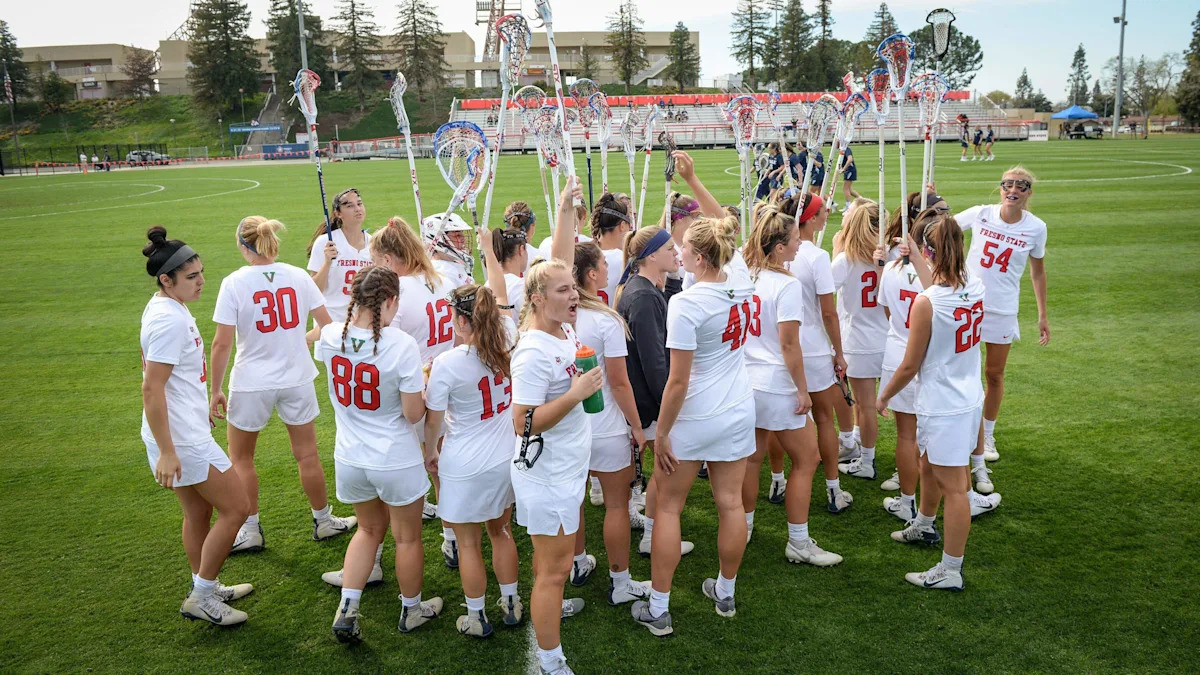
Fresno State has agreed to conduct a gender equity review and will ensure its athletics department is in Title IX compliance by the end of the 2027-28 academic year as part of a settlement agreement with six former members of its defunct women’s lacrosse team, who in 2021 filed a class action sex discrimination lawsuit shortly after their program was cut.
The players alleged the university violated Title IX by depriving female students and future student-athletes of equal opportunities to participate and of equal athletics financial aid. They also alleged unequal treatment of women’s lacrosse and other sports compared to male programs.
“Our clients are of course delighted and proud,” said Arthur Bryant, lead counsel for the plaintiffs. “They held Fresno State accountable. They were in this case to begin with to end the school’s sex discrimination against its female student-athletes and force the school to comply with Title IX. That’s what they’ve done.
“Fresno State has been treating its female student-athletes like second-class citizens. That’s going to stop.”
Title IX is the federal civil rights law that prohibits sex discrimination in all educational institutions that receive funding from the federal government.
The settlement agreement, which was reached in September, was approved on Wednesday by the Senior U.S. District Judge Kimberly Mueller in Sacramento.
Fresno State agreed to pay a negotiated sum of $900,000 for attorney’s fees and costs the plaintiff’s incurred in pursuing the lawsuit.
The university as part of the settlement also will pay a neutral, third-party to conduct the review for a flat fee of $25,000, plus reasonable expenses consistent with university policies. The parties agreed that Gabe Feldman, director of the sports law program at Tulane University, will conduct the review.
University officials declined to comment on the settlement agreement.
The plaintiffs in the case were Taylor Anders, Courtney Walburger, Hennessey Evans, Abbigayle Roberts, Megan Waliatis and Tara Weir. All six played in a final 2020-2021 season before the program was eliminated along with men’s wrestling and men’s tennis. The university cited a sharp decline in athletics revenues due to the COVID-19 pandemic in cutting the programs and its athletics portfolio down to 18 teams from 21.
Fresno State released a statement when the Title IX lawsuit was filed in 2021.
“The university stands behind its position that, as a result of state budget reductions and significant revenue losses due to the COVID-19 pandemic, the university had to make the difficult decision to eliminate three sports teams: men’s tennis, men’s wrestling and women’s lacrosse after this academic year,” it said, in that statement.
“The department of athletics will ensure continued efforts toward Title IX compliance as a result of these reductions.”
The gender equity review, according to the settlement, will address athletics participation opportunities at Fresno State and compare benefits and treatment afforded members of male and female sports programs. It will not address athletics financial aid, issues related to Name, Image, and Likeness, or any actions taken by Fresno State as a result of the class action House settlement, which cleared the way for NCAA schools to directly pay student-athletes through revenue sharing.
Following the review, Fresno State will have 60 days to work with Feldman to develop a gender equity plan to address findings in the review. The parties agreed in the settlement that Fresno State will have discretion to determine how to address any issues identified. It will not be required to increase its overall athletics budget to address any items or issues identified in the review.
Fresno State will continue to comply with Title IX in its athletics program after July 31, 2029, but will have no further obligations under the settlement after that date.
Feldman will complete the gender equity review no later than June 30, 2026, and issue a written report of the findings. The university will begin to implement a subsequent gender equity plan no later than Sept. 1, 2026, and complete implementation by the end of the 2027-28 academic year, barring extenuating circumstances that would lead to extensions.