
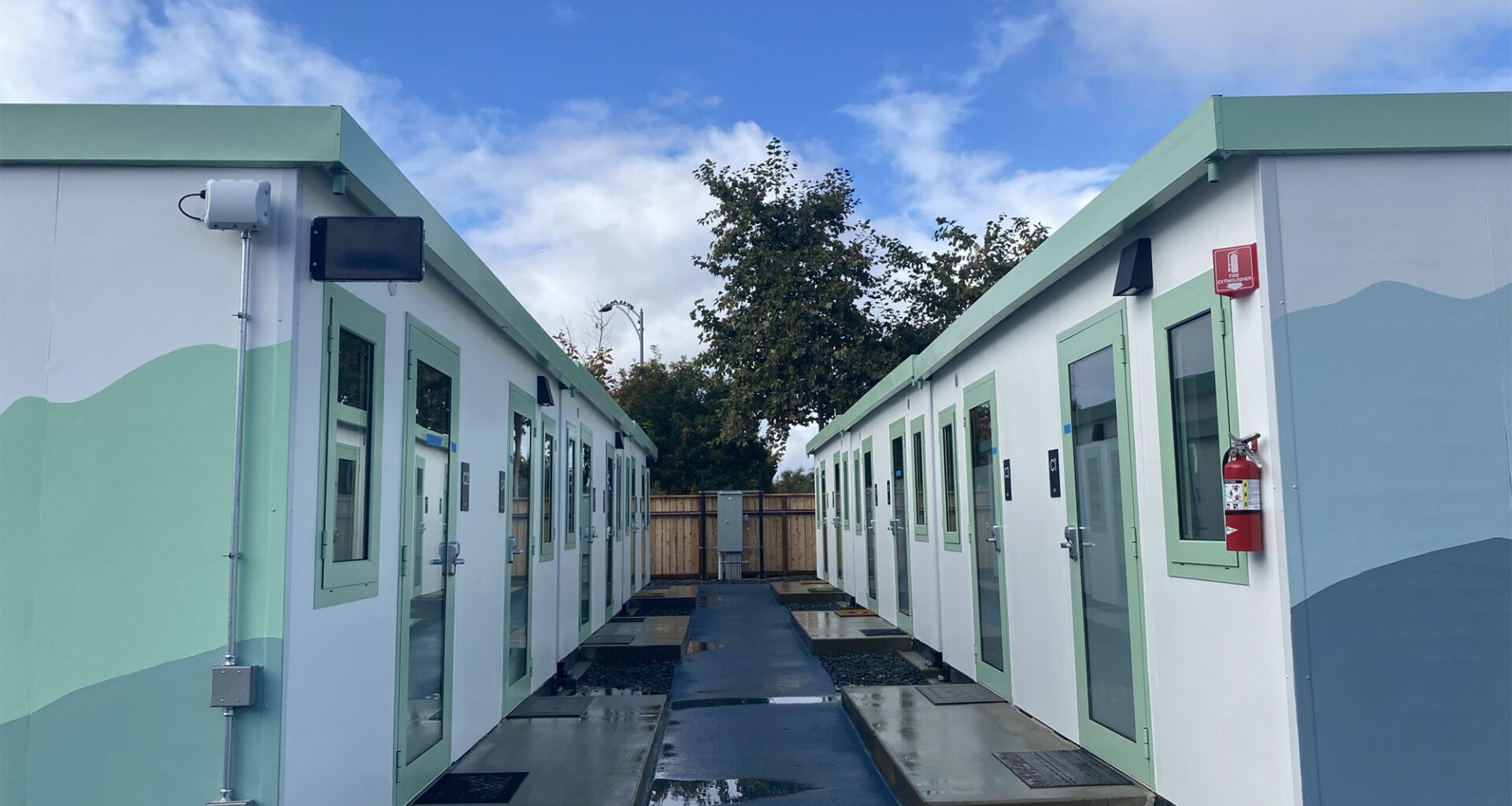
A LONG-AWAITED SAN JOSE TINY HOME VILLAGE built on land owned by the region’s largest water supplier has opened — giving 136 homeless people a roof over their heads.
The tiny homes on Cherry Avenue cost $18.3 million to build and include central laundry, private bathrooms and an outdoor picnic area. Nonprofit HomeFirst will provide case management to help people transition into permanent housing. Security and meals will also be provided. The city is leasing Valley Water’s land until Dec. 31, 2035, with an option for a five-year extension.

San Jose Vice Mayor Pam Foley, whose District 9 covers this site, said her district previously hasn’t been part of the solution to end homelessness because there’s not much available land to build on.
“But this property and the partnership with Valley Water shows that there really is opportunities,” Foley said at a news conference held at the grand opening on Monday. “This community… reflects our belief that every person deserves a chance to rebuild their lives.”
The tiny homes have been funded with about $9 million from the state and $7 million from Measure E, a property transfer tax approved by city voters in 2020. San Jose also received more than $2.5 million in philanthropic donations. Developer DignityMoves received up to $15 million to design and construct the site. The city has allocated $3.3 million for operating costs from Oct.1 to June 30, 2026.
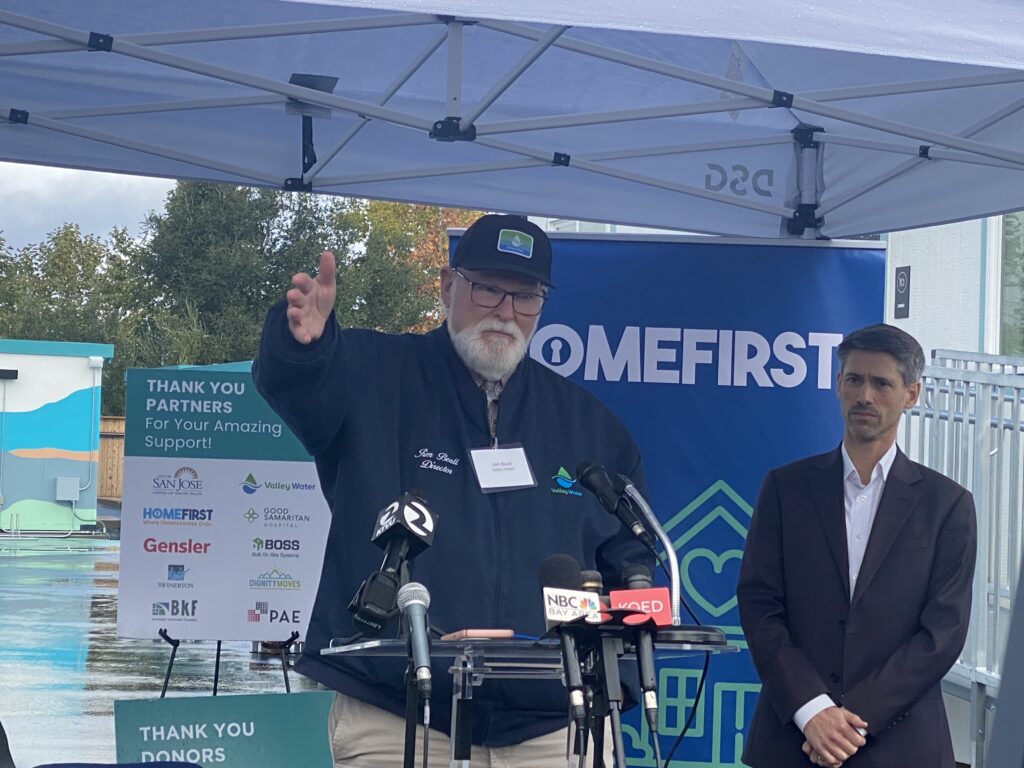 Valley Water Director Jim Beall said more government agencies should consider allowing San Jose to build housing on their land. (Joyce Chu/San Jose Spotlight)
Dozens of homeless people previously lived on the land, which sits across from Hampton Inn and other major businesses and homes. The city cleared the camps where the site sits by January and Valley Water established a no encampment zone to prevent people from returning. People who camp on the property can be charged with an infraction or fined under the water agency’s policy.
Three years in the making
The genesis of the Cherry Avenue project began in 2022, when the Valley Water board directed employees to look for ways to address homeless people living on agency land. Valley Water partnered with San Jose on a plan for its Cherry Avenue property, and in June 2023 the City Council approved temporary housing on the site — with the intention to move homeless people living there into the future tiny homes.
“I urge all government institutions to consider this dynamic intergovernmental relationship,” Jim Beall, District 4 director on the Valley Water board and former state lawmaker, said at the grand opening. “We end up with a lot more (housing) projects when that happens.”
The Cherry Avenue tiny home village is the 11th temporary housing site to open in San Jose this year. Tiny homes on Branham Lane opened in February. Then came the Berryessa safe parking site, Via del Oro tiny homes, Taylor Street safe sleeping site, five motels converted to homeless shelters and the expansion of Rue Ferrari last month. One more site is scheduled to open this year, the Cerone tiny homes.
Once that is finished, San Jose will have added nearly 1,240 spaces for homeless people to stay — nearly tripling the city’s capacity from last year, according to city data.
At the Cherry Avenue grand opening, Mayor Matt Mahan emphasized the city is upholding its promise to bring 1,000 beds online by the end of the year.
“Exactly 300 days ago, we stood in the same spot and broke ground on the community we see before you here today,” Mahan said. “I shared the results that were proving that this approach was starting to work. I told you that San Jose had seen a 10% drop in unsheltered homelessness, while the rest of the state saw a 10% rise.”
More homeless residents finding shelter
San Jose has 6,503 homeless residents. Unsheltered homelessness in San Jose has dropped more than 1,000 people since 2022. Roughly 3,959 homeless residents are unsheltered, or about 60%, and 2,544 are sheltered, according to the latest point in time count conducted in January before the 11 sites opened. Still, the city has experienced a slight increase in its homeless population, up 237 people, from the last count in 2023.
San Jose is working to bring unsheltered homelessness down to 50% and reach “functional zero” — when the number of people exiting homelessness is greater than the number of people becoming homeless.
“If we stay determined to end the crisis on our streets, this city really is going to do it,” DignityMoves CEO Elizabeth Funk said at the grand opening. “I’m proud to be a part of it.”
Contact Joyce Chu at joyce@sanjosespotlight.com or @joyce_speaks on X.