
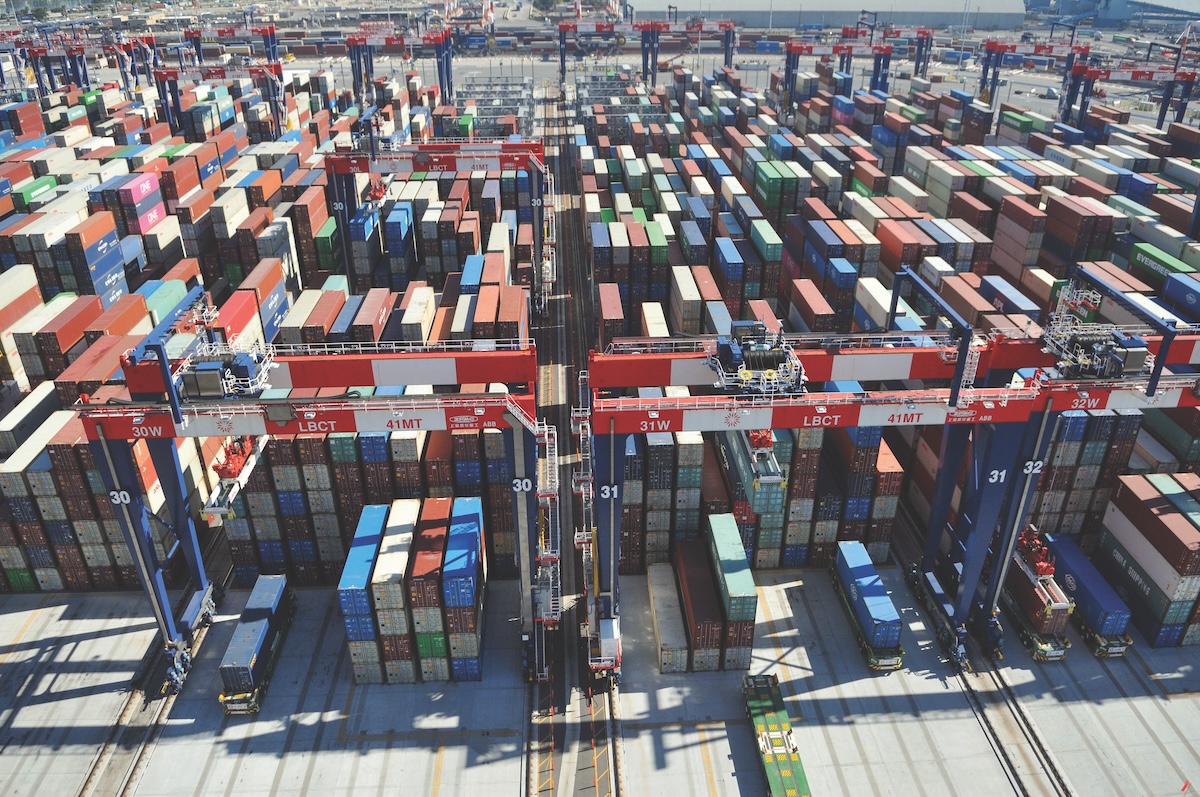
The year-over-year slump continues at the Port of Los Angeles and Port of Long Beach, though they both remain on track to approach the year-end cargo volumes from 2024.
The Port of Los Angeles reported processing a total of 848,431 cargo containers in October, while the Port of Long Beach reported 839,671. These numbers put them down, respectively, about 6.3% and 14.9% from October 2024. Combined, the two ports moved nearly 1.69 million containers in October, down from the nearly 1.9 million they moved last October.
Still, the two ports’ ability to remain within striking distance of last year’s record numbers in a trade year marred by sclerotic tariff policy is a feat. For the first 10 months of 2025, the Port of L.A. is up about 2% while Long Beach is up by about 4%.
“With six weeks to go, we are within reach of the 10 million container unit-mark for the year,” Port of L.A. Executive Director Gene Seroka said at his November media briefing. “If we reach that milestone, it would be the third time in our history and something no other Western Hemisphere port has achieved even once.”
Dockworkers in the Port of L.A. moved 429,283 loaded import containers in October, down from the 462,740 last year. They also handled 123,768 loaded exports, an increase of about 1,000 from last year.
In Long Beach, dockworkers handled 401,915 loaded imports – down from 487,563 – as well as 99,817 loaded exports – down from 112,845.
Noel Hacegaba, the chief operating officer of the Port of Long Beach, noted that both complexes have avoided any backlogs of cargo ships, as seen during the first couple years of the Covid-19 pandemic.
“Even in the midst of the nation’s longest government shutdown, cargo continues to move smoothly through our port and across the nation’s supply chain,” Hacegaba said. “We continue to coordinate closely with all of our partners to anticipate and mitigate issues before they arise to keep cargo and our economy moving.”
Leaders expect volumes will continue to soften in November and December, in part because the back-and-forth trade policy shifts motivated manufacturers and retailers to ship year-end inventory such as holiday-related products earlier in the year than usual. They also speculated that consumers would begin feeling a stronger hit to their wallets as a result of these tariffs, which make importing goods more expensive for retailers and manufacturers.
“The consumer has not seen significant tariff impacts given that manufacturers, retailers and others have shared in incurring some of these costs and mitigating price escalation to the consumer, but that may change as we approach 2026,” Mario Cordero, the retiring chief executive of the Port of Long Beach, said. “Consumers will likely see price escalation in the coming months as shippers continue to pass along the cost of tariffs on goods, and a higher percentage of these costs will be passed on to the consumer.”
Truckers and rail operators continue to move cargo out of the ports at a fast clip.
Truck-bound cargo saw consistent average dwell times – the period between when cargo is taken off a ship and loaded onto an outbound vehicle – at 2.74 days, a bit better than the 3.16 days last October. Truck dwell times have been less than three days all year excluding January.
Rail-bound cargo, on the other hand, saw dramatic improvement from last year – 3.31 days, as opposed to the nearly 10 days last year. October’s rail dwell times were the fastest all year.
“The October dwell time results demonstrate the continued efficiency and resilience of our gateway,” said Natasha Villa, external affairs manager of the Pacific Merchant Shipping Association. “Marine terminals, drayage operators and rail partners are working in close coordination to keep cargo moving fluidly while supporting the needs of shippers and consumers nationwide.”