
(TNND) — Beef prices at the grocery store aren’t likely to move much after Tyson Foods announced the closure of one of its plants and the reduction of operations at another, according to an agricultural economist.
Meanwhile, David Anderson, of Texas A&M, is also skeptical that the government can make a dent in high beef prices by investigating meat-packers for alleged collusion and price fixing.
Cattle prices are at a record high, Anderson said. And, as concentrated as the meatpacking industry is, the companies are losing money on their beef production.
“That might suggest that maybe they don’t have much power either,” Anderson said. “Because if they had a lot of market power, maybe they wouldn’t be losing money.”
Tyson announced last week that it was ending operations at its Lexington, Nebraska, beef facility.
The Wall Street Journal reported that the Nebraska plant can process around 5,000 cattle daily.
Tyson also announced it was reducing production at its Amarillo, Texas, beef facility.
Tyson, which recently reported a $426 million annual loss in its beef business, said the changes are meant to “right size its beef business and position it for long-term success.”
Tyson is one of a handful of big meatpacking companies that dominate the industry.
The Springdale, Arkansas-based company said it has 11 beef facilities, and 40% of its sales come from beef.
AP Photo/Toby Talbot, File
President Donald Trump ordered his Justice Department a few weeks ago to investigate meat-packers for possible collusion and price-fixing.
He accused them of driving up beef prices.
“We will always protect our American Ranchers, and they are being blamed for what is being done by Majority Foreign Owned Meat Packers, who artificially inflate prices, and jeopardize the security of our Nation’s food supply,” Trump said in a social media post. “Action must be taken immediately to protect Consumers, combat Illegal Monopolies, and ensure these Corporations are not criminally profiting at the expense of the American People.”
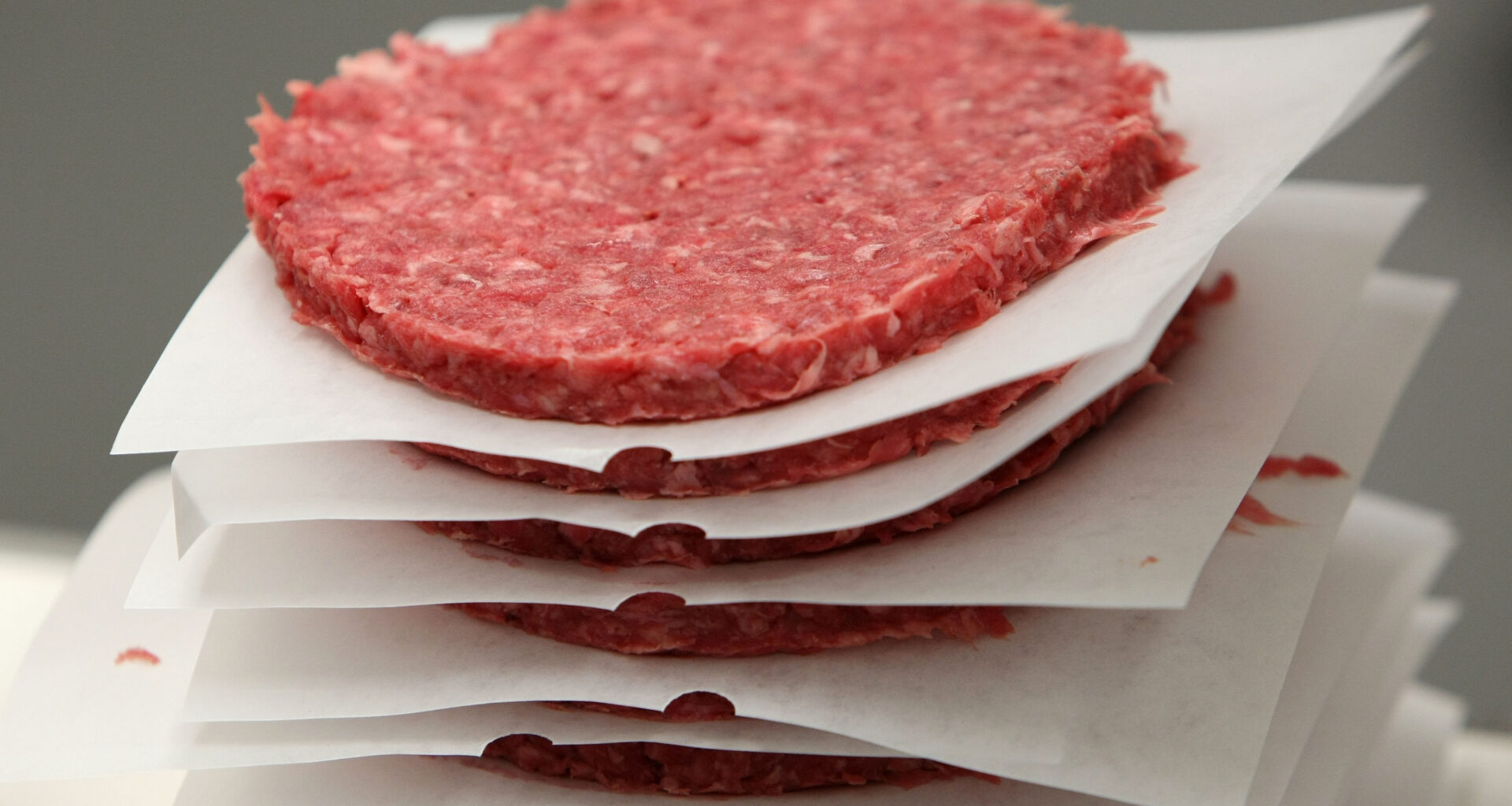
Ground beef is up to $6.33 a pound, up more than 11% from a year ago, according to the most recent consumer price index.
Anderson said there’s an excess of capacity in the meatpacking industry, with the supply of beef cows at its lowest level since the early 1960s.
Every beef-packing plant is losing money, not just Tyson, he said.
Live animal prices go up faster than beef prices coming out of the plants.
That’s normal during periods of low cattle supply, Anderson said.
When herds are plentiful, it’s reversed. Ranchers lose money, and packers make money.
Americans consume mostly beef produced in the U.S.
Anderson acknowledged ongoing concerns over the market power of meat-packers, because there are not very many of them.
But he said there’s not really evidence pointing to their ability to keep consumer beef prices artificially high.
“If I’m going to force a higher price to my buyers, grocery stores and restaurant chains, and ultimately consumers, I’ve got to be able to control supply,” Anderson said. “I’ve got to restrict supplies to be able to push that price up. And there’s not much evidence of their ability to control supplies. They don’t own the cattle. They don’t own the feed lots.”
In fact, Anderson said the large plants might keep prices lower through economies of scale.
The high prices in the grocery stores stem from the deficit of cattle roaming America’s ranchlands.
Anderson said droughts, previously low cattle prices, and rising costs all contributed to the shrinking herd.
And reversing that trend takes time, even if there’s clearly consumer demand.
A calf that was born last spring is not going to have its first calf until the spring of 2027, Anderson said. And then that animal that’s born in the spring of 2027 is not going to hit their full-grown weight until late in the fall of 2029.
“It’s hard to beat biology,” he said. “We can’t really speed that up much.”