
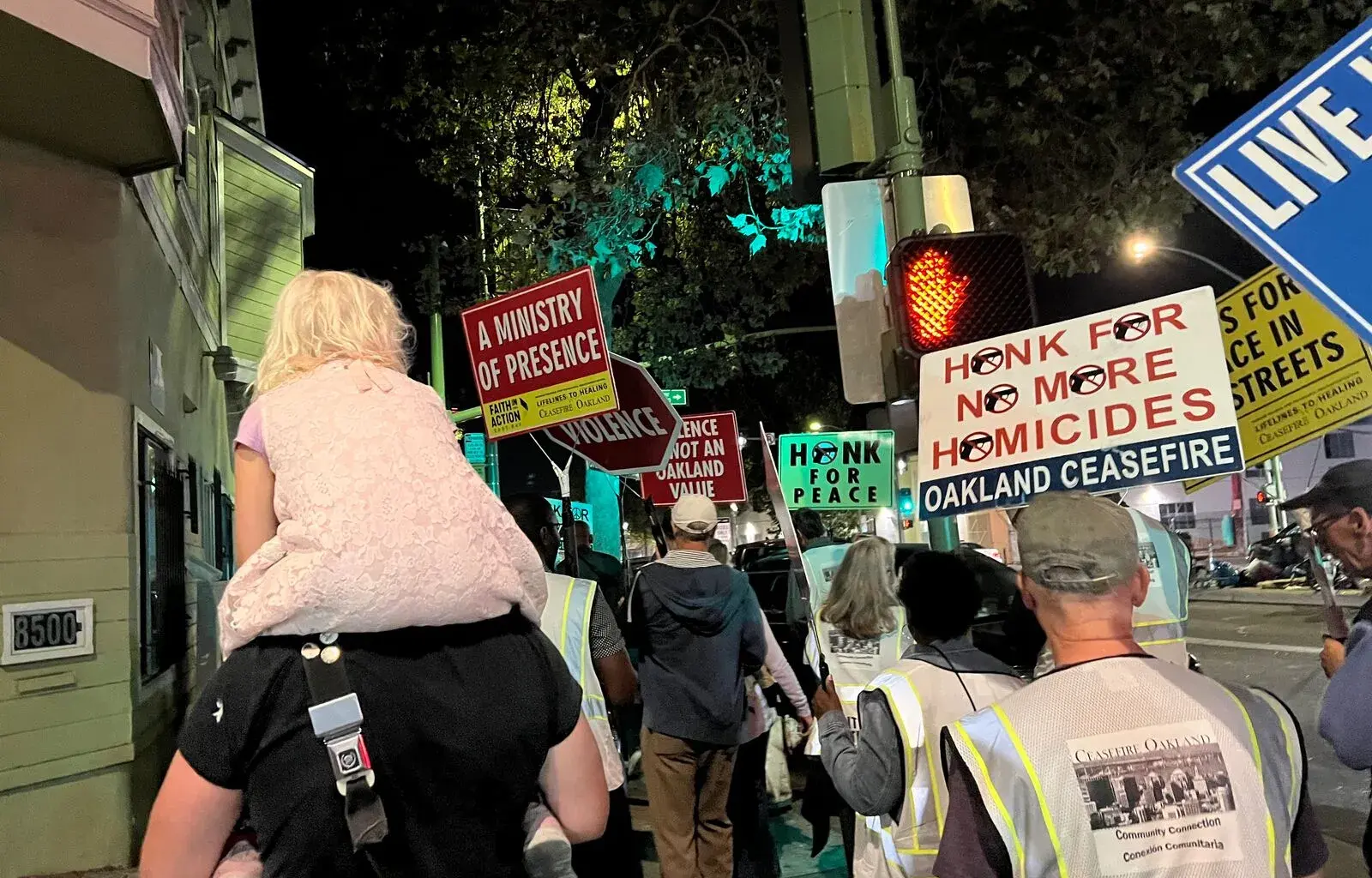
In 2012, Oakland launched Ceasefire, a gun violence prevention program that uses trained, non-law enforcement workers to contact individuals at the highest risk of picking up a gun or falling victim to gun violence, and offering them life coaching and other services from community organizations.
One study from 2018 credited Ceasefire for reducing homicides in Oakland by 31% and shootings by 20% between 2013 and 2018. But starting in 2016, the city gradually disinvested in the program, in part due to scandals at OPD, and eventually shifted its focus to other public safety initiatives.
The city began reinvesting resources in Ceasefire in 2024. Since then, homicides and shootings in Oakland have been trending downward. OPD’s most recent crime data shows homicides are down 28% and shootings are down 25% year-to-date compared with the same period last year. It’s unclear whether Ceasefire is causing this drop in crime, as many other factors could be playing a role.
But for those interested in following Ceasefire’s work, the Department of Violence Prevention recently unveiled a new “focused deterrence dashboard.”
Launched in July and updated on the 5th of each month, the data portal provides insight into the Oakland residents most likely to engage in violence, as well as how the DVP’s violence interrupters work. It presents demographic information on the individuals, known as “clients,” served through Ceasefire and outlines the most common risk factors among those at the center of gun violence in the city.
Here are some insights from the data portal.
Most Ceasefire clients are young Black men
As of October, 113 people were enrolled in life coaching services through the Department of Violence Prevention. Life coaches are trained specialists who work with their clients for at least 12 months to help them identify what’s driving them to engage in violence and make plans to deter them from violence, such as by securing housing or employment or relocating to a different city.
According to the dashboard, most of the clients enrolled in life coaching services are Black, male, and between the ages of 18 and 34. The median age is 25.
87% of Ceasefire participants are unemployed. Nearly three-quarters live at home with family.
Education level is split in the middle, with half of Ceasefire participants having graduated from high school or obtained a high school equivalency diploma.
Many Ceasefire participants are from East and West Oakland, with the zip codes most represented among participants being 94601 (16%), 94605 (12%), 94621 (12%), and 94607 (11%).
How are people referred to Ceasefire?
Most participants (57%) are referred to the DVP program through a “custom notification,” a meeting between a person deemed at risk of picking up a gun or being a victim of gun violence within the next 90 days and representatives from each branch of the Ceasefire partnership, such as a violence interrupter from the DVP and an OPD officer assigned to the Ceasefire Unit. During these meetings, the representatives inform the person about the risks of engaging in violence and offer them life coaching services.
The second-most common referral method for Ceasefire participants are “call-ins” (22%). These are quarterly group meetings of up to 20 high-risk individuals at the center of violence with Ceasefire partnership representatives.
Since the start of the year, the DVP has contacted 161 people.
Of those, 111 were offered support, and 62 enrolled in life coaching.
Some people were not offered immediate support either because they were in custody, or the life coaches’ caseloads were at capacity.
These numbers might seem small, but the people actually responsible for most of the violence in the city are estimated to be only 0.3% of Oakland’s population, according to the DVP.
A person is deemed “at risk” if they have prior history in the criminal justice system or know someone who’s been shot
Risk factors for Ceasefire participants include prior involvement in the criminal justice system and knowing someone who’s been shot or taken into custody for a shooting within the past six months.
According to the DVP’s dashboard, 93% of Ceasefire clients have a history with the criminal or juvenile justice system, meaning they’ve been arrested, charged with or convicted of a crime, or been to juvenile hall or prison.
Additionally, 81% of participants reported having a close friend, family member, or gang member who has been a shooting victim or been arrested for a shooting in the past six months.
Nearly half (47%) of Ceasefire clients say they’ve been intentionally shot, stabbed, or shot at.
The DVP incentivizes Ceasefire participants to set and complete goals
The DVP uses an intensive life coaching model to deter individuals from participating in violence and reduce recidivism. This involves daily or near-daily in-person meetings, texts, and phone calls.
Since the start of the year, the DVP’s life coaches have logged 9,284 service hours with Ceasefire clients.
As part of the life coaching program, participants create “life map goals,” or concrete plans to manage the factors that drive them to engage in violence, often with incentives like financial compensation for completing them.
105 participants have set life map goals this year. Participants year to date have completed 118 life map goals.
Among the 600 goals created:
Roughly one-third had to do with improving the person’s safety
23% involved securing a job
19% centered around support in navigating the criminal justice system.
According to the DVP, 115 participants received financial incentives to complete their life map goals. The average incentive amount per month was about $500. In total, the DVP has paid out $318,516 in incentive funds to Ceasefire life coaching clients.
Check out the new data dashboard to learn more.
“*” indicates required fields