
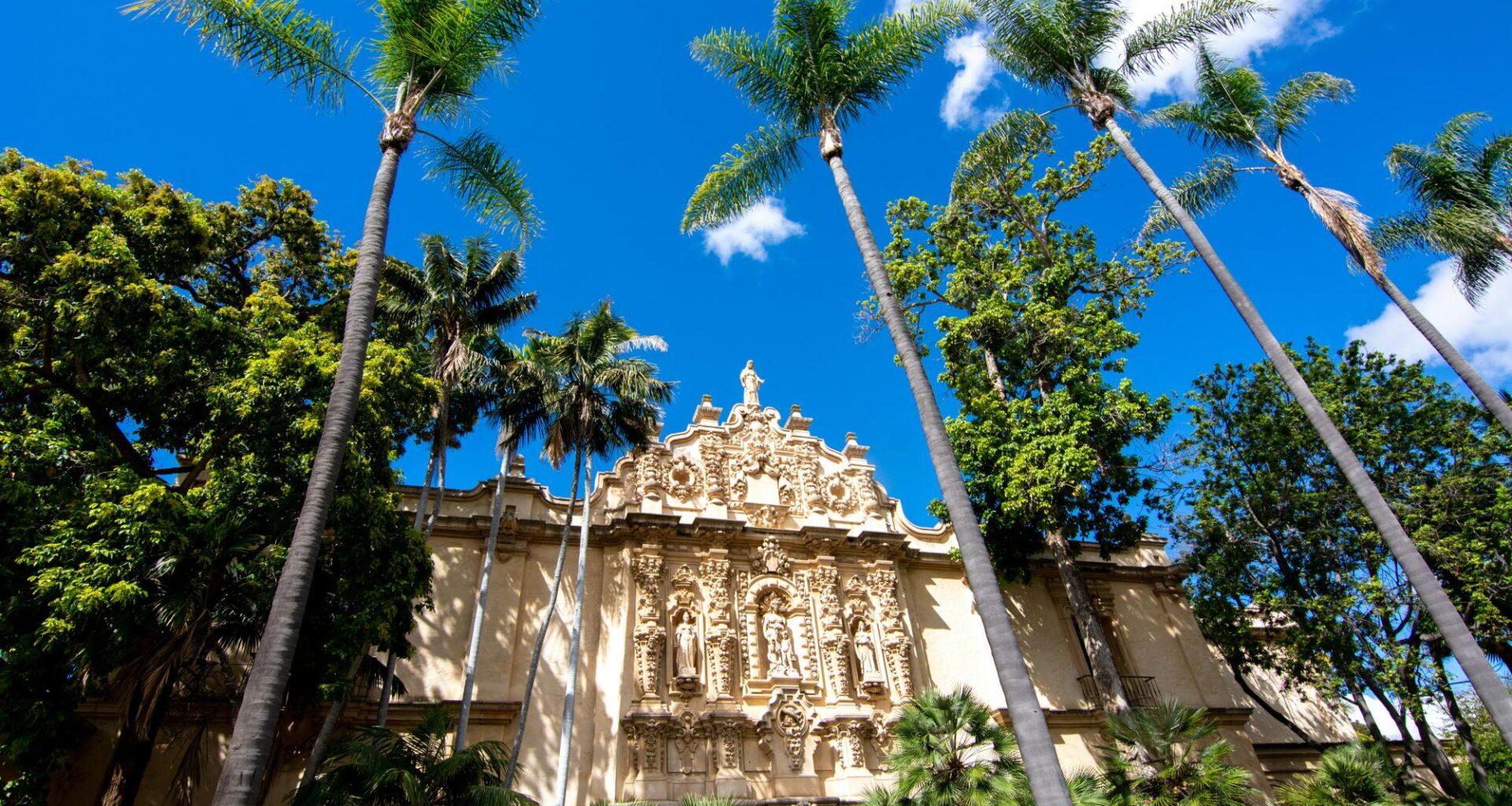
At its meeting on Tuesday, Nov. 18, the San Diego City Council approved its Balboa Park paid parking system to go into effect on Jan. 5, 2026. This system will include a monthly, quarterly, and annual parking pass for purchase that varies in price — from $30 to $300 — depending on the purchaser’s residency status.
Starting on Jan. 5, parking rates will be $30 per month for residents, $40 per month for non-residents, $60 quarterly for residents, $120 quarterly for non-residents, $150 yearly for residents, and $300 yearly for non-residents. A daily pass option will also be available, ranging from $2.50 per hour with a $10 per day maximum.
Online resident verification will require a driver’s license and a utility bill as proof of residency. Approval will take 24 to 48 hours, and status is valid for up to three years. Each pass will be tied to the license plate of a given car. This verification portal is expected to be live prior to Jan. 5, but no specific date has been provided.
Bethany Nocon, the parking program manager for the city of San Diego, said that IPS, the selected vendor for verification, would charge $5 per person to verify their residency status. This fee is cost neutral to the city of San Diego, meaning that the revenue generated will go to IPS.
While these passes will be eligible for use in all lots in Balboa Park, they are invalid in the San Diego Zoo parking lot and on street roads outside of Balboa Park. For outside street parking, there are parking meters available for hourly rates. These passes will be available for purchase through a portal developed by IPS. Signage and kiosks will be installed beginning at the end of November.
Balboa Park has offered free parking since its opening in 1868. There have been various attempts to implement paid parking prior to this motion, all of which have failed until now. The approval of this iteration of its parking system follows ongoing discussion by the City Council on this topic; it initially proposed a system of daily parking rates during an earlier meeting on Sept. 15.
The approved plan builds off the “three-tiered parking plan for off-street lots in Balboa Park and parking meters along Park Boulevard and 6th Avenue” from Sept. 15, with some additions regarding the provision of quarterly and annual parking passes for park visitors, a resident verification portal, and an option for free parking for resident high school students.
The final approved parking plan addressed these stipulations, except the option of free parking for students. According to representatives from the San Diego Parks and Recreation Department, there will be some free spaces available in Balboa, but the spaces cannot be reserved for students. Volunteers and employees will be able to park for free during their shifts. Passes will be distributed to those who require them for work, at an unknown time.
After nearly two hours of discussion during its Nov. 18 meeting, the council voted 6-3 to approve the parking rates with councilmembers Raul Campillo, Vivian Moreno, and Stephen Whitburn voting “No.” Council President Joe LaCava, councilmembers Jennifer Campbell, Henry L. Foster III, Marni von Wilpert, Kent Lee, and Sean Elo-Rivera voted yes.
“This feels like an admissions charge to Balboa Park,” Whitburn stated prior to voting no on the motion. Moreno did not provide her reasoning for opposition.
Campillo, who attended the meeting virtually, was particularly outspoken in his opposition. He stated that he believed the resident and non-resident parking rates were unfair.
“I also have an issue with charging non-residents more,” Campillo said. “This money still matters to our city budget to bring it in. We are continuously making our revenue problems into an outsider debate. Don’t we want everyone to come here and spend their money?”
Among the 72 people who spoke in opposition, many specifically expressed their concerns about the different rates for non-residents.
David Walters, a member of the Redwood Bridge Club hosted at Balboa Park, stated that 40% of the members of the Bridge Club are from outside of the city of San Diego. He explained his concern that participation will decline and internal revenue within Balboa will decrease as a result.
Katy McDonald, the current president and CEO of nonprofit Forever Balboa Park in San Diego, said that she fears the parking rates will have unintended consequences like insufficient funds forcing cuts to the Parks and Recreation budget.
During Tuesday’s City Council meeting, staff revealed that the parking rates might bring in anywhere from $2.9 million to $4 million in the first year, as opposed to the 15.5 million that was first projected.
“The city could actually be losing money on this and therefore need to reduce services,” Campillo said. “It is my position that charging for parking at one of San Diego’s most important assets is just a bad idea.”
Many people who gave public comments at the meeting claimed that they would stop going to Balboa Park because of the new parking rates.
“The city having to plug our $350 million dollar budget hole was supposed to be about living within our means, but what the city seems to keep doing is living within our residents’ means,” Campillo said. “We haven’t really looked inward to scrutinize the spending.”
Von Wilpert inquired about the allocation of the funding prior to voting yes on the motion. According to Bethany Bezak, the city transportation director, the funds are legally required to be spent within the park.
The City Council plans to meet in one year to determine the benefit of the newly established paid parking system at Balboa, based on a financial report that staff will prepare.