
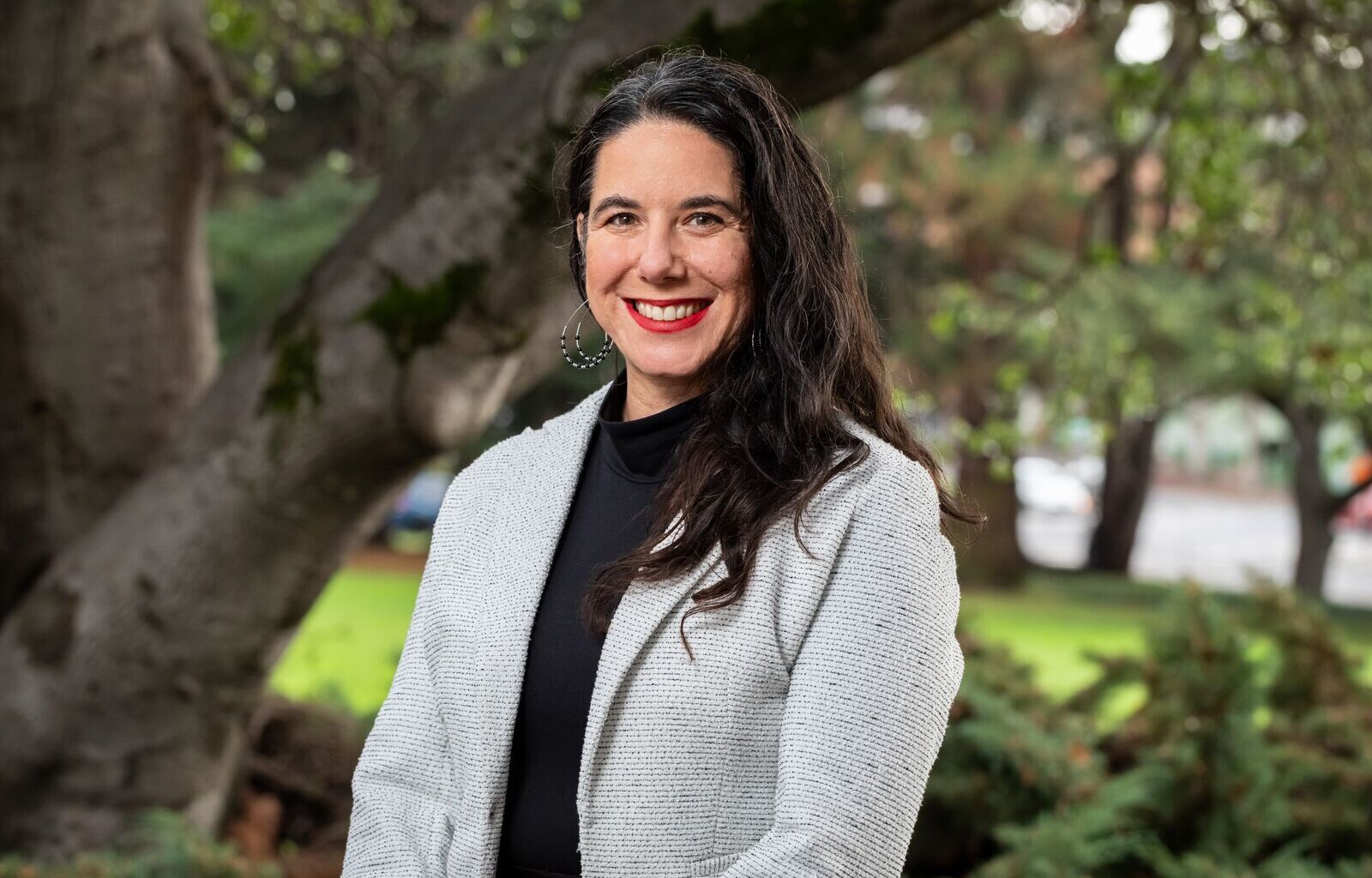
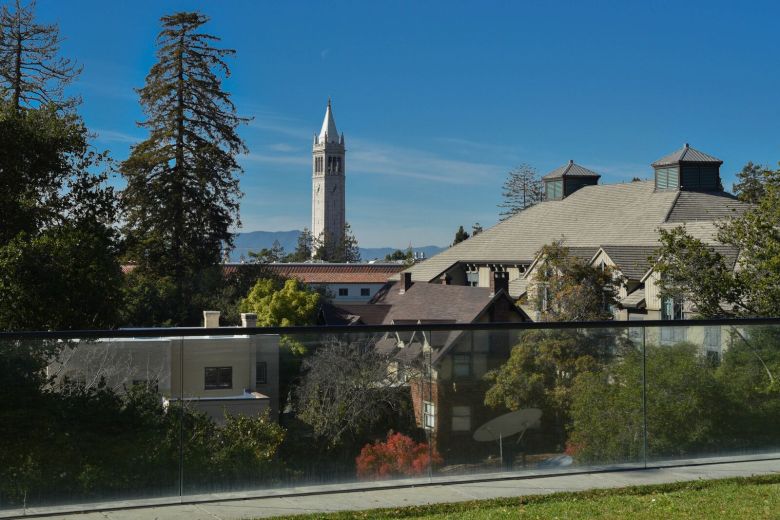
 Berkeleyside is the only professional newsroom with a beat principally dedicated to covering UC Berkeley. Credit: Ximena Natera/Berkeleyside
The fortunes of the city of Berkeley and the university at the foot of its hills have always been intertwined. Today, UC Berkeley owns more than 400 acres of land in Berkeley and is its largest employer, accounting for nearly one in four jobs. Its students, faculty and alumni — 63 Nobel laureates among them — have made UC Berkeley into a world-class research institution and bolstered the city’s reputation as a bastion of free speech and progressive values.
Cal opens the door to a top-tier education for students from modest backgrounds; nearly a third of last year’s undergraduates were the first in their families to go to college. And it often takes center stage in national debates over higher education.
This year, all that is at risk.
The Trump administration’s attempt to reshape higher education in line with its political priorities poses an existential threat to UC Berkeley and other East Bay campuses. Across the UC system, the administration has canceled or suspended $230 million in research grants this year.
Federal officials are investigating Cal over its admissions practices, its handling of campus protests and allegations of antisemitism, and its receipt of foreign funds. Earlier this fall, UC Berkeley officials sparked an outcry when they turned over to the Department of Education the names of 160 students and faculty who had been mentioned in internal antisemitism complaints.
Amid this turmoil, Berkeleyside is launching a new beat to cover the challenges and opportunities facing higher education in the East Bay.
Our reporting will build on the higher education reporting we have published since we launched in 2009, including excellent coverage of town-gown relations, student housing, People’s Park, campus protests and more. As the only professional newsroom with a reporter dedicated to covering UC Berkeley, we will be able to dig more deeply and tell more stories.
This two-year higher education beat at Berkeleyside is a partnership with Open Campus, a national nonprofit newsroom dedicated to improving the quality of higher education reporting. Funding for the beat has also been provided by the Jonathan Logan Family Foundation and individual donors.
The new beat will allow us look at how UC Berkeley and other colleges are fulfilling their historic mission to promote critical thinking and innovation, while offering Californians social mobility and access to well-paying jobs. Our reporting will also stretch across the four campuses of the Peralta Community College District, Cal State East Bay, West Contra Costa College and private institutions.
We will tackle debates over academic freedom, budget cuts and affordability, how best to serve a diverse student population, and the relationship between universities and the local community. We will focus on holding university and government officials accountable for how they are meeting this moment and shining a spotlight on what’s at stake. And we’ll pay special attention to the voices of students, who ultimately reap the consequences of any higher education policy decision.
Felicia Mello, a seasoned education reporter, has deep Berkeley roots
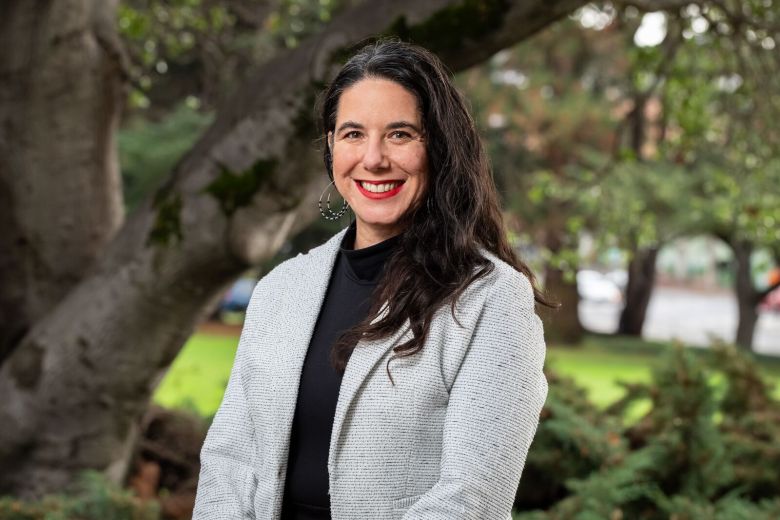 Felicia Mello, Berkeleyside’s new higher education reporter, on UC Berkeley’s Crescent Lawn. Credit: Kelly Sullivan for Berkeleyside
Berkeleyside is delighted to welcome Felicia Mello, a skilled reporter with a track record doing accountability work that drives statewide change, into our newsroom to cover this challenging new beat. Her first day was Nov. 17.
A writer and editor at CalMatters for over seven years, Mello built the statewide nonprofit newsroom’s first higher education beat, focusing on themes of affordability, equity and innovation. Her investigation into California’s lax oversight of for-profit colleges inspired legislation that more strictly regulates the industry.
She founded CalMatters’ College Journalism Network, an award-winning program training student journalists to report on the impact of higher ed policy on their campuses. And, in her two years covering housing, inequality and the “California divide,” she published investigations revealing that state regulators were inspecting farmworker housing by video call, and that $500 million the state had set aside to preserve affordable housing was never spent.
Since leaving CalMatters, she has written independently for the Hechinger Report and the New York Times, among other publications.
Mello is a graduate of Berkeley High and earned a master’s degree from the UC Berkeley Graduate of Journalism.
“Higher education and the University of California system specifically face an existential threat under this administration,” Mello said. “There has perhaps never been a more important time for incisive and accessible journalism that can help readers understand not just the news of the day, but what it means for the larger quest to provide Californians with opportunities for learning and social mobility.”
To cover this beat right, we need your help. What should Felicia Mello be covering? What are the stories you would like her to look into about UC Berkeley or other East Bay colleges? Let her know by emailing felicia@berkeleyside.org.
“*” indicates required fields