
FRESNO COUNTY, Calif. (FOX26) — For years, farmers have struggled with water supplies.
Sometimes, because of drought.
Other times, because of government red tape.
But now, they are facing a new threat that requires all hands on deck— from laboratories to the legislature.
“The potential impact is significant,” says Kelly Vandergon, Deputy General Manager for Operations and Maintenance at Westlands Water District.
It is the country’s largest agricultural water district, serving a 1,000 square-mile area from Kerman to Kettleman City, on the westside of California’s San Joaquin Valley.
FOX26 was there Friday, as crews carried out maintenance on a pump near Five Points along the California Aqueduct.
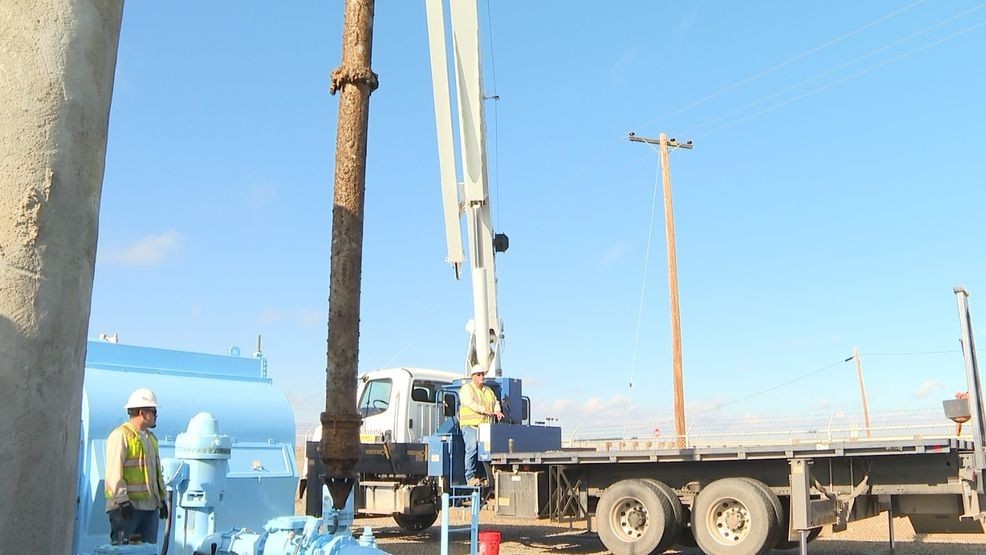
FOX26 was there Friday, as crews carried out maintenance on a pump near Five Points along the California Aqueduct. As they removed the traveling water stream pump, you could see shell after shell. (Photo: FOX26 Photojournalist Bert Montelongo)
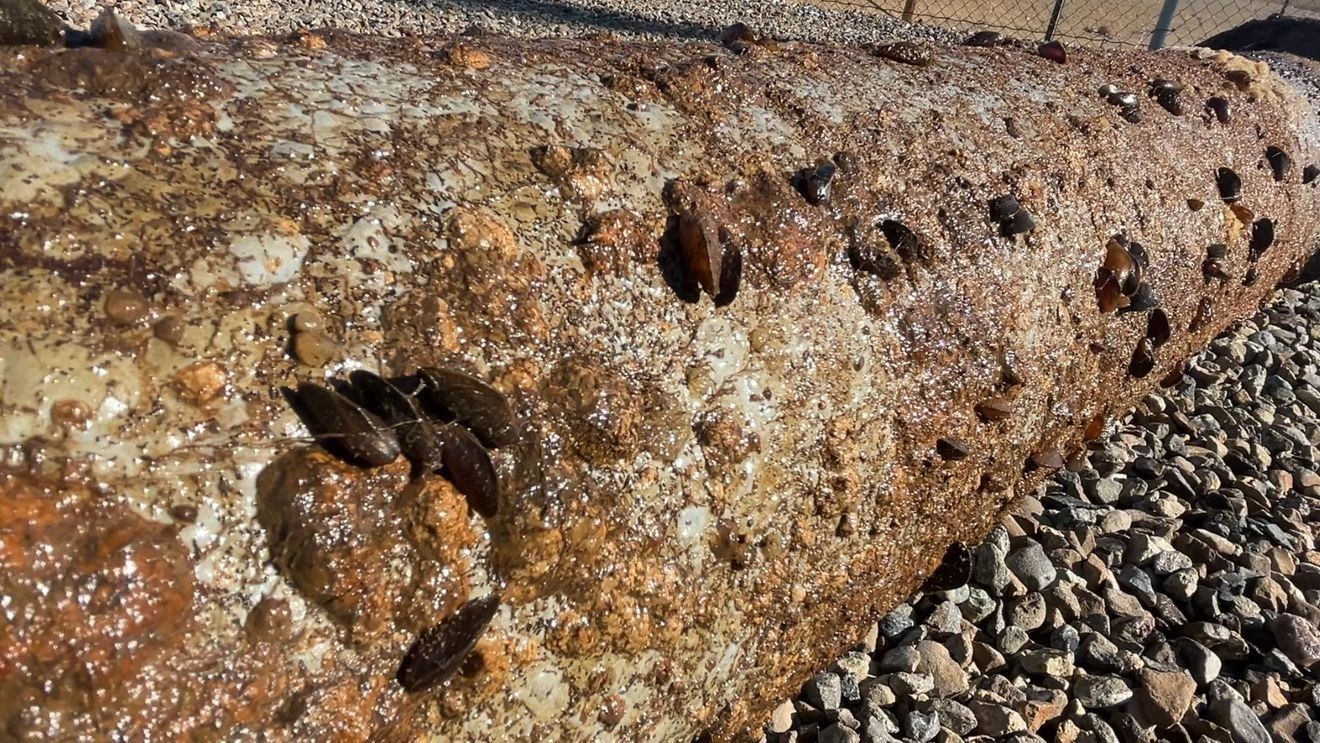
As they removed the traveling water stream pump— you could see shell after shell.
They were Golden Mussels—smaller than a the size of a quarter– attached to the pipe.
Vandergon says the first Golden Mussels were first detected by Westlands in October of 2024.
“At that time, we didn’t know what it was,” he says. “We reached out to our partner agencies and came up with information it was something new.”
New– and menacing.
“They’re ranked one of the top five worst invasive species on the planet,” says Pam Marone, co-founder and executive chair of the Invasive Species Corporation.
She says the Golden Mussels feed on just about any microscopic organism.
It’s a freshwater species that can tolerate brackish water conditions.
“I was astonished the density of the populations that I saw where we were collecting some for our work,” Marone says.
The California Department of Fish and Wildlife believes the Golden mussels originated in China or Southeast Asia, found in California in October of 2024.
“Most likely, it hitched a ride on one of the vessels that come into our ports—since we found it in the Stockton Delta first,” says Steve Gonzalez with CDFW.
Vandergon says it didn’t take long for the larvae to travel the 120 miles downstream to the site where Westlands crews carried out maintenance.
He says the youngest mussels are virtually invisible — and the multiplication rate is overwhelming.
“In one year, one mussel can produce over 100-thousand mussels,” Vandergon says. “Once they start to form as they reproduce, they’ll grow in size and cluster to form a mass.”
And those clusters—are where real problems can occur.
“That mass can restrict flow in pumps. It can cause damage to equipment,” Vandergon says, pointing to the pump bowl assembly.
He says some mussels have already made it past the pump bowl and into even more pipes in the district’s vast network.
For now, maintenance is the name of the game at the pumps – at least until there’s a scientific breakthrough.
But Marone says, she’s close.
She’s developed a treatment that consists of naturally occurring bacterium in tablet and granule forms, that would be applied to water.
She says it’s already been used to kill Zebra mussels and Quagga mussels—also invasive species.
“We’ve recently retested it, tested it again against golden mussels and found it also kills golden mussels,” she says, adding field testing will be taking place this fall.
She says Invasive Species Corporation is awaiting approval by the California Department of Pesticide Regulation and the U.S. Environmental Protection Agency—a process delayed by the recent federal government shutdown.
So far, legislators on the state level have had some success with bringing attention to the problem.
She admits, the amount “just scratches the surface” when you consider the potential economic impact to commerce, recreation and agricultural operations.
“The pricier this gets, the more expensive your goods are gonna be,” she says. “We have to get more dollars to get boots on the ground, to stand up decontamination stations, to make sure there are enough throughout all counties that are impacted in order to stop the spread.”
On a federal level, Representative Josh Harder (9th Congressional District- Stockton) has pushed for legislation, too.
“If we don’t put a halt to this infestation now, water supplies for 27 million Californians and $50 billion in agriculture are at risk,” his office tells Fox26 News.
But so far, efforts have stalled.
And until more resources are dedicated to the Golden mussel, stakeholders will continue to meet to share discoveries, information—and concerns.
Leaders in San Joaquin County have created a task force.
Vandergon says that’s happening with water districts, UC Davis and the California Department of Water Resources, too.
“It’s too early to tell if it’s something we can eradicate,” Vandergon says. “Any restriction to the pumping flow here can limit our ability to deliver water to the family farms in the district that grow the food that feeds the Central Valley and the nation.”