
Over the past few days, a layer of fog and low clouds has slowly been expanding through the Valley and into the lower Foothills. This persistent gloomy weather has a colloquial name in the Central Valley: Tule fog. It’s a common feature of winter weather in California, forming during the calm, cool nights that follow a stretch of rainy days.Tule fog can lead to dangerously poor visibility for drivers, especially on freeways where traffic flows much faster. In December of 1997, Tule Fog was blamed for a quarter-mile-long fiery crash on Interstate 5 in Sacramento County. One experienced truck driver recalls his anxiety that day. “I’ve been driving 15 years and today, it’s like my first day in this truck. I’m nervous, y’know,” he said.Five people were killed in that chain reaction crash and another 36 were injured. The freeway had to be closed for more than 24 hours. Similar incidents have occurred up and down the Sacramento and San Joaquin Valley over the years. But those who have lived in the Central Valley for at least a couple of decades may have noticed that fog events aren’t as intense as they used to be. Scientists say that’s not just an anecdote. Stricter pollution policies like burn bans and emissions requirements have dramatically reduced the amount of pollution in the Valley during the winter months. Fewer pollution particles means there’s less for water vapor to condense onto. That leads to either less fog or fog that’s not as thick. The reduction in fog is a plus for road safety, but some sectors of the state’s agriculture industry rely on fog during winter to produce a good crop. UC Davis says that cherry trees, almond and walnut trees, as well as pistachio trees, are some of the most reliant on Tule fog. “Fog is a nice layer that keeps tree temperature and air temperature very similar,” says Kosana Suvocaev.That temperature balance helps keep trees in an important dormant phase, allowing them to store more energy for the growing season. Suvocaev says that with fewer fog days, trees can become overheated, which can lead to a lower crop yield or a crop that’s less appealing on the market. Some farmers choose to apply a dormancy-breaking agent to help when fog is less present. Others spray water on trees from above to mimic the cooling effects of the fog. During drought years, this can be expensive. A long-term solution for some farmers has been to choose to grow tree varieties that have adapted to drier, warmer conditions. The KCRA 3 weather team is expecting rounds of low clouds and thick fog to be present over the next few days, including Thanksgiving. REAL-TIME TRAFFIC MAPClick here to see our interactive traffic map.TRACK INTERACTIVE, DOPPLER RADARClick here to see our interactive radar.DOWNLOAD OUR APP FOR THE LATESTHere is where you can download our app.Follow our KCRA weather team on social mediaMeteorologist Tamara Berg on Facebook and X.Meteorologist Dirk Verdoorn on FacebookMeteorologist/Climate Reporter Heather Waldman on Facebook and X.Meteorologist Kelly Curran on X.Meteorologist Ophelia Young on Facebook and X.Watch our forecasts on TV or onlineHere’s where to find our latest video forecast. You can also watch a livestream of our latest newscast here. The banner on our website turns red when we’re live.We’re also streaming on the Very Local app for Roku, Apple TV or Amazon Fire TV. See more coverage of top California stories here | Download our app | Subscribe to our morning newsletter | Find us on YouTube here and subscribe to our channel
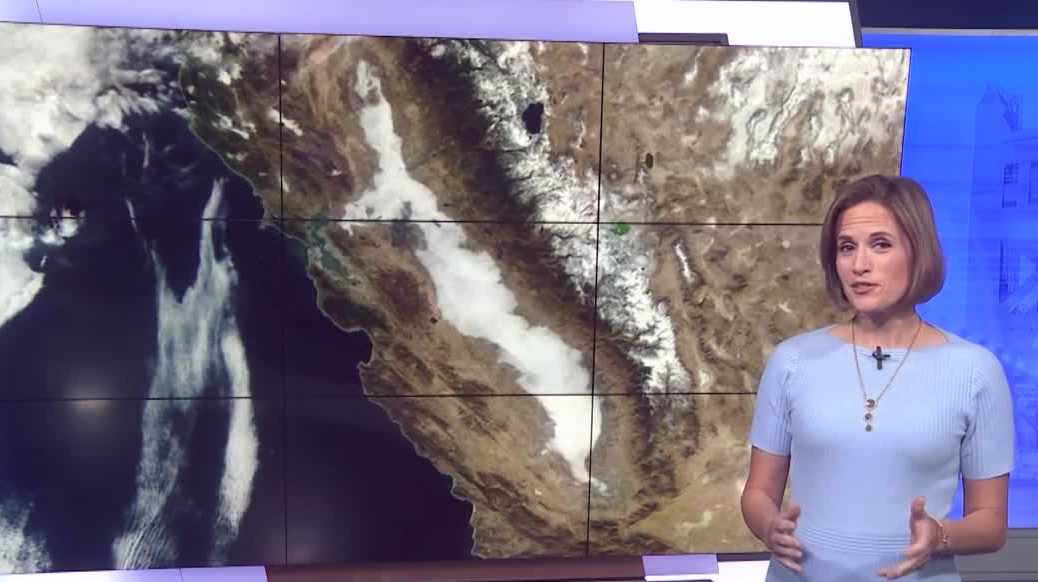
Over the past few days, a layer of fog and low clouds has slowly been expanding through the Valley and into the lower Foothills.
This persistent gloomy weather has a colloquial name in the Central Valley: Tule fog.
It’s a common feature of winter weather in California, forming during the calm, cool nights that follow a stretch of rainy days.
Tule fog can lead to dangerously poor visibility for drivers, especially on freeways where traffic flows much faster.
In December of 1997, Tule Fog was blamed for a quarter-mile-long fiery crash on Interstate 5 in Sacramento County.
One experienced truck driver recalls his anxiety that day.
“I’ve been driving 15 years and today, it’s like my first day in this truck. I’m nervous, y’know,” he said.
Five people were killed in that chain reaction crash and another 36 were injured. The freeway had to be closed for more than 24 hours.
Similar incidents have occurred up and down the Sacramento and San Joaquin Valley over the years.
But those who have lived in the Central Valley for at least a couple of decades may have noticed that fog events aren’t as intense as they used to be.
Scientists say that’s not just an anecdote. Stricter pollution policies like burn bans and emissions requirements have dramatically reduced the amount of pollution in the Valley during the winter months.
Fewer pollution particles means there’s less for water vapor to condense onto. That leads to either less fog or fog that’s not as thick.
The reduction in fog is a plus for road safety, but some sectors of the state’s agriculture industry rely on fog during winter to produce a good crop.
UC Davis says that cherry trees, almond and walnut trees, as well as pistachio trees, are some of the most reliant on Tule fog.
“Fog is a nice layer that keeps tree temperature and air temperature very similar,” says Kosana Suvocaev.
That temperature balance helps keep trees in an important dormant phase, allowing them to store more energy for the growing season.
Suvocaev says that with fewer fog days, trees can become overheated, which can lead to a lower crop yield or a crop that’s less appealing on the market.
Some farmers choose to apply a dormancy-breaking agent to help when fog is less present. Others spray water on trees from above to mimic the cooling effects of the fog. During drought years, this can be expensive.
A long-term solution for some farmers has been to choose to grow tree varieties that have adapted to drier, warmer conditions.
The KCRA 3 weather team is expecting rounds of low clouds and thick fog to be present over the next few days, including Thanksgiving.
REAL-TIME TRAFFIC MAP
Click here to see our interactive traffic map.
TRACK INTERACTIVE, DOPPLER RADAR
Click here to see our interactive radar.
DOWNLOAD OUR APP FOR THE LATEST
Here is where you can download our app.
Follow our KCRA weather team on social media
Meteorologist Tamara Berg on Facebook and X.Meteorologist Dirk Verdoorn on FacebookMeteorologist/Climate Reporter Heather Waldman on Facebook and X.Meteorologist Kelly Curran on X.Meteorologist Ophelia Young on Facebook and X.
Watch our forecasts on TV or online
Here’s where to find our latest video forecast. You can also watch a livestream of our latest newscast here. The banner on our website turns red when we’re live.
We’re also streaming on the Very Local app for Roku, Apple TV or Amazon Fire TV.
See more coverage of top California stories here | Download our app | Subscribe to our morning newsletter | Find us on YouTube here and subscribe to our channel