
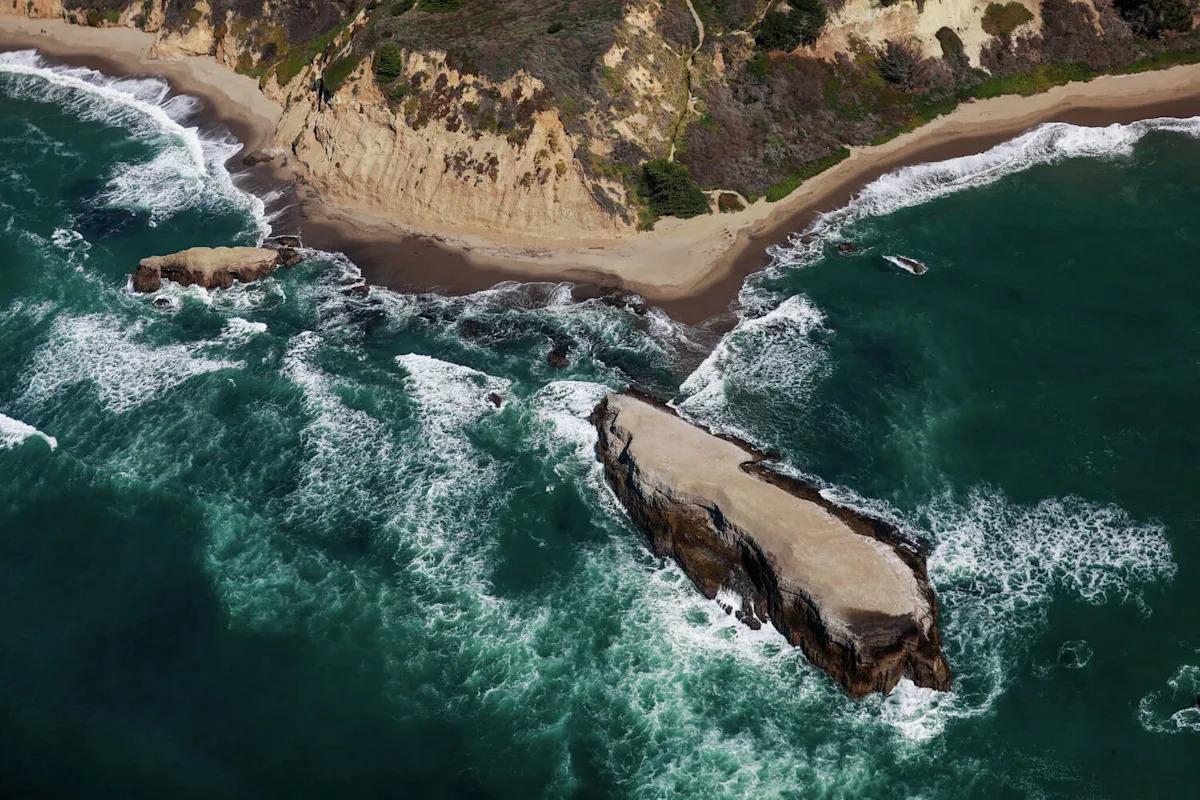
Waters off the California coast, part of one of Earth’s richest marine ecosystems, have acidified faster than most of the rest of the world’s oceans over the past century, according to a new study.
The authors report that the broad swath of coastal water that flows southward from British Columbia to the Baja California peninsula, known as the California Current system, and the adjacent Salish Sea along the border of the U.S. and Canada, could also become far less supportive of marine life in the coming decades, based on modeling using a worst-case climate change scenario.
The region is “sitting at the leading edge of ocean acidification impacts,” said Mary Margaret Stoll, who recently earned a Ph.D. in oceanography from the University of Washington and co-authored the study in Nature Communications. “It provides a window into future conditions predicted in the coming decades for the rest of the ocean.”
Since the Industrial Revolution, the amount of carbon dioxide in Earth’s atmosphere has skyrocketed amid surging human-produced greenhouse gases. That’s had impacts on the world’s oceans.
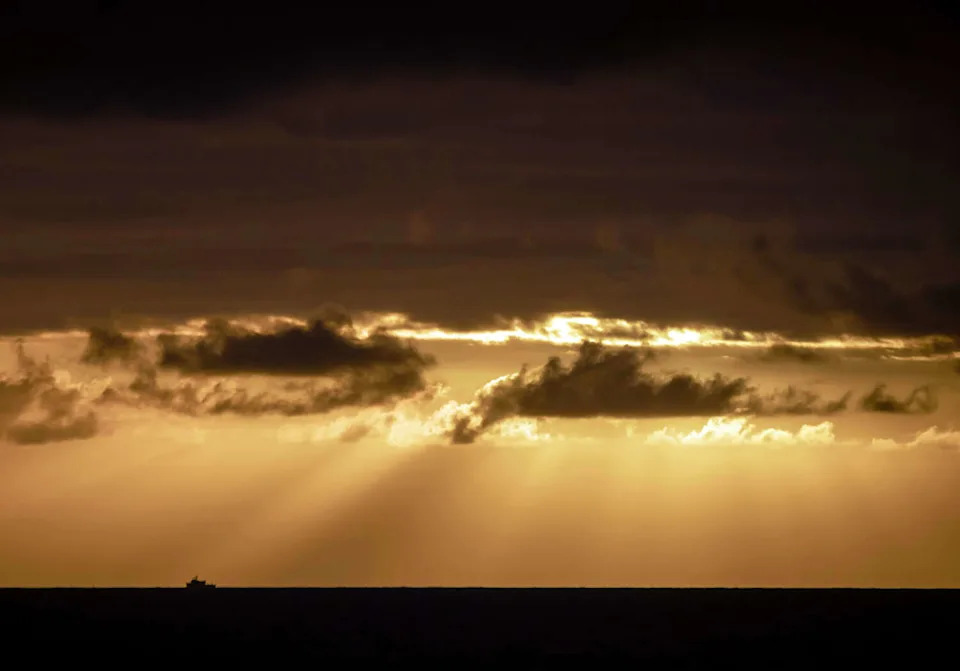
A boat is silhouetted on the horizon against the setting sun, as seen from Stinson Beach on Nov. 19. (Carlos Avila Gonzalez/S.F. Chronicle)
“The ocean is a tremendous sponge for that carbon dioxide,” said Tessa Hill, a professor of oceanography at UC Davis’ Bodega Marine Laboratory, who wasn’t part of the new study. “About a third of what we put into the atmosphere ends up in the ocean.”
This absorbed carbon dioxide chemically reacts to acidify seawater, which can disrupt marine life: Organisms like Dungeness crabs, oysters and corals face difficulty forming hard shells and skeletons. Such impacts could have ripple effects through marine ecosystems and threaten fisheries.
Scientists have projected that the world’s oceans will continue to become more acidic over time. But it hasn’t been clear what to expect specifically for the California Current system, said co-author Alex Gagnon, an associate professor of oceanography at the University of Washington.
{ “__type”: “devHubFreeformEmbed”, “__id”: “AIHTML”, “__fallbackImage”: “https://files.sfchronicle.com/embed-bot/2025/sfc_acidicocean1126/acidicocean1126-fallback.png”, “__data”: { “html_url”: “https://files.sfchronicle.com/embed-bot/2025/sfc_acidicocean1126/acidicocean1126.html” } }
Waters in this region are naturally more acidic than those of the open ocean because of upwelling. This natural process is a distinct feature of the California Current system and brings nutrient-rich water up from the ocean depths, fueling the growth of marine life; but this water is also extra acidic, due to the decomposition of organic water in the deep ocean.
“There’s been sort of a scientific debate about whether this really productive region is going to be moderated from ocean acidification or amplified,” Gagnon said.
The answer seems to be: amplified.
Climate simulations from the new study indicated that carbon dioxide increases in the California Current system over approximately the past century outpaced atmospheric carbon dioxide by 50%, on average. By contrast, most of the world’s oceans have added carbon dioxide at about the same rate as the atmosphere.
The authors found a similar pattern in the Salish Sea, which includes Puget Sound and the Strait of Juan de Fuca.
The modeling results were reinforced by a separate analysis of historical coral samples collected by the research vessel Albatross in the California Current system and Salish Sea between 1888 and 1894.
The scientists quantified levels of boron, a chemical element that builds up in different forms depending on the acidity of surrounding seawater when the corals formed. In 2020, the researchers revisited some Salish Sea sites where samples had previously been collected and gathered present-day corals for analysis.
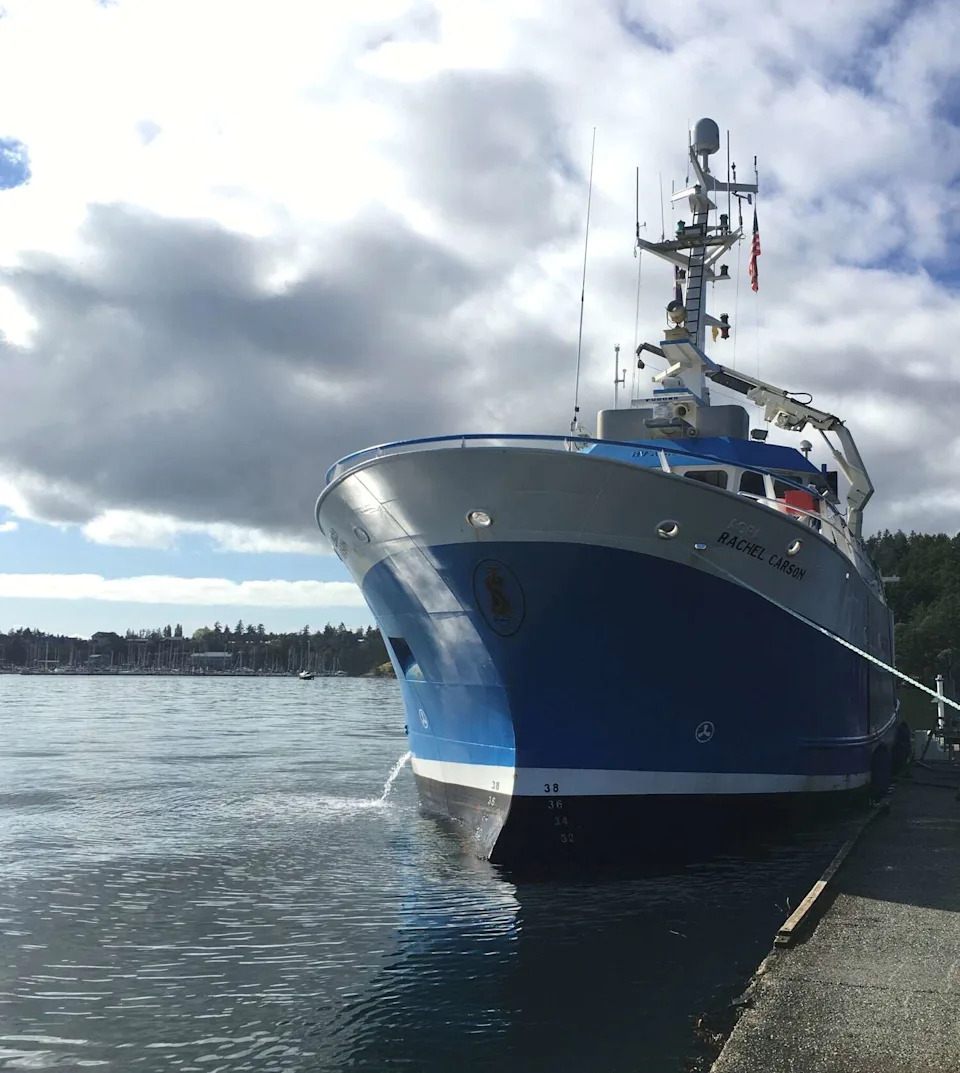
Scientists collected coral samples in the Salish Sea aboard the University of Washington research vessel Rachel Carson in 2020. (Alex Gagnon/University of Washington)
“We were able to compare old corals from the dawn of the Industrial Revolution with modern corals collected from the same locations and figure out how much acidification had happened,” Gagnon explained. The authors uncovered that carbon dioxide increases in the Salish Sea outgained the atmosphere by about 40%.
They propose that the intrinsically high acidity of the California Current system makes it more sensitive to atmospheric carbon dioxide increases than other parts of the ocean.
The researchers project continued rapid escalation of carbon dioxide in the California Current system through the end of the 21st century, as the ecosystem continues to outpace increases in the atmosphere and other ocean regions. That could mean sooner-than-anticipated consequences for marine life.
“Our work on the acceleration of ocean acidification shows that we will see these negative effects earlier than expected, in some cases decades earlier.” Gagnon said. “The ocean is already a less hospitable place because of (carbon dioxide) emissions. The coastal ocean will certainly be an even less hospitable place in the 2050s to 2070s.”
The projections rely on an extreme greenhouse gas emissions scenario, involving dramatic increases in coal use. Climate change mitigation efforts, while far weaker than climate experts had sought, have meant such an extreme scenario isn’t actually likely to play out. But Hill, agreeing with the study authors, said that it’s still “useful to see what those outer bounds look like.”
“It helps paint a picture for what the future holds if we don’t address (carbon dioxide) emissions,” Hill explained. An area of future investigation could be seeing what models show with other, more conservative climate scenarios, Hill said.
Todd Martz, a professor at UC San Diego’s Scripps Institution of Oceanography who wasn’t part of the new study, described the new research as solid work, adding that “it highlights the need for sustained and expanded ocean observing and monitoring.”
The findings underscore the importance of protecting coastal ecosystems. “Even if it seems small, everything that we can do to reduce the impacts of climate change and pollution along the coast, everything matters,” Hill said.
This article originally published at California’s coastal waters are transforming at a surprising rate. Here’s what the future could look like.