
In summary
The U.S. deported just five immigrants from Turkey in the 2024 federal budget year. One Turkish immigrant now fears deportation after being summoned to a San Diego ICE office.
Welcome to CalMatters, the only nonprofit newsroom devoted solely to covering issues that affect all Californians. Sign up for WhatMatters to receive the latest news and commentary on the most important issues in the Golden State.
A San Diego pedicab driver who fled Turkey after being tortured because of his religious beliefs is the latest among hundreds of people who have been arrested across California at routine immigration check-ins, according to advocates, his attorneys, and his wife.
Idris Demirtas, 25, sought asylum in El Paso in December 2022 and was legally paroled into the United States that same month. He was issued a five-year work permit. A biomed student in Turkey, Demirtas has no criminal history in his home country or the U.S., according to his wife and attorneys.
“He is the sweetest, most loving, and kind person. Everyone who meets him loves him. He’s very family-oriented and a fair-minded person,” said his wife, Mae Bovenzi, who was born and raised in San Diego.
His attorneys and Bovenzi said Demirtas has scars on his body from physical violence he suffered in Turkey because he is not a member of the Muslim faith.
“He’s never told me everything about what exactly happened, but he has scars all over his body,” said Bovenzi.
In 2023, the U.S. Department of State issued a report finding in Turkey “significant human rights issues included credible reports of: enforced disappearance; torture or cruel, inhumane, or degrading treatment or punishment by the government or on behalf of the government.”
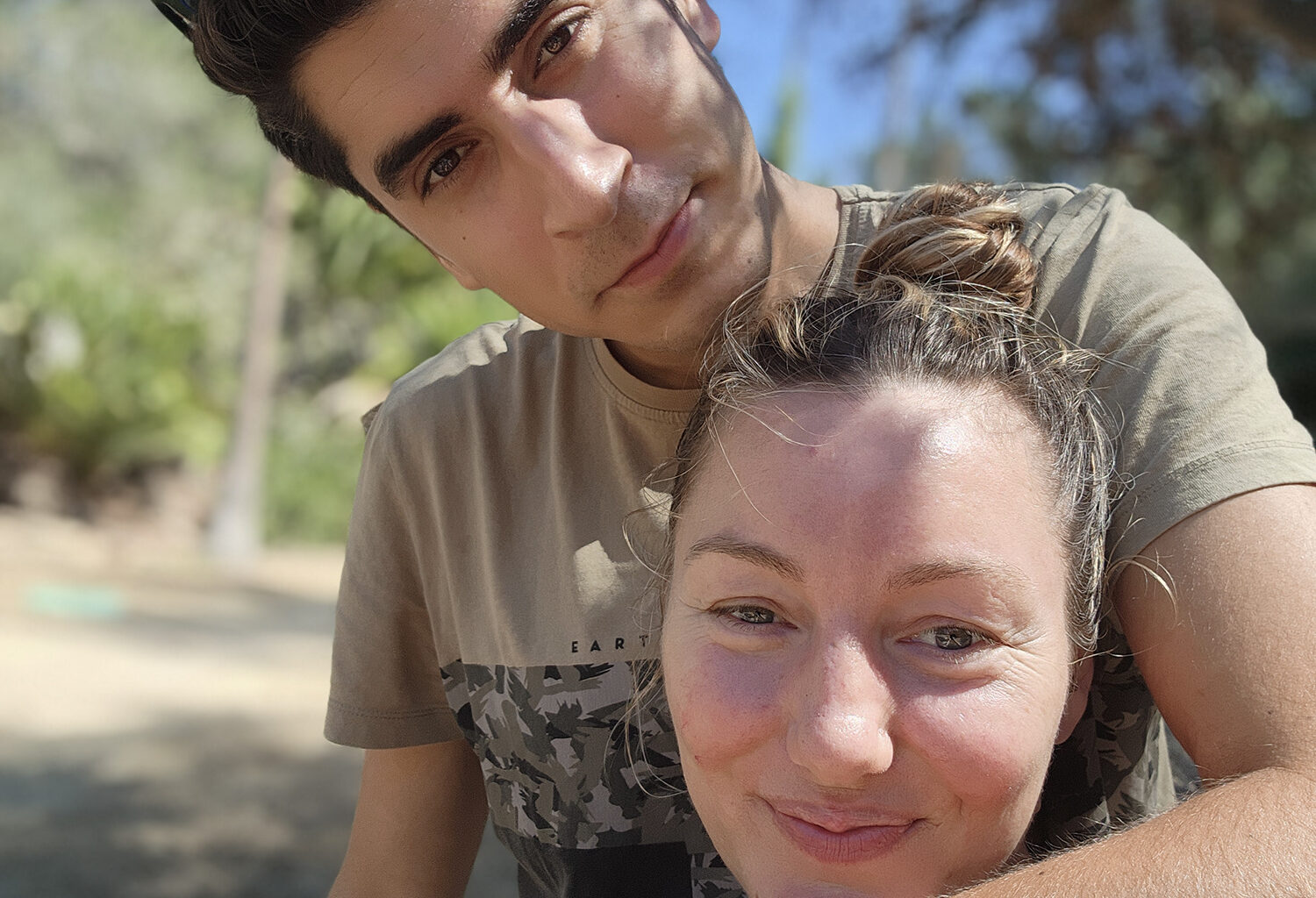
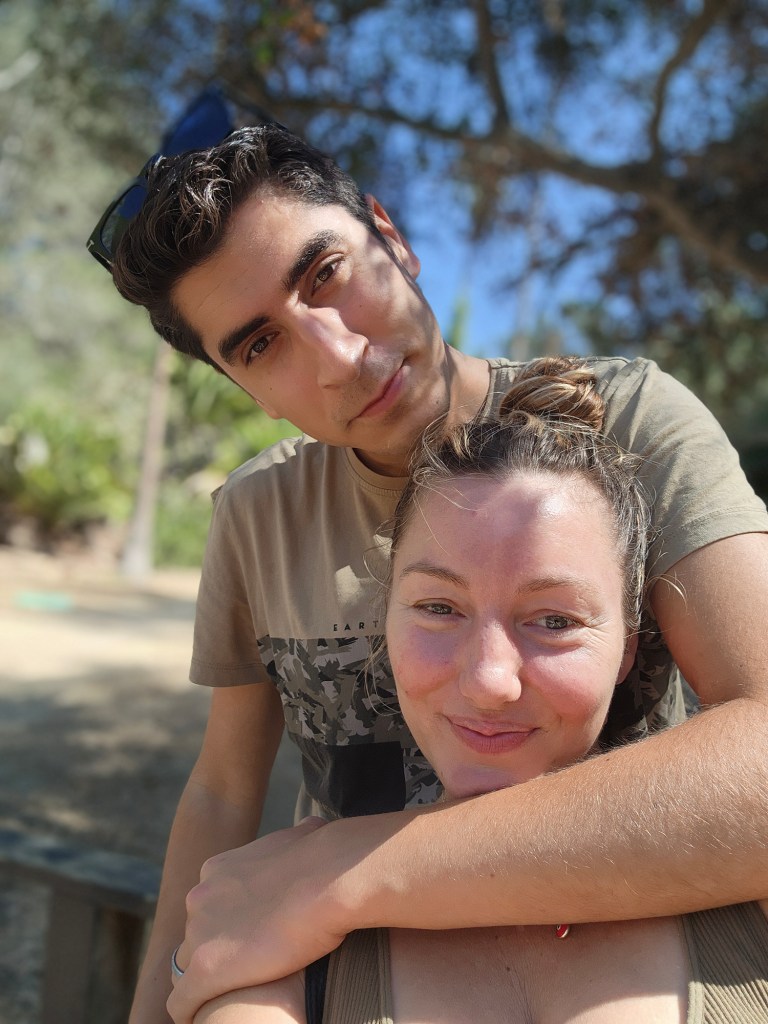 Idris Demirtas, a San Diego pedicab driver who fled Turkey after being tortured because of his religious beliefs, and his wife Mae Bovenzi, a U.S. citizen. Demirtas was arrested last week at an immigration call-in appointment. He’s the latest among hundreds of people who have been arrested across California at routine immigration check-ins. Photo courtesy of Mae Bovenzi
The United States during the second Trump administration is deporting people to countries that were mostly off-limits in the past, such as Iran. In the past, authorities have been forced to either hold those immigrants indefinitely in detention or release them into the U.S. That means immigrant communities from countries that previously did not have to worry about being deported now have renewed cause for concern.
Just the right amount of news
Just the right amount of news
Get California’s most essential headlines without feeling overwhelmed.
Get California’s most essential headlines without feeling overwhelmed.

A review of ICE Flight Monitor housed at the Human Rights First organization shows zero deportation flights to Turkey between January 2025 and October 2025.
In April 2022, the Immigration and Customs Enforcement agency reported deporting a Turkish national who they said was suspected of providing support to terrorist organizations to Istanbul. The agency reported deporting five Turkish people in the 2024 federal budget year.
Arrests ramp up at immigration court
Federal immigration agents arrested Demirtas in San Diego last Thursday at the downtown federal Edward Schwartz courthouse, where he was responding to a call-in letter he received on Nov. 19 ordering him to appear for a check-in at 8 a.m. the next morning. With less than 16 hours’ notice, Demirtas and his wife decided he would go to the check-in because he was trying to comply with the law, his wife said. Bovenzi said she has barely been able to eat since the couple received the call-in notice.
Immigration and Customs Enforcement did not respond to a request for comment about why Dimitras was arrested or why he is still being detained. He is currently being held at the Otay Mesa Detention Center, operated by the for-profit prison company CoreCivic, according to a federal detainee locator database.
Apprehensions at ICE check-ins have ramped up across California since the beginning of October in cities such as San Diego, Fresno, and Stockton, according to news reports and advocacy groups. President Donald Trump issued an executive order in the first hours of his second term that lifted a previous Biden-era ban on arresting immigrants at sensitive places, including courthouses, schools, and churches.
In October, activists with an organization called Detention Resistance documented more than 100 arrests at ICE check-in appointments on the second floor of the San Diego federal building.
Some politicians, advocates, and lawyers argue that apprehensions at ICE check-ins violate people’s due process rights by creating a catch-22 for immigrants: If they go to their appointments, they may be detained for months and potentially deported. But if they don’t appear at a scheduled check-in or call-in, ICE can issue a formal deportation order against them, effectively guaranteeing their arrest and deportation.
U.S. Sen. Alex Padilla visited the San Diego immigration court in September and likened it to “a trap.”
“I think they’re accomplishing exactly what they want, which is basically forcing people into a really difficult decision,” said one of Demirtas’ attorneys, Tessa Cabrera. “You’re detaining someone, separating them from their family and their resources, their ability to make money and support their families … I think a lot of people are going to say, ‘I don’t want to deal with this,’ and just give up.”
Detention conditions
Demirtas told his wife during a Sunday visitation at the Otay detention center that he was first held for 11 hours in the crowded basement of the downtown federal courthouse without access to food or water. He could hear babies crying throughout the night, according to his wife, Bovenzi. ICE did not respond to a question about whether or not infants are being held in the basement of the federal building.
After being transferred to Otay, Demirtas told his wife he has been sleeping on the floor because of overcrowding.
“He has now been provided with food, but none of it has been a complete nutritious meal,
the water is foul, and he has no bed, just a mat on the floor,” according to a draft court document one of his attorneys wrote on his behalf.
Ryan Gustin, a spokesperson for CoreCivic, said everyone at the facility has a bed.
“Any claim of water quality issues is patently false,” he said. Otay Mesa Detention Center “gets the same clean drinking water the local utility supplies to the surrounding community. Staff at our facility drink the same water as those in our care.”
The Department of Homeland Security did not immediately respond to a request for comment about Demirtas’ case.
In late July, KPBS reported the Otay Mesa Detention Center housed more than 100 people over its contractual capacity of 1,358 detainees, citing a report from Syracruse University. Nationally, detention numbers have also spiked, with more than 65,000 people detained – a record high.
Over the forty days between October 1 and November 10, Otay Mesa Detention Center held an average of 1,456 people on a daily basis, about 98 people above its contractual capacity, according to ICE data and the site Detention Reports, which shows detainee population fluctuations over time at each ICE facility.
It’s nearly impossible to determine from the data how many of those arrests occurred at immigration court hearings or check-ins, but mathematician Joseph Gunther identified 2,388 cases nationwide of people (including 76 children) who were likely arrested at immigration courthouses in May, June, and July 2025. His research paper identified 141 confirmed and likely arrests at the San Diego federal courthouse, which was the fourth highest in the country. Gunther noted the actual number of arrests was likely higher.
Bovenzi said her husband already paid more than $2,000 in fees to file immigration-related paperwork. Now, the family is scrambling to get together another $5,000 for a potential habeas petition.
Attorneys have increasingly used these federal lawsuits during the second Trump administration to end what they argue are illegal detentions of their immigration clients.
.wp-block-group__inner-container > :not(h2){margin: 16px 40px !important;}.cm-cta.long-ask .wp-block-group .wp-block-group__inner-container{display: flex;gap: 12px;align-items: center;}.cm-cta.long-ask figure{max-width: 40px;flex-shrink: 0;}.cm-cta.long-ask .wp-block-group p{font-size: 18px;font-weight: 700;line-height: 120%;letter-spacing: -0.36px;width: 100%;}.cm-cta.long-ask .wp-block-group .wp-block-buttons{flex-shrink: 0;}.cm-cta.long-ask .wp-block-button__link{padding-left: 40px;padding-right: 40px;}@container long-ask (min-width: 601px){.cm-cta.long-ask *{font-size: 16px;}}@container long-ask (max-width: 600px){.cm-cta.long-ask h2,.cm-cta.long-ask .wp-block-group p{text-align: center;}.cm-cta.long-ask h2{background: linear-gradient(90deg,#FFE094 0%,#FFB500 100%);padding: 12px 20px;font-size: 20px;letter-spacing: -0.4px;}.cm-cta.long-ask .wp-block-group .wp-block-group__inner-container{flex-direction: column;}.cm-cta.long-ask > .wp-block-group__inner-container > :not(h2){margin: 16px 20px !important;}}]]>
Nonpartisan, independent California news for all
We’re CalMatters, your nonprofit and nonpartisan news guide.
Our journalists are here to empower you and our mission continues to be essential.
We are independent and nonpartisan. Our trustworthy journalism is free from partisan politics, free from corporate influence and actually free for all Californians.
We are focused on California issues. From the environment to homelessness, economy and more, we publish the unfettered truth to keep you informed.
We hold people in power accountable. We probe and reveal the actions and inactions of powerful people and institutions, and the consequences that follow.
But we can’t keep doing this without support from readers like you.

Please give what you can today. Every gift helps.