
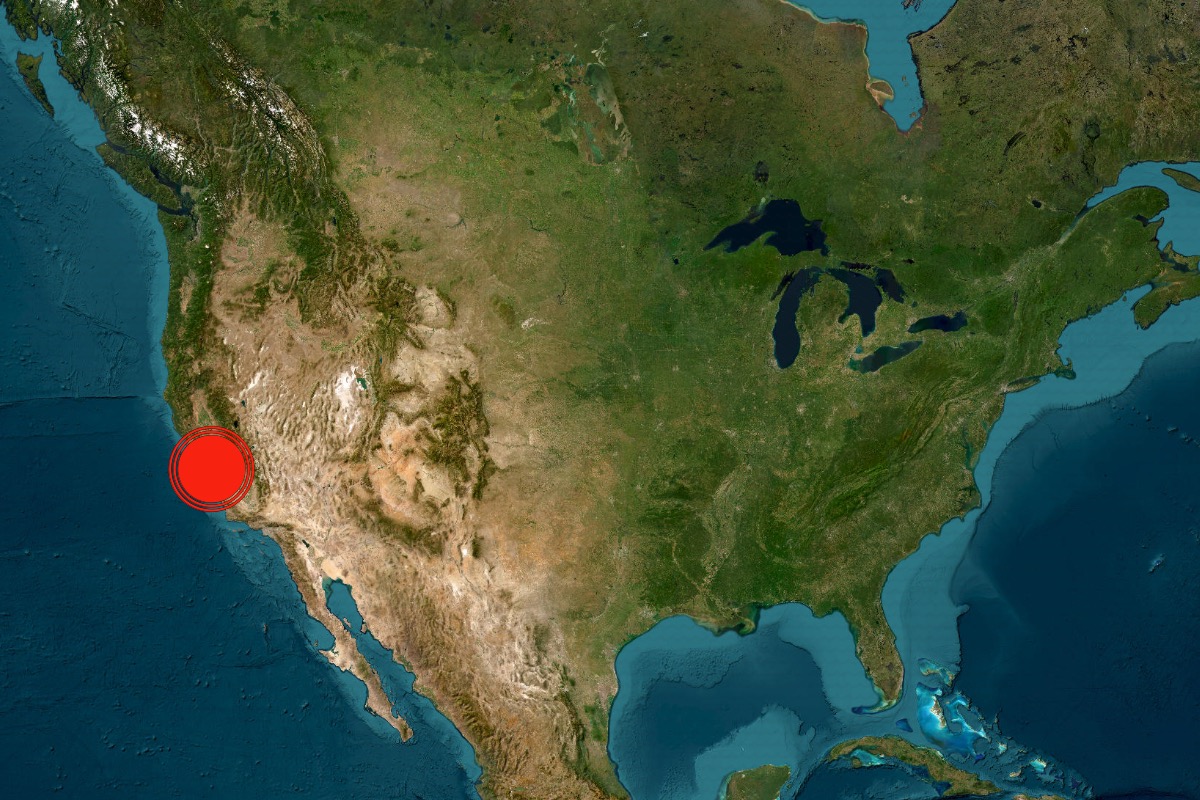
A series of earthquakes rattled California’s Bay Area near Gilroy on Wednesday, according to the U.S. Geological Survey. The largest was a magnitude 4.0 quake centered about 8 kilometers east of Gilroy, followed by a magnitude 3.6 quake southeast of the city and a magnitude 2.7 event to the east.
Residents across Santa Clara and San Benito counties reported feeling sharp jolts, though there were no immediate reports of injuries or major damage. Seismologists said the cluster is not unusual for the region, which sits near the Calaveras Fault and frequently experiences small to moderate earthquakes.
Map Shows Three California Quakes TodayCalaveras Fault: What to Know
The Calaveras Fault is a major branch of the San Andreas Fault system, running roughly 123 miles through California’s East Bay and South Bay regions. It stretches from the Carquinez Strait southward toward Hollister, passing beneath or near several densely populated communities, including Danville, San Ramon, Pleasanton, Morgan Hill and Gilroy.
Geologists classify it as a right-lateral strike-slip fault capable of producing moderate to strong earthquakes, and it is considered one of the most active faults in the Bay Area. Its frequent small earthquakes make it a constant subject of monitoring by the U.S. Geological Survey.
The fault has been responsible for several notable quakes, including the 1984 Morgan Hill earthquake, a magnitude 6.2 event that caused widespread damage across Santa Clara County. It also produced the 1979 Coyote Lake earthquake, a magnitude 5.7 temblor felt across much of the region.
Scientists warn that the Calaveras Fault is accumulating strain that could generate a larger quake in the future, and they consider it a significant seismic hazard due to its proximity to rapidly growing communities.
Updates: 11/26/25, 1:57 p.m. ET: This article was updated with new information.