
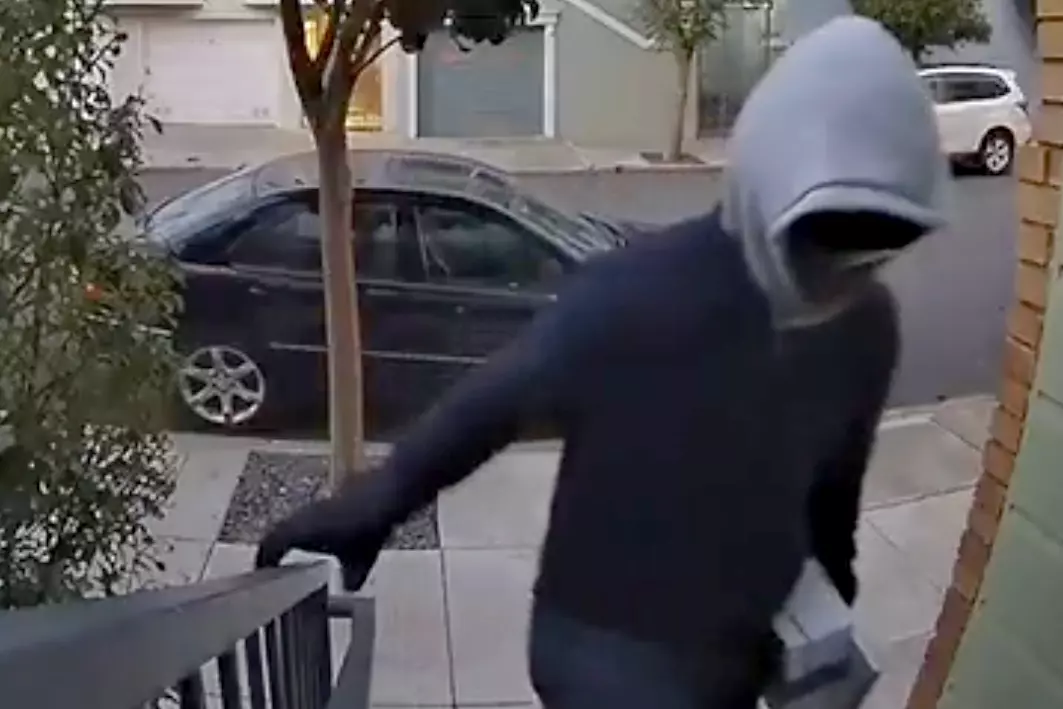
The hooded and masked figure seen on doorbell video footage didn’t seem particularly out of place against the backdrop of a neighborhood regularly trafficked by porch pirates sneaking packages.
But on a recent Saturday evening in Mission Dolores, the person caught on camera was there for something far more valuable than groceries or gifts: digital assets.
The suspect, who wore dark-colored clothing, a light-colored hood, and a mask, addressed the resident of a Dorland Street home by name shortly before 5:10 p.m., then entered, tied up the resident, and demanded access to his financial accounts. The robber took the victim’s laptop and cellphone — the digital keys to his cryptocurrency holdings and online accounts — before fleeing.
In a statement Monday, the San Francisco Police Department said the victim — who has declined to speak publicly, citing safety concerns — sustained non-life-threatening injuries and suffered financial losses. No arrests have been made, and the case remains under investigation.
“There are concerns about my safety, and the people that did this are still on the loose,” the victim told The Standard. “I’ve decided to stay as private as possible.”
The robbery underscores a vulnerability of cryptocurrency holders: the physical safety risks that accompany digital wealth. Most crypto theft plays out online, through malware, phishing schemes and investment scams. But cybersecurity experts say crypto’s rising popularity means virtual threats are becoming physical, with a growing number of cases involving in-person intimidation or violence to gain access to digital assets.
David Wagner, a computer security expert at UC Berkeley, said that unlike bank accounts that have controls to protect customers, crypto has few safeguards.
“The thieves are figuring that out,” Wagner said. “Owning crypto is a little bit like storing all your money in cash under your mattress. It’s open for theft. And there’s the additional risk of someone on the other side of the world stealing your money.”
Venture capitalist and Y Combinator CEO Garry Tan, a friend of the victim, shared doorbell footage Monday on social media and appealed for public assistance. “There was a daylight home invasion robbery at gunpoint in Mission Dolores this weekend,” Tan wrote in a post he later deleted. “It happened to a friend and member of our community and we have to find the perpetrator. Time is of the essence. This is a public call for info to apprehend the suspect/group.”
Police are seeking video footage taken Saturday from 4:30 to 6 p.m. at Dorland between Dolores and Guerrero streets. Anyone with information can call a 24-hour tip line at 415-575-4444 or text TIP411 beginning with “SFPD.”
This year, crypto investors or their families have been targeted in physical attacks more than 60 times, according to a tally (opens in new tab) of public reports. France has emerged as a hotbed for brazen, copycat attacks (opens in new tab) on family members of crypto entrepreneurs and influencers. In two instances, kidnappers cut off a victim’s finger to extract millions of euros in ransom. Most physical attacks do not take place in the U.S., but last November, prosecutors charged two men with abducting and torturing (opens in new tab) a crypto trader inside a 17-room Manhattan townhouse.
Bay Area crypto investors and founders who requested anonymity due to security concerns said they are becoming increasingly vigilant about personal safety.
Measures include paying data-removal services to scrub personal details from the internet, keeping a few thousand dollars in cash at home to placate potential intruders, and hiring private security when traveling to crypto conferences abroad. Most said they have moved their holdings to third-party custody services — tools that function much like a bank, holding crypto on the customer’s behalf rather than leaving it stored on personal devices.
Last year, some investors gathered in Switzerland for a daylong “counter-kidnapping” workshop (opens in new tab) to learn how to reduce their chance of being attacked, avoid honeypot schemes, and bite their way out of plastic zip ties.
“It really comes down to removing the target painted on your back,” said Andrew Reddie, a cybersecurity expert at UC Berkeley. “Never shout online about owning bitcoin.”