
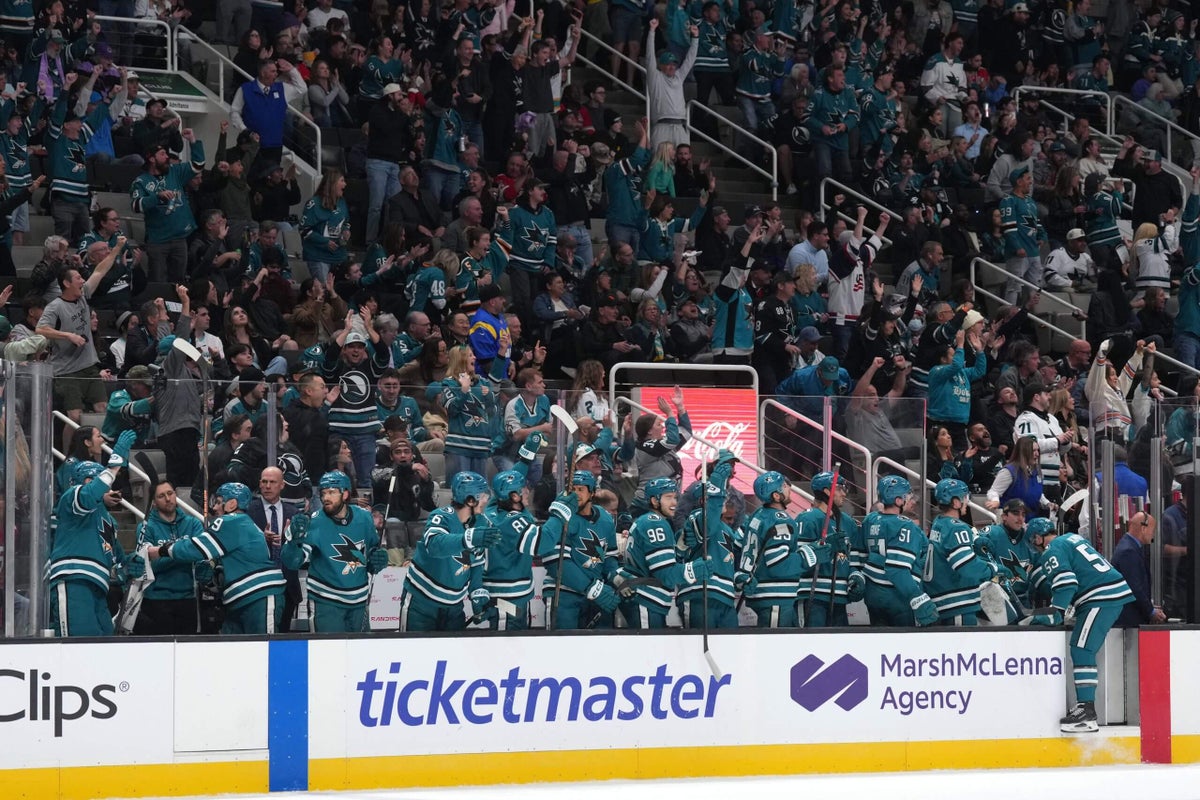
After Tuesday’s game in Edmonton, the NHL season is already 360 games old — or just shy of 30 percent of the way through the 2025-26 campaign. The Olympic-year schedule is certainly relentless.
We’ve now reached U.S. Thanksgiving, one of the big demarcation points on the NHL calendar, which gives us an appropriate number of games to take a snapshot of various trends across the league. Today, we’re analyzing attendance, the biggest piece of hockey-related revenue for the 32 teams.
We’ll break down these numbers in a couple of ways in this piece. The first separates how close teams are to playing to a full house on a nightly basis so far this season. The second looks at home attendance figures from a similar point last season, allowing for a direct comparison for each franchise. From there, we will be able to see which teams have made the biggest gains and losses year over year.
A few disclaimers:
Attendance figures here are from Hockey Reference and include all games played through Saturday, Nov. 22.
In the event of a discrepancy in arena capacity size, we went with the official number supplied by a team’s media guide or arena website (when available).
The Utah Mammoth aren’t included as their seating configuration continues to evolve in Year 2 in Salt Lake City, and it wouldn’t be an apples-to-apples comparison looking at last year.
Two teams (Nashville and Pittsburgh) have played overseas games that technically counted as “home” appearances. We’re excluding those games from the average attendance figures.
Tier 1: Guaranteed sellouts
Team
Attendance
Capacity
Capacity%
17,907
17,500
102.3%
17,850
17,565
101.6%
19,516
19,250
101.4%
18,099
18,007
100.5%
17,192
17,113
100.5%
17,151
17,100
100.3%
19,092
19,092
100.0%
18,532
18,532
100.0%
16,504
16,514
99.9%
18,833
18,910
99.6%
18,265
18,347
99.6%
19,403
19,515
99.4%
20,962
21,105
99.3%
18,551
18,800
98.7%
17,684
18,006
98.2%
18,317
18,680
98.1%
Exactly half the league slots in this tier, as 16 teams are hitting 98 percent capacity or higher this season.
This top tier includes a healthy blend of market types: historic Original Six franchises such as Boston, Montreal, Toronto and New York; expansion teams Vegas and Seattle; and contending teams from less traditional markets such as Carolina, Florida, Dallas and Tampa Bay.
The Panthers, in particular, have built strong momentum on the back of their on-ice success. Florida has sold out every home game this season, with average attendance up 12.4 percent compared to this time two years ago.
New Jersey is a new entry into Tier 1, averaging an extra 657 fans per game. The Devils were one of the hottest teams in the NHL in October, which likely fueled this modest growth. It will be fascinating to see whether they can maintain those gains, considering Jack Hughes’ recent injury.
Nashville’s attendance has remained surprisingly resilient, despite being one of the worst teams in the NHL for a second consecutive year.
Vancouver will be an interesting market to watch moving forward. The Canucks’ early attendance has been robust, but apathy is hitting the fan base as the club has plummeted down the standings, with the dark cloud of Quinn Hughes’ uncertain future looming. The Canucks have recently offered more discounted “Student Rush” tickets than usual, suggesting demand is starting to soften, even if it hasn’t affected attendance totals yet.
The Leafs and Rangers have both seen slight attendance dips (about 200-250 fans per game) in the wake of disappointing starts, but that’s small potatoes for these two revenue-generating juggernauts.
Tier 2: Middling showings
Team
Attendance
Capacity
Capacity%
17,673
18,096
97.7%
17,575
18,506
95.0%
17,018
17,954
94.8%
16,995
18,144
93.7%
14,223
15,325
92.8%
16,609
18,118
91.7%
15,658
17,255
90.7%
15,499
17,174
90.2%
16,797
18,652
90.1%
There are both good news and bad news stories in this group. The only four holdovers of the nine teams in this range include the Blues, Capitals, Kings and Ducks, with Anaheim the one team in that group that feels likely to keep rising the longer the season wears on, as they continue to push for their first playoff berth in eight years.
The Blues, meanwhile, have struggled so badly — currently sitting in 29th place — that you wonder if they could slip further from nearly 98 percent capacity as porous goaltending and a lack of offense combine to put their season in jeopardy early.
Quite a few teams moved up to here, with Columbus, Winnipeg, Ottawa and the Islanders all bumping up their early-season sales figures for varying reasons.
The Blue Jackets had a terrific revival last season, narrowly missing the playoffs, and have enough young talent and potential to be a bigger draw than they’ve been in a while. Winnipeg and Ottawa both had strong regular seasons a year ago, buoying early interest in the two small Canadian markets. There’s still more room for those numbers to go up, depending on how their seasons go.
The Islanders, meanwhile, are getting some immediate benefits from the Matthew Schaefer effect. They’ve been one of the league’s biggest and best surprises, sitting in ninth overall, and could make the playoffs thanks to their No. 1 pick leading the way.
The only club to move down into this group is the Wild, who we’ll dig into a little more below, given how notable their drop is.
Tier 3: Some empty seats
Team
Attendance
Capacity
Capacity%
16,345
18,187
89.9%
17,702
19,717
89.8%
17,299
19,289
89.7%
15,562
17,435
89.3%
17,248
19,537
88.3%
16,375
19,070
85.9%
The Penguins were one of the biggest attendance fallers last year. That downward pressure has continued, with this marking the first time they’ve failed to reach 90 percent capacity since we’ve been writing this attendance tracker.
Pittsburgh’s sliding ticket sales aren’t overly surprising, considering the club’s lack of recent success and high prices. The silver lining is that the numbers are slowly improving — Pittsburgh has hit at least 17,000 fans in all four of its true home games in November, including a couple of sellouts, whereas in October it didn’t hit 17,000 even once.
The Blackhawks’ drop to this bottom tier is surprising. Last year’s lagging ticket sales made sense because of the team’s miserable on-ice performance. This season, however, Connor Bedard’s supernova play and the club’s competitive record have yet to make a significant dent in Chicago’s attendance (more on that later).
The Flyers’ 11-7-3 start under Rick Tocchet has them in the thick of the playoff race, but it hasn’t made them any more relevant to Philly sports fans. After five consecutive playoff misses, it’s going to take longer, sustained success from this rebuild to generate meaningful buzz.
Year-over-year analysis
Compared to this point last season, NHL attendance is close to flat with only a 0.4 percent increase — up 76 fans per game (without Utah’s numbers included).
Including the Mammoth selling out their increased capacity at the Delta Center (now 12,748 but projected to get to 17,000 in the coming years due to renovations), the average team is playing to 96 percent capacity, which is slightly higher than historical norms.
Year-over-Year Comparison
Team
November 2024
November 2025
Difference
13,506
15,562
2,056
15,916
16,995
1,079
15,303
16,375
1,072
15,847
16,504
657
18,887
19,516
629
13,764
14,223
459
15,247
15,658
411
17,354
17,575
221
16,607
16,797
190
18,764
18,833
69
18,038
18,099
61
17,889
17,907
18
17,850
17,850
0
17,151
17,151
0
19,092
19,092
0
18,532
18,532
0
19,410
19,403
-7
17,206
17,192
-14
17,690
17,673
-17
17,344
17,299
-45
18,347
18,265
-82
21,105
20,962
-143
17,407
17,248
-159
18,765
18,551
-214
17,935
17,684
-251
16,931
16,609
-322
15,852
15,499
-353
18,736
18,317
-419
16,902
16,345
-557
18,544
17,702
-842
18,170
17,018
-1,152
Biggest climbers
San Jose Sharks: +2,056 fans/game (15.2 percent increase)
The Sharks have seen the most significant increase in early attendance of any team in the NHL, and it’s not even close.
Last year, San Jose drew meager crowds of 10,000-11,200 during seven of its first 13 home games. They were the only team in the NHL selling at less than 80 percent of its capacity at the quarter mark of the 2024-25 season. This year, though, the SAP Center has yet to dip below 12,000 fans for a Sharks game and has had several sellouts.
Macklin Celebrini’s immediate ascent as a 19-year-old superstar is likely the biggest catalyst for these improved numbers. It was a bit unusual that the Sharks didn’t get an immediate attendance bump last season from the excitement and hype of having an 18-year-old No. 1 overall pick. There’s likely a catch-up effect now that Celebrini has firmly established himself as a must-see player.
The Sharks are genuinely entertaining to watch, and at 11-9-3, they’re way more competitive than anybody could have imagined. All of these factors have led to this surge, though there’s still plenty of room for improvement, as San Jose is still filling slightly less than 90 percent of its capacity.
Columbus Blue Jackets: +1,079 fans/game (6.8 percent increase)
It hasn’t earned them a playoff spot yet, but since last year, the Blue Jackets have quietly been one of the most fun, dynamic teams to watch in the league. Columbus was one of the highest-scoring teams in the NHL last season, on the back of breakout performances from several key young players.
That optimism and an entertaining run-and-gun playing style have fueled a significant jump in attendance this season. Columbus was filling just 87.7 percent of its seats in the early part of the 2024-25 season, ranking third-lowest in the NHL. The Blue Jackets have since climbed to 93.7 percent, which is right around league average.
Zach Werenski and Kirill Marchenko deserve credit as well because their emergence as elite game-breakers has made them worth the price of admission alone.
Buffalo Sabres: +1,072 fans/game (7 percent increase)
This one honestly surprised us. The Sabres are on pace for their 15th consecutive playoff miss … and yet their attendance has gone up?
It’s worth mentioning that even with this first-quarter increase, they’re still only filling 85.9 percent of capacity, which is the worst mark in the NHL. In other words, they’ve improved, but their overall crowd sizes are still pretty lousy.
The Sabres have made some changes to their ticket sales strategy, which could be boosting these numbers. For example, Buffalo included free tickets to its home opener with any five- or 10-game pack purchased by fans, which helped make the home opener a sellout. The organization also parted ways with its vice president of ticket sales and service just before the season started.
This may also be a situation where the Sabres have been bad for so long that anyone who’s still stuck around engaging with the team and going to games is unlikely to tune out despite another mediocre start.
Biggest declines
Minnesota Wild: -1,152 fans/game (6.3 percent decrease)
Fans aren’t attending games in the State of Hockey? What’s going on?
Historically, the Wild have made headlines more for their long sellout streaks than anything else attendance-wise, but that very well could change this season. Minnesota was absolutely brutal out of the gate — winning just five of its first 15 games and getting booed off the ice at home — and is now on pace for its lowest attendance figure ever.
They have caught fire on the ice lately (7-0-1), which should help ease the fans’ base-level angst, but the bigger issue for the Wild is likely a deeper malaise over the team’s inability to make inroads as a Western Conference contender for many years. Minnesota hasn’t won a playoff round in more than a decade now, going through five head coaches and turning over the entire roster save for veteran defensemen Jared Spurgeon and Jonas Brodin.
Wild tickets are not cheap and there’s a lot of competition in the market with the NFL, NBA and MLB and college sports all having a strong presence. They do have a decent youth movement coming and some star talent in Kirill Kaprizov, Brock Faber and Matt Boldy, but you can’t blame a fan base for wanting more wins when it counts. And those can only come in April.
Chicago Blackhawks: -842 fans/game (4.5 percent decrease)
The young, plucky Blackhawks have been another of the NHL’s good news stories on the ice, as even with a recent mini-skid (three straight regulation losses), they’re well ahead of where most projected they’d be in Year 3 of Connor Bedard. They’ve also been loads more fun to watch, leaping up into a tie for ninth in goals per game after finishing near the league basement in that department last season.
The Athletic’s wonderful Scott Powers had a deeper look at the issue. Since that point, they’ve packed the house a few times — including more than 20,000 fans at games against the Leafs and Avs — driving their average up nearly 1,000 fans a game on the year.
Chicago’s a great hockey town and obviously packed the (massive) United Center in the past when they had success. It certainly feels like Bedard’s recent heroics — and a potential scoring race chase with fellow wunderkind Celebrini — will bring out more Chicagoans the rest of the way. Our guess is they won’t be on this list much longer.