
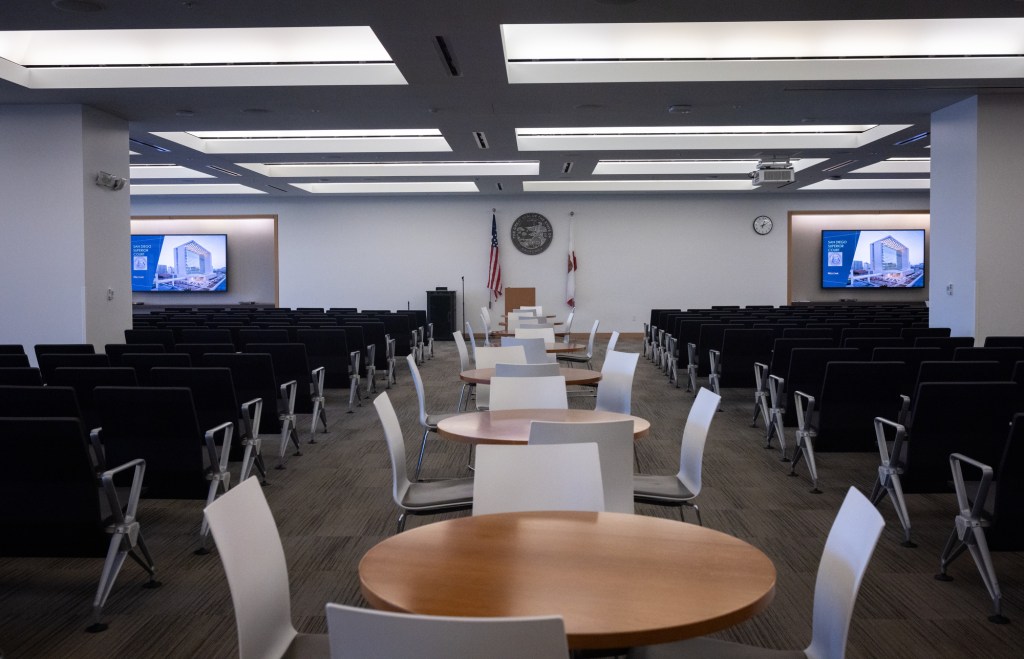
On any given day, thousands of San Diegans let out a collective groan when they get the postcard in the mail summoning them for jury duty.
Yes, jury duty can be disruptive. But it can also break up a hum-drum routine, get you out of your bubble and give you a refresher in civics, especially if you get called into a courtroom and sworn onto a panel.
“In my view of American history, jury trials are the greatest democratic experiment in world history,” said San Diego Superior Court Judge Joan Weber. She tells prospective jurors the same thing regularly during the morning orientation for jurors.
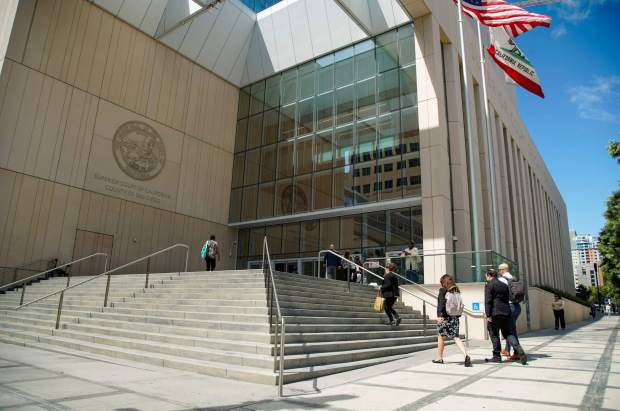 People coming and going at the San Diego Superior Court’s Central Courthouse in downtown San Diego. (Alejandro Tamayo / U-T file)
“All different walks of life, all different parts of the county come together to decide the case,” she said. “It’s a remarkable responsibility given to American citizens.”
If you weren’t one of the more than 1 million county residents summoned in the past fiscal year, then your time could be coming up soon.
Here’s a guide for the downtown Central Courthouse when it does.
Parking
The central San Diego Superior courthouse downtown does not have a parking garage of its own, so your next best bet is likely one of the private lots or garages dotting the area.
But they can be pricey. A recent visit to the ACE parking lot at Union and B streets, just a block from the courthouse, cost $40 for a full day. If you venture just a few blocks farther, the price can drop drastically. Prices may also be cheaper if you book the parking lot in advance online.
Parking at a curbside meter would be tricky: there’s just no telling how long you will be tied up for the day. Enterprising commuters may be able to find free street parking on the outskirts of downtown, just be prepared for a long walk.
Beginning on the second day of service, jurors can be reimbursed $0.34 per mile for travel, based on your ZIP code.
Other transportation options
Public transportation may be your best bet. The PRONTO app and sdmts.com can help with planning.
The Orange Line trolley stops at Courthouse Station in front of the courthouse steps, and the Blue Line has stops at nearby America Plaza Station and Civic Center Station. Several bus routes also go downtown.
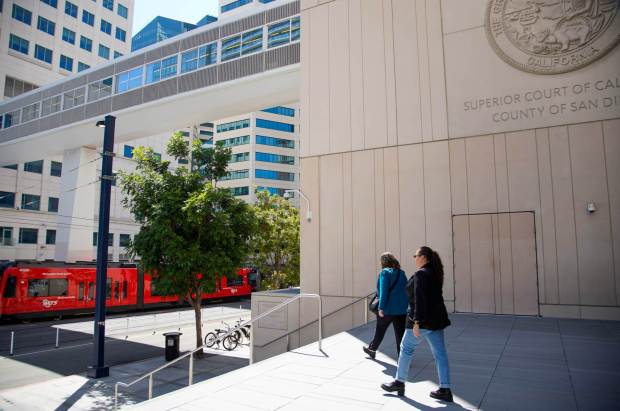 An MTS trolley runs in front of the San Diego Central Courthouse. (Alejandro Tamayo / U-T file)
While the court does not reimburse trolley or bus fees on the first day of service, you can get a free one-day trolley or bus pass to use later. Starting on your second day of service, you can waive the mileage reimbursement and get a free daily transit pass.
Better yet, get a loved one to drop you off. Pick-up times would have to be flexible. It’s not uncommon for potential jurors to be dismissed right before or after lunch.
What to bring
Bring your jury summons. It will be scanned to check you in and also serve as your juror tag. Otherwise, you will have to fill out a new form there. If you don’t want a name tag pin poking through your nice shirt, bring tape.
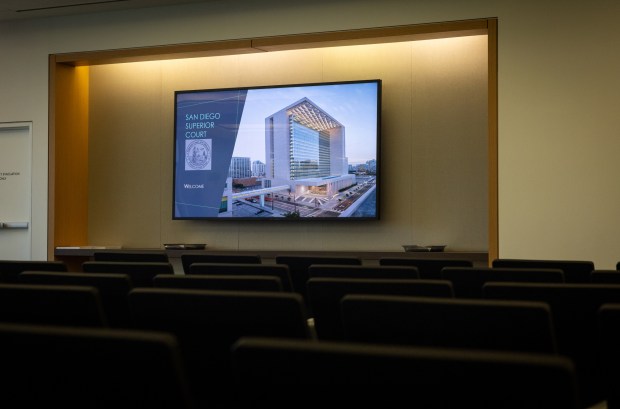 The jury lounge at the San Diego Central Courthouse. (Ana Ramirez / The San Diego Union-Tribune)
The jury lounge vibe is a cross between a busy airport terminal and a hushed library, so pack accordingly. Chances are, you’ll be sitting in the jury lounge for several hours, so bring something to keep you quietly occupied. Headphones are encouraged if you plan to catch up on your Netflix, as well as chargers for your laptop and cellphone. The lounge has Wi-Fi, but anyone concerned with security may want to consider bringing their own hotspot device.
The air conditioning can get chilly, so a light jacket or sweater is recommended. A water bottle, a thermos full of coffee and snacks are also good, since the vending machine isn’t apparently all that reliable.
Double-check your bags and keychains for prohibited items, including pocket knives, pepper spray, scissors, sewing or knitting needles, lighters, glass containers and metal food utensils. Such items must either be put back in your car or thrown away outside the courthouse before going through a security screening at the entry.
When to arrive
The arrival time on the jury summons is 7:45 a.m. A film about the importance of serving is shown on arrival, and the orientation and jury service instructions start at 8 a.m.
Be mindful of morning traffic, construction around the courthouse, the time it takes to park and pay and a long security line (which actually moves fairly quickly).
For those who want to work on laptops, there is limited table-top workspace, so arrive early if that’s important. Electrical outlets are located along the walls and in the quiet room, not in the center seating area.
What to eat
Lunch is typically a leisurely hour and 15 minutes, if not longer — plenty of time to eat and to stretch your legs.
The county no longer operates a food court on the ground floor of the Hall of Justice, nor coffee carts in either courthouse. There is a jury lounge cafe across from the jury lounge, but the operation has been inconsistent as a new vendor takes over.
Fortunately, there are plenty of solid options in the area around the courthouse. Within a few blocks are CAVA, Mendocino Farms, Tender Greens, Grab & Go Subs, Lucy’s Taco Shop, Chipotle and a hot dog stand.
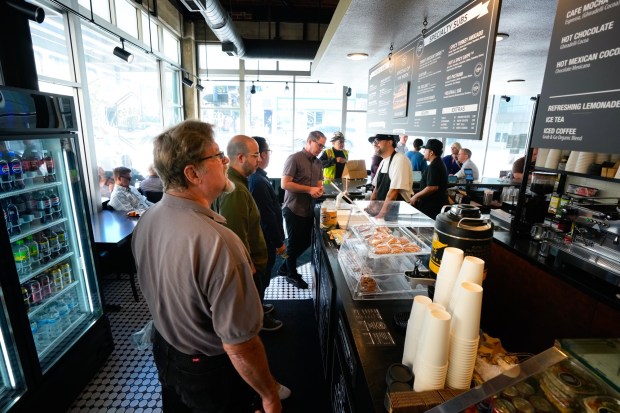 During the start of the lunch hour at Grab & Go Sub on First and C streets in downtown San Diego, owner Christian Arce takes orders from customers on Oct. 1. (Nelvin C. Cepeda / The San Diego Union-Tribune)
You can also pack your own lunch. The jury lounge stays open during the lunch hour if you don’t feel like giving up your spot. There is a refrigerator and microwave in a small kitchenette in the back of the room.
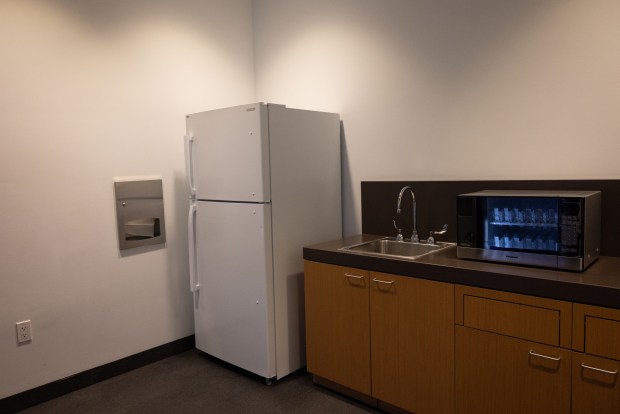 The jury lounge at the San Diego Central Courthouse includes a kitchenette with a fridge and microwave for those who wish to bring a sack lunch. (Ana Ramirez / The San Diego Union-Tribune)
There’s also typically a mid-morning and mid-afternoon break of at least 30 minutes. Starbucks, Kuma Cafe and Blue Bottle Coffee are all within a few blocks.
What to expect
For most people, jury duty will be one day of chilling in the jury lounge. If you don’t get called into a courtroom that day, then your service has been fulfilled for at least a year.
Your chances of getting called into a courtroom as part of a large group depend on the number of trials scheduled to start that day. Once in the courtroom, both sides of a case will typically ask potential jurors personal questions relating to the case, looking for bias, conflicts of interest or other characteristics that may make someone undesirable to sit on that particular jury, in a process known as voir dire. The questioning, under oath, can be done verbally or in writing.
“We do have to explore very personal issues,” Judge Weber explained. “It’s usually the very personal things about our lives that might make it difficult to be fair and impartial in a particular case.”
 The state seal behind the bench in a courtroom at the San Diego Central Courthouse. (Ana Ramirez / U-T file)
Criminal and civil trials require 12 jurors, and the number of alternates chosen depends on the case.
The typical trial lasts three to seven days, and the estimated time is always provided upfront for potential jurors in case of conflicts.
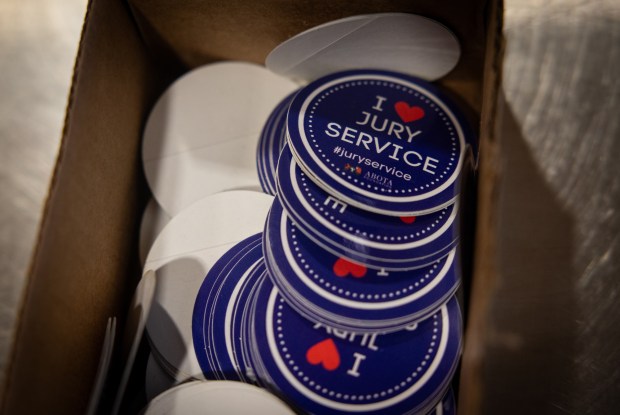 Stickers in the jury lounge. (Ana Ramirez / The San Diego Union-Tribune)
“I write a letter to every juror after every trial in my courtroom, thanking them for serving,” Weber said. “I’ll get feedback and they’ll say, ‘That was fascinating.’
I think once people do it, they find it to be a very rewarding experience.”
More questions
Visit the Superior Court’s website, sdcourt.ca.gov/sdcourt/jury2, for more information, including eligibility and how to request a postponement or excuse from service. If the date of your summons doesn’t quite work for you, you can also show up any Monday through Thursday two weeks before or after your reporting date, without notice.
Requests can also be submitted to the court to move your jury summons to another county courthouse that may be more convenient.
Staff writer Abby Hamblin contributed to this report.