
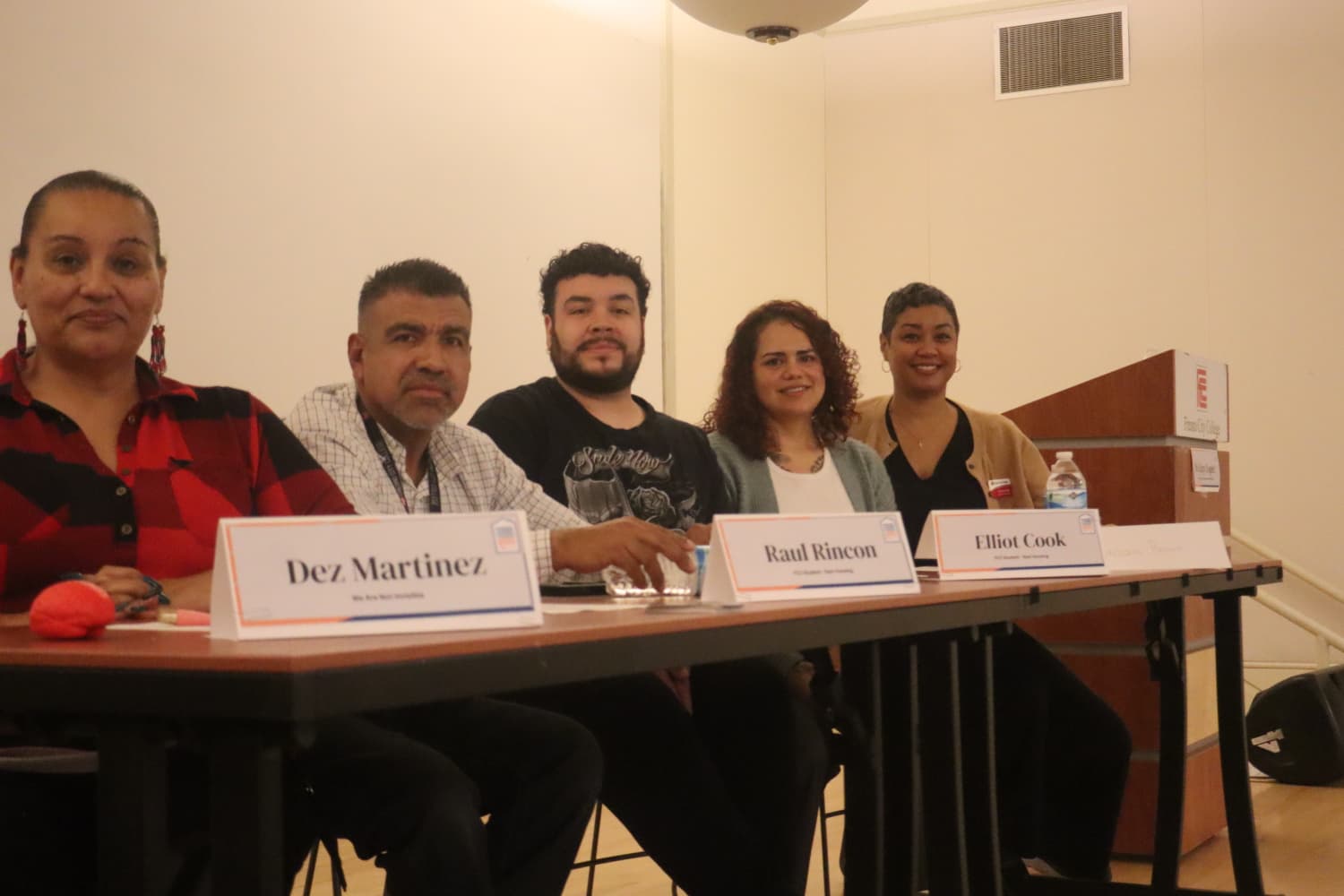
As part of National Hunger and Homelessness Awareness Week, professional advocates spoke to students at Fresno City College about unhoused problems and their experience on housing in a discussion panel on Nov. 18 in the Old Administration Building from 2 to 4:00 p.m.
According to Dez Martinez, founder of “We are not Invisible,” many people in Fresno have housing problems.
“We currently have over 3,000 people sleeping on the streets of Fresno,” Martinez said.
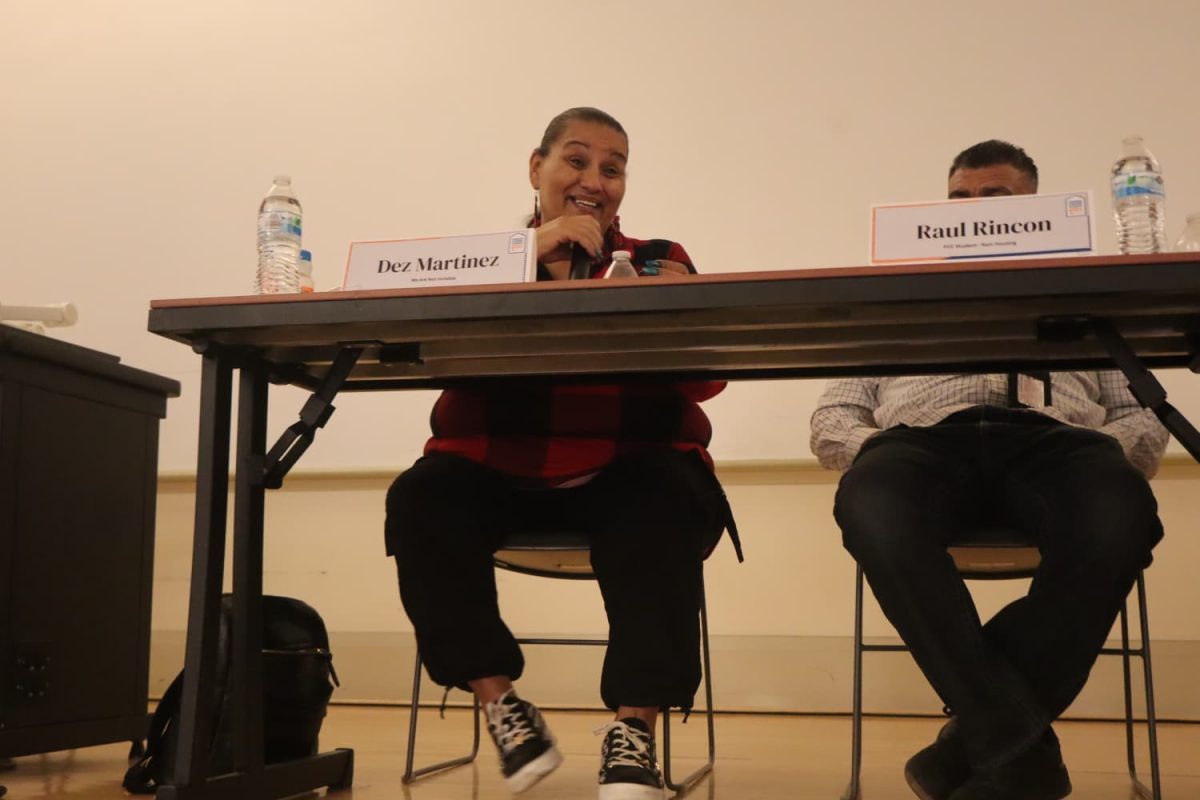 Dez Martinez during her speech in the discussion panel on Nov. 18. (Photo by: Artem Tikhomirov)
Martinez had big problems with housing, and now that she understands what they are, she decided to establish her own organization “We are not Invisible.”
“Over the past 11 years I’ve experienced homelessness, and during all that time I have started my own organization ‘We are not Invisible’ as a nonprofit organization here in Fresno,” Martinez said.
Monique Reina, senior program specialist in basic needs, has been at FCC for 10 years, and addressed her perspective on how homelessness has changed in relation to students.
“We do not have a GPA requirement, and it’s really ridiculous to require students’ GPA, and we try to offer all around services,” Reina said.
This program offers more than emergency housing.
“We have also expanded programs that offer not only emergency housing, we offer a rental support pathway, so we can support students for up to a year,” Reina said.
According to Reina, the mental health of students is important.
“I think mental health is something that we need to talk about more, and I think here at city college, so some of the changes that I’ve seen is people just be more aware,” Reina said.
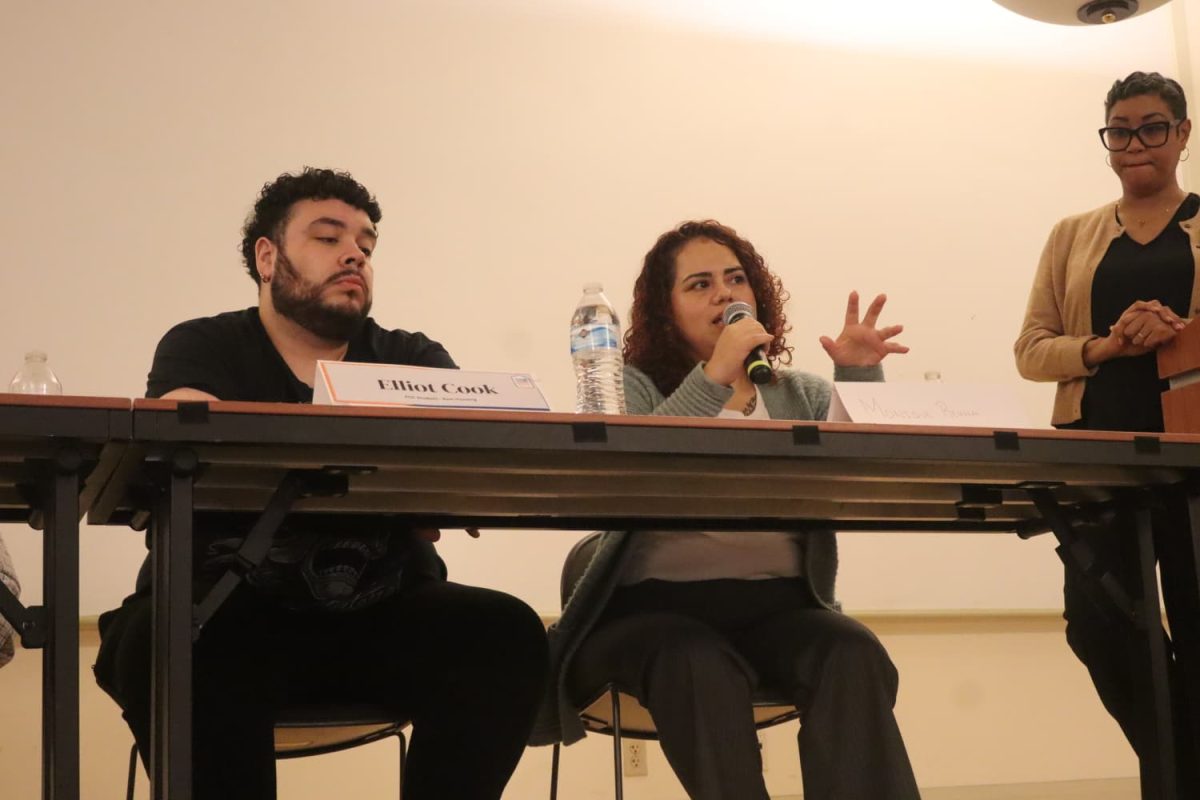 Monique Reina during her speech in the discussion panel on Nov. 18. (Photo by: Artem Tikhomirov)
According to Elliot Cook, a student at FCC, the program gave him a lot of opportunities.
“Housing has been the best thing for me because they [FCC basic needs] gave me a big opportunity, I have a savings account, financially I’m doing better and I’ve been able to get a better job,” Cook said. “I hope this program happens to you guys and many who need it, and it really changed my life for the better and I am so grateful for it.”
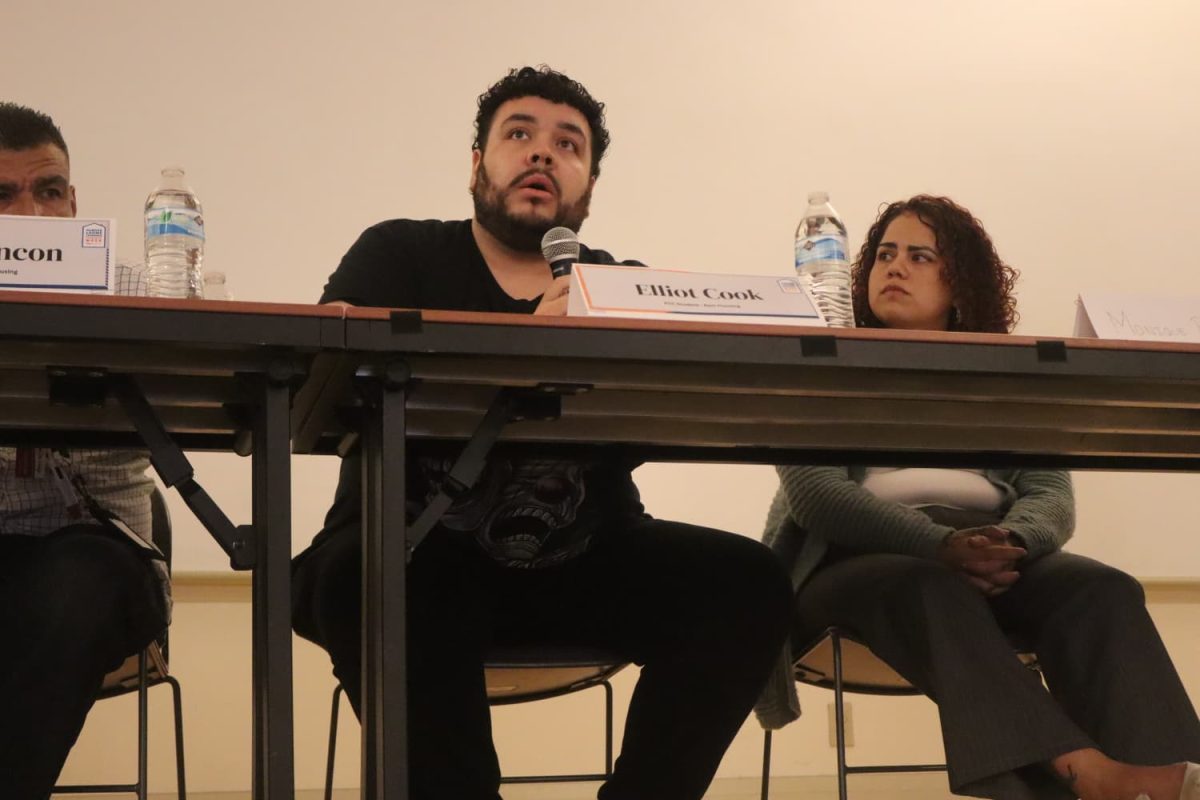 Elliot Cook during his speech in the discussion panel on Nov. 18. (Photo by: Artem Tikhomirov)
According to Martinez, there is a 3% rise in the amount of people that are entering shelters.
But according to panelists, conditions in regular shelters are bad.
“You can wash clothes only once a week and they give you a portion of food like for a little baby,” Raul Rincon, a student at FCC, said.
However, some agree that shelter conditions are much better than staying outside.
“I’d rather be there than to be on the street where all the drugs are,” Rincon said.
FCC administration can be a solution to problems, according to Reina.
“The staff, the faculty administration and staff here at Fresno City College can be part of the solution, and we have available to students both on and off-campus a lot of times they have really great intentions,” Reina said.