
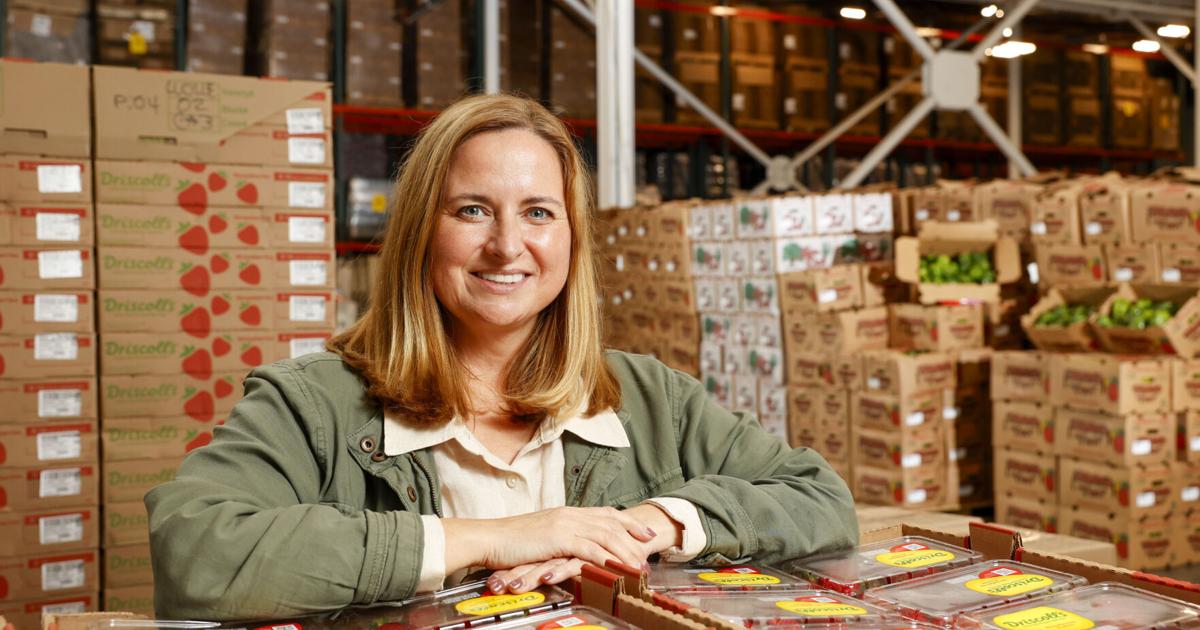
Founded in 1987, the San Francisco-Marin Food Bank is the largest distributor of food to low-income people in San Francisco and Marin Counties, serving 36,000 households each week, and was thus in a position to help connect people with the funds officials wanted them to receive.
“We were proud to be part of this public-private partnership,” said Tanis Crosby, its executive director. “We’re so grateful that individuals who were impacted by this were able to access the immediate support of the emergency grocery-card program.”
The government’s efforts to block November payments through CalFresh — the state’s SNAP implementation — marked the first-ever threatened interruption of the program because of a budgetary shutdown since 1964, the year Congress passed legislation making a supplemental food program permanent, Crosby said.
“We’ve had 21 government shutdowns, but this is the first time SNAP benefits had been impacted as a result of the government shutdown,” she said of the federal program formerly known as food stamps.
SNAP benefits for November were eventually delivered after the end of the federal shutdown.
But in response to the disruption, the nonprofit Crankstart Foundation — a family foundation of venture capitalist Michael Moritz and his wife, artist Harriet Heyman — put up $9 million and The City put up another $9.1 million to provide emergency benefits.
That money was rapidly made available to The City’s 82,000 CalFresh recipient households, with the food bank helping to coordinate the effort with The City’s Health and Human Services Agency and pro-bono support from GiveCard, a platform that enables nonprofits and government agencies to issue and manage prepaid debit cards.
“We are incredibly grateful that the San Francisco-Marin Food Bank stepped up so quickly to facilitate the process with the gift card vendor, GiveCard,” said Trent Rhorer, the San Francisco Human Services Agency’s executive director.
Rhorer also thanked other community organizations for helping CalFresh clients get emergency grocery cards, which must be activated by Dec. 31 and used by March 31.
“What’s ahead of us is the most historic cuts we’ve ever seen,” Crosby said — and food insecurity is already at “record highs.”
The new law’s full implications are not yet clear, but it reduces federal money that helps pay for CalFresh, meaning some people might get less money for food, according to the state Department of Social Services.
In addition, more recipients will need to work to keep their benefits, and many lawfully present immigrants will no longer qualify for CalFresh, the department said. City officials have estimated that federal and state legislative changes could result in almost 20,000 residents losing CalFresh benefits by end of 2027.
California Attorney General Rob Bonta and other attorneys general have accused the USDA of creating the “misimpression” that the bill excludes lawfully residing noncitizens from accessing SNAP benefits.
CalFresh provides food and other supplies to 5.5 million state residents. According to the Urban Institute and the California Budget & Policy Center, more than 3 million Californians could lose some or all their CalFresh benefits as a result of the One Big Beautiful Bill Act. The latter estimated the loss of federal funds to California will be between $2.5 billion and $4.5 billion annually.
The food bank has already been dealing with significant cuts to its programs over the past two years following the curtailment of federal, state and local funding for emergency pandemic services. The organization trimmed staff by more than 20 percent to just less than 200 employees after announcing a two-year contraction in October of 2023.
As a result, the food bank in its last fiscal year finished a two-year process of closing a raft of pandemic-era emergency pop-up pantries it had opened in places such as schoolyards and parking lots — outlets that were originally meant to last only several weeks. It currently has a waiting list of about 8,000 households.
To help meet that need, the food bank currently has dollar-for-dollar gift-matching offers set to run through the end of the year.
“Every dollar counts,” Crosby said.


Local Take honors The City’s landmarks, neighborhoods and natural surroundings with whimsical merchandise and handmade artwork

The SF native has grown Empire into one of the largest independent music distributors in the United States, championing diverse and emerging artists

For an event spread largely by whispers and group texts, the charity boxing matches pull SF together in all its messy, loyal, beautifully unglamorous glory
The San Francisco-Marin Food Bank had revenue of $185.4 million in fiscal year 2023-24, including $92.9 million in donated food and in-kind contributions, $40.4 million in private contributions, $29.1 million in government food commodities and $19 million in government grants. Revenue has varied significantly, dropping from $201.5 million in fiscal 2020-21 to $156.9 million the following fiscal year before rising to $168.5 million in fiscal 2022-23.
Ub 2023-24, volunteers worked 55,000 shifts, contributing 138,000 hours of work. That was down from fiscal 2022-23 and 2021-22, when volunteers contributed 155,000 hours and 144,000 hours, respectively. Volunteerism rose during the pandemic and calls from people interested in helping spiked during the government shutdown, according to food-bank officials, who said that the need for volunteers will particularly acute in January after the holidays when interest traditionally decreases.
“Every hour counts and does a whole lot of good,” Crosby said. “We would be so grateful for volunteer drivers to take a shift and help deliver groceries directly to people who would otherwise not be able to access community based pantries.”
The food bank in fiscal 2023-24 gave out 67 million pounds of food — enough for more than 153,000 meals a day — and served about 20% more people than before the pandemic, during which requests for food spiked. About 70% of the total has been fresh fruits and vegetables, Crosby said. More than 8,000 seniors and other homebound people received grocery deliveries in fiscal 2023-24.
Food is sorted and packed at three warehouses — one each in Potrero Hill and Dogpatch, and another in San Rafael. Subsequent distribution is through a network of more than 300 organizations.
A new program at the food bank is a collaboration with a half-dozen community-based organizations to offer food in grocery-store-like “community markets” that also provides connections and referrals to social services.
“This is a dignified service, in addition to being an accessible service, and we’re really proud of the work we do with our partners, each and every day,” Crosby said.
Gabriel Medina, executive director of La Raza, said people like picking out their own food at El Colibri Mercado. That limits food waste, he said, as when people take unwanted items out of pre-sorted bags and leave them on the street.
El Colibri Mercado, which occupies a space next to La Raza’s longtime offices on Valencia Street that was vacant for 11 years, is currently open Monday through Wednesday and accommodates 800 households, up from the 150 the organization’s food pantry previously served, Medina said.
Construction on additional space is expected to finish by the end of the month, after which Medina said he expects to add another 250 households to the food program.
La Raza’s food operation grew from a 650-square-foot space to the current 2500 square feet— and soon there will be another 1,000 square feet, which will include check-out counters, a walk-in refrigerator, a food-preparation area and an Americans with Disabilities Act-compliant restroom, Medina said.
Medina said the food bank’s support has been very important for La Raza, a nearly 20-person organization that has been in existence for 55 years. The food bank provided planning support and $135,000 in grant money and also helped La Raza win a $100,000 grant from another organization, he said.
“They’ve been a great ally and partner, always letting us lead,” Medina said.
Even with such programs, Crosby says food banks are not likely to get food to all who need it, which is why the San Francisco-Marin Food Bank also advocates for policies at various levels of government. Such efforts have focused on optimizing government food-assistance programs and eliminating barriers that prevent low-income people from receiving assistance, among other things.
Last year, the food bank cosponsored a new state law that requires California to identify and develop ways to reach out to people who are eligible for the CalFresh program but not participating in it. The law required a state executive to report on implementation.
Crosby said the CalFresh and the larger SNAP program have always been a good investment.
“SNAP is our nation’s most effective anti-hunger, anti-poverty program,” Crosby said, one that she said also provides an economic boost to local grocery stores.
“We remain undaunted,” she said. “We remain focused on our job and our mission to end hunger, and it will take our whole community to work to address these big issues together, and that must include policy solutions. We can’t food-bank our way out of the SNAP cuts that are coming.”