
Collaboration. Transparency. Support.
Those are some key elements of the company culture Brain Corp. works hard to foster for its 200 workers in San Diego County and even extends to its interns.
Brain, founded in 2009, is an artificial intelligence software company in San Diego that powers mobile robots to perform labor-intensive tasks like cleaning floors and tracking inventory at places like grocery stores, malls, airports, health care facilities and warehouses.
It is named as a top workplace in the medium-size company category this year.
Like many other tech companies, Brain offers an onsite gym, pool, tennis and basketball courts, taco and ice-cream trucks, and video games in the game room. Also, Brain organizes ping-pong and pool tournaments, hiking groups and bowling nights.
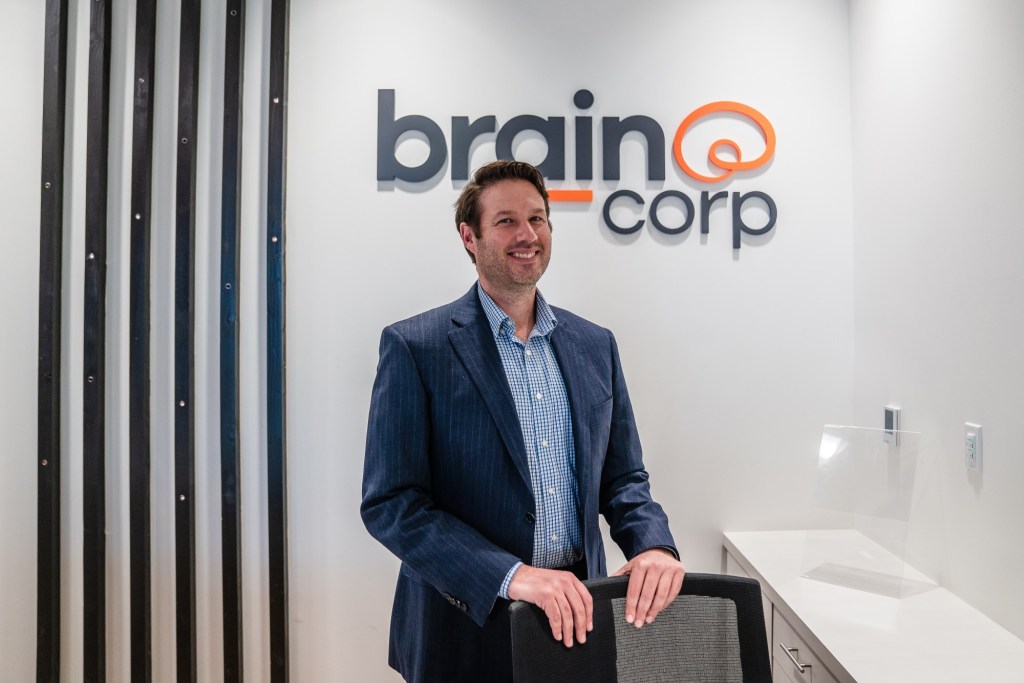
But when it comes to attracting and retaining tech workers, CEO David Pinn said: “It’s not about the perks. It’s about how the perks unlock the culture. That really matters and that really makes Brain Corp. a very special place to work and to stay to build a career.”
The following is an excerpt from a chat with Pinn, who joined Brain Corp in 2017 and was chief strategy officer and chief financial officer before becoming CEO in 2022. He goes into detail about why the company offers perks, work-life balance, the importance of a supportive manager and transparency. The interview has been edited for brevity and clarity.
Why offer these perks and social events?
We’re in robotics. It’s a multidisciplinary field. There’s a lot of different kinds of engineers who have to work together in order to realize a product. Extend that beyond engineering. You need product managers, salespeople, marketing people, and accounting people. Everyone needs to work together as one in order to change the world. A lot of that takes place not (only) in a meeting but at the lunchroom table or at a Padres game or at the pickleball court or at the game room. That’s why we focus very heavily on these collaborative experiences for our people. Collaboration is foundational to our success as a business.
In order for collaboration to take place in a meeting, people have to have a level of trust amongst each other. So you want to bring down barriers. You want people to get to know each other on a personal level in order to maximize the collaboration in their work setting. One of the ways we do that is through all these social activities.
How does the company approach work-life balance?
We offer unlimited vacation for our salary employees. That’s fairly common in our industry. We go a step further. We actively encourage our managers to make sure that they’re paying attention to their team members. What kind of vacation are they taking? Are they taking enough vacation? Are they coming back refreshed and ready to take on the next challenge?
It’s a balance of course. As in many businesses, there’s going to be peak times where we expect all hands-on deck. But in order for us to be effective in those times, we need people to have the opportunity to rest and recharge. It’s about fostering the right culture around vacation.
What portion of your workers come into the office vs. work from home?
The vast majority of employees work at least three days a week in the office. The other two days they can work from wherever they are most productive. Maybe 40 percent choose to come in every day. We offer a free lunch. But people can make a sandwich at home. It’s that opportunity to connect with your team, connect with people at Brain Corp. in the cafeteria for lunch. Even though we don’t demand that people come in on Mondays and Fridays, they do because we have a really collaborative environment.
Tech workers often value growth opportunities to stay competitive in a rapidly evolving field. How do you address that?
It’s very important to give everyone in the company growth opportunities for their careers. That’s one of the key differentiators for us on the recruiting side, but also on the retention side. To make sure people have the opportunity to work on a variety of things. To be able to change teams, for example, and work on something different. To make sure we have promotion opportunities for people who are showing promise to get to the next level. To make sure we’ve got training in place to allow people to learn new skills. A lot of programs that we have in place make sure that we’re fostering teaching and learning within the company.
It’s fairly formalized. We have in our company something called a quarterly check in. It’s a conversation between a manager and an employee, one on one. We ask the manager to ask the employee four questions and one of the four questions is “What areas for development do you and your manager commit to focus on in the next quarter?”
What else is an important part of your company culture?
All employees are given stock options. We’re going to treat you like an owner. We’re going to tell you what’s going on in the business that normally only owners would talk about amongst themselves. So every employee is an employee owner and every month, we have an employee owners meeting, not an all-hands meeting, in which we discuss matters of importance to the owners. So this relates to the collaboration in the company. This relates to the transparency in the company.
But it also goes in the other direction. We value transparency in the other direction. We expect employees to tell us what’s going right, what’s going wrong from their perspective, really to give their feedback in a very honest and candid way. People in our company know their opinion is valued. So that’s the transparency, communication, and collaboration in both directions that we’re extremely proud of.
Hang Nguyen is a freelance writer for the U-T.