
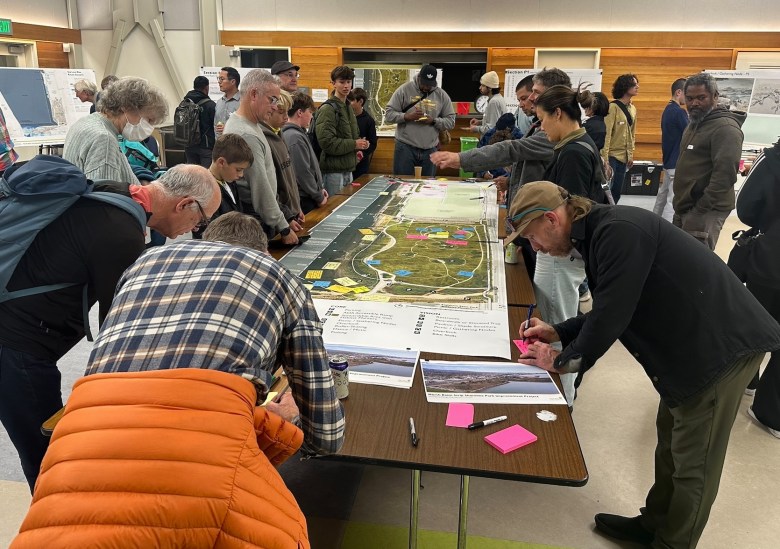
 Aound 50 community members attended a public meeting on Nov. 19 to review a new plan for Berkeley’s North Basin Strip. Credit: Morgan McFall-Johnson
A year of heated debate and activism has finally coalesced into a new plan for the North Basin Strip, a 20-acre plot of shoreline tucked between Berkeley Meadow and the Tom Bates Regional Sports Complex.
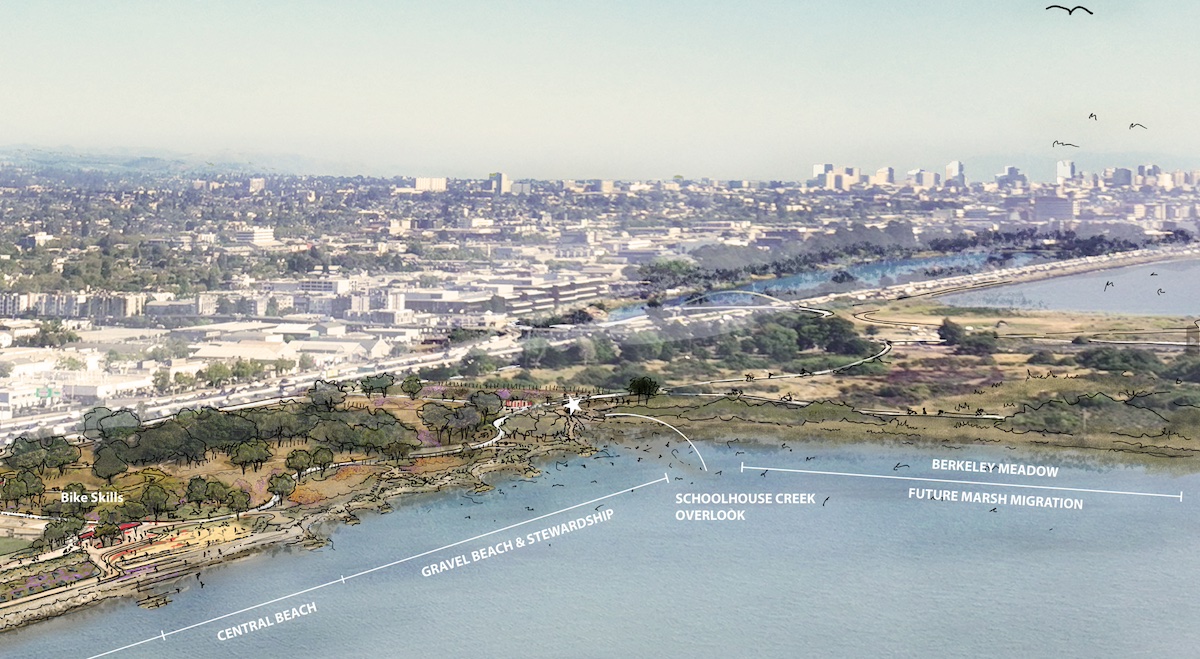
The $25 million plan from the East Bay Regional Park District (EBRPD) calls for a promenade with stepped access to the water, new restrooms, a beach, and a mountain-biking area, all on the northern end of the strip near the Bates complex. In the southern part of the strip, walking trails would wind through an area designed to preserve vegetation and create a habitat for birds and pollinators.
The park district and WRT, the firm it hired to produce the design, presented the new plan in a public meeting on the evening of Nov. 19 at the North Berkeley Senior Center.
About 50 people filled the room, including birders and hikers who had asked that the district retain the area’s existing plants and trees, disability activists who wanted accessible pathways to the shoreline, environmentalists who had campaigned to daylight an underground creek, and a contingent of at least half a dozen 10- to 14-year-old boys who had lobbied for a biking area with ramps and mounds.
“I love this area so much because it’s some of my favorite things. I got nature, I got mountain biking, and I love fishing too. And there’s almost nobody out here, so it feels a little wilder,” said Cypher, a 14-year-old who grew up nearby and spent his childhood picking blackberries, catching leopard sharks, and learning to bike in the North Basin Strip. Along with his younger brother, Madrone, and his dad, Yes, Cypher still goes to the strip to bike. They’re all excited that the bike area will give East Bay kids a new place for outdoor activities.
“I want more people to be able to access that, but I think it’s going to be hard, with all the modernization of it, to kind of keep it what it is,” Cypher added, referring to the plans for new facilities. “Hopefully it’s something better, something new.”
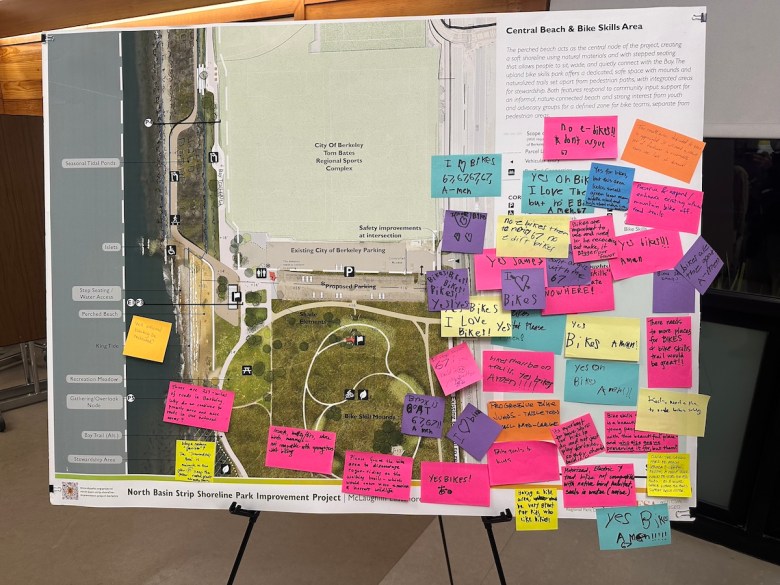 Some of those who attended the Nov. 19 community meeting left sticky notes sharing their feedback on the proposed design. Credit: Morgan McFall-Johnson
Some people left anti-biking sticky notes on the feedback sections of posterboards displaying the plan. Others expressed concern that the development would disturb shorebirds. Otherwise, the group of people who showed up seemed mostly satisfied with the design.
Even Susan Schwartz, an activist whose 25-year-long dream of excavating the mouth of Schoolhouse Creek was rejected in the new design, expressed her approval in a discussion session at the end of the meeting. “I think this is a pretty good plan,” she told the room.
It’s unclear however, how, or if, the plan will be executed. Although it is estimated to cost $25 million to implement, there are currently no funds allocated for it.
No daylighting for Schoolhouse Creek
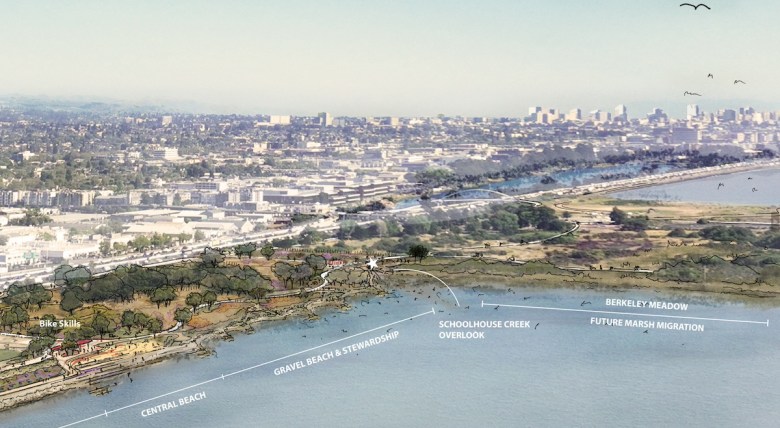 Rendering of the proposed new design for North Basin Strip which is on the Berkeley shoreline between Berkeley Meadow to the south and Tom Bates Regional Sports Complex to the north. Credit: East Bay Regional Park District/WRT
The North Basin strip is part of the McLaughlin Eastshore State Park, which gets about 500,000 visitors a year, making it the second most-visited park in the district. (Crown Beach in Alameda ranks first in most years, according to Stoller.) High tides already cause regular flooding in the area, and this is only expected to get worse as a result of rising sea levels caused by human-caused climate change. The new plan takes a “managed retreat” strategy, building facilities well above flood zones, relocating the Berkeley Meadow shoreline trail further inland, and allowing the waterfront to naturally transition into a marsh as the bay creeps in.
Those rising sea levels are part of the reason WRT and EBRPD ruled out the possibility of daylighting the mouth of Schoolhouse Creek, where it empties into the Bay. Advocates like Schwartz have long argued that excavating the creek from an underground concrete culvert would create more wetland habitat on the shore and help reduce flooding upstream in West Berkeley.
According to Peter Trio of WRT, the culvert is sitting in the mud and there’s already seawater washing up into it. WRT concluded that excavating would bring more bay water into the site and reduce the amount of land that could become marsh habitat. Excavators might also accidentally dig into fill material, which could contain toxic substances. Instead, WRT recommended creating a different wetland area nearby with seasonal tidal ponds.
“You don’t always get what you want,” Schwartz said.
A plan with a big question mark
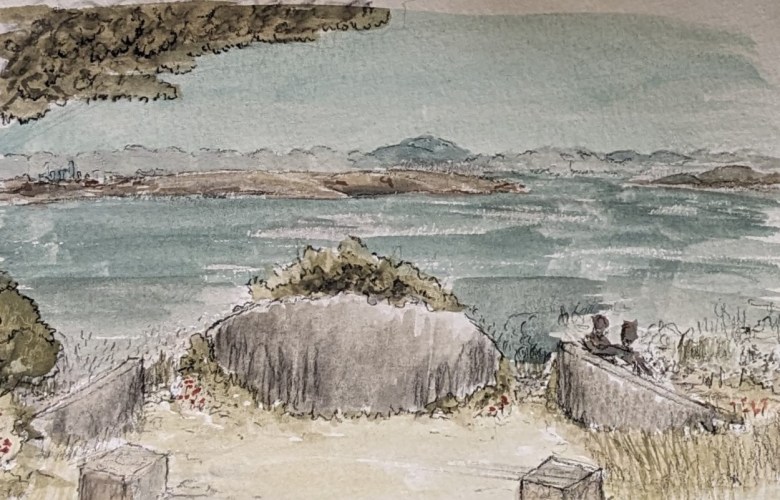 A watercolor shows a potential gathering spot on the waterfront in the proposed new plan for Berkeley’s North Basin Strip. Credit: East Bay Regional Park District/WRT
Wednesday’s meeting was the third and final community workshop about what to do with the North Basin Strip. The previous meetings, in November 2024 and April 2025, drew about 100 participants in total, according to EBRPD.
The park district designed the plan for the strip using feedback from those meetings and about 1,000 responses to an online survey. It was funded by a $600,000 grant from the San Francisco Bay Restoration Authority, according to Scott Stoller, a civil engineer at the EBRPD who oversaw the process. Stoller said he’d never seen this much involvement in one of his projects.
The planners also incorporated feedback from the New Voices Partnership, a pilot program which provided 22 participants with stipends of up to $1,000 to participate in workshops, tour the site, and share their feedback. The goal was to bring in people and groups that aren’t always involved in the parks planning process. Participants included representatives from Latino Outdoors, the Golden Gate Bird Alliance, the disability community, YES Nature to Neighborhoods, and the Original Scraper Bike Team. The New Voices program has since won an Underserved Communities Merit Award from California State Parks.
It’s an open question when this design might ever be implemented.
Stoller plans to present it to the EBRPD board for review in early 2026. If the board approves the plan, it would then need to authorize next steps, including obtaining construction permits and California Environmental Quality Act approval — a notoriously slow process.
“We’re hopeful that things will happen in a time period we can experience, and certainly the next generation can,” Trio of WRT told the community meeting on Wednesday.
“*” indicates required fields